The quick answer
What defines a traditional Austin-style smoke profile?
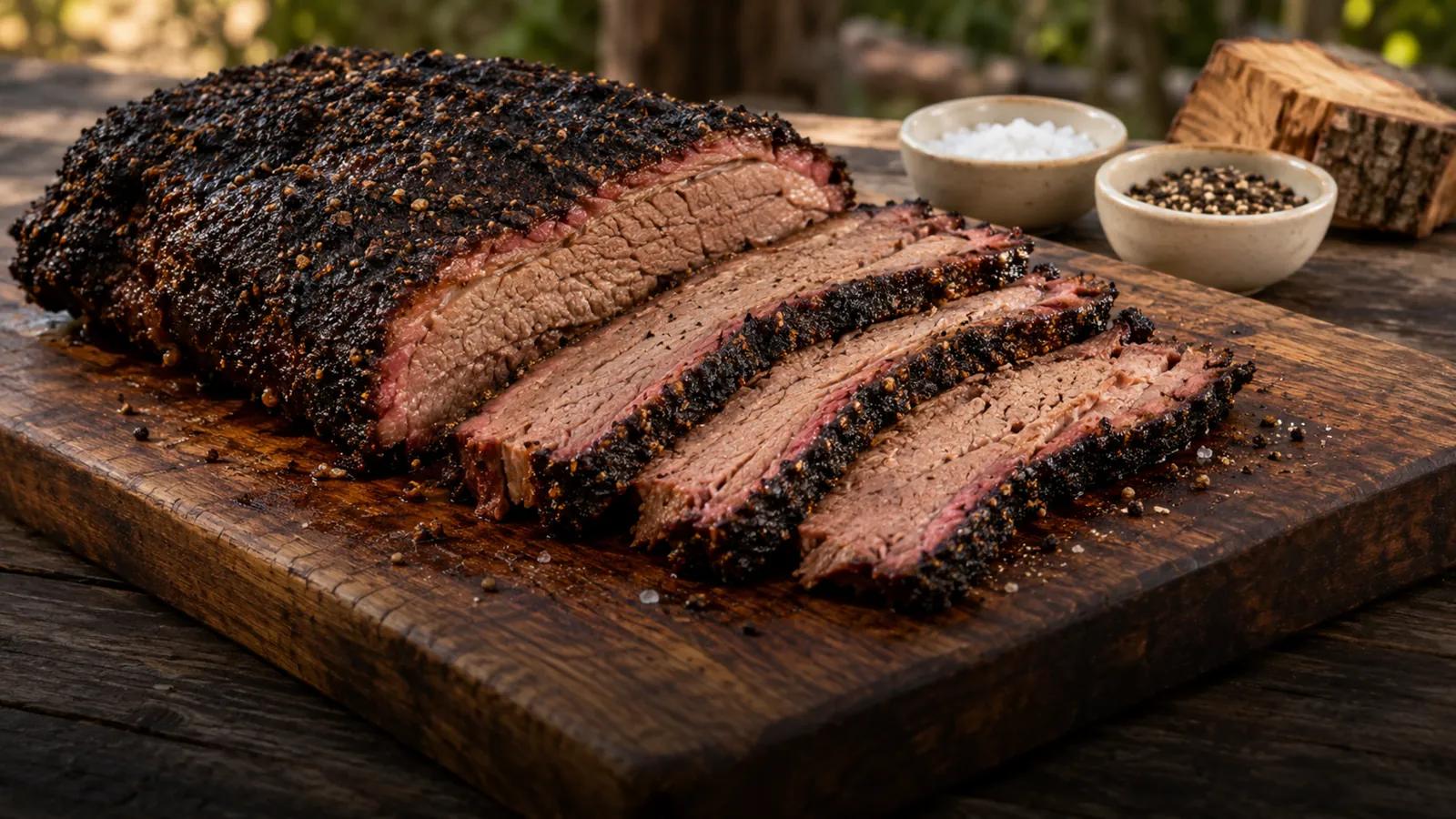
For this guide, our reference is brisket with recognizable beef flavor, oak smoke, and a salt-and-pepper foundation. We reviewed published rub formulations against that reference, beginning with the official Franklin Barbecue rub range. The useful question is how seasoning supports the finished brisket: smoke aroma, pepper heat, surface color, and bark texture each deserve separate attention.
A dark brisket can look convincing before you taste it. A peppery bite can feel intense without carrying much wood-smoke character. Those differences shaped how we evaluated traditional Austin-style smoke profiles and the commercial rubs commonly considered for them.
Our evaluation method: this is a source-based comparison of official ingredient information and brand descriptions. It includes a proposed cooking protocol for checking those ideas at home. It does not report a completed tasting panel, measured bark performance, or laboratory smoke analysis.
Affiliate disclosure
As an Amazon Associate, we earn from qualifying purchases. Affiliate purchases may earn us a commission at no extra cost to you. Read our full disclosure.
Our starting point: wood, fire, beef, and seasoning
Austin sits within a broader Central Texas barbecue tradition. We use a beef-and-oak reference to make this comparison useful, while recognizing that individual pitmasters have different recipes and preferences.
In his lesson on smoking wood, Aaron Franklin connects post oak with Central Texas barbecue and explains why seasoned wood matters. That supports using post oak as a reference fuel when it is available. Another cooking hardwood can produce enjoyable barbecue, but changing wood introduces another variable into a comparison.
Fire management deserves equal attention. Weber's smoking guidance warns that excessive wood and poor ventilation can lead to unpleasant flavors. A different seasoning cannot establish whether a fire was managed well.
Our preferred evaluation target is therefore clear: beef remains identifiable, smoke contributes aroma and depth, and seasoning adds a distinct but balanced layer. This is an editorial benchmark for comparing options, rather than a claim that every Austin brisket must taste identical.
The criteria we used to evaluate the rubs
We separated facts available from a label from questions that need a cooked sample. Ingredients can identify added sugar, charcoal, or smoked chile. They cannot tell us exactly how salty a slice will taste or which rub a group will prefer.
| Criterion | What we checked | What a cook must confirm |
|---|---|---|
| Seasoning foundation | Listed salt, pepper, and supporting spices. | Balance at the chosen application rate. |
| Smoke interpretation | Ingredients with their own smoky character. | Wood aroma, intensity, and lingering finish. |
| Appearance | Color-affecting additions, including charcoal. | Actual bark texture and surface development. |
| Flavor complexity | Garlic, onion, sugar, and other declared additions. | Whether beef remains easy to recognize. |
We also checked product identity. A brand name can cover several blends, and similarly named seasonings can differ substantially. The comparison below explains why each formulation is relevant without assigning unsupported numerical scores.
For a useful purchase decision, consider the question each ingredient list can answer. A short list makes a simpler reference; a longer list identifies more potential flavor contributors. Neither establishes quality by itself. We also avoid treating the absence of a named ingredient as proof of a particular cooked flavor, especially when a label groups ingredients under a general term such as spice.
Five rub options and the questions they help explore
These are candidates for different comparisons. Choose according to what you want to learn: a simpler seasoning foundation, extra savory ingredients, visual contrast, or a smoked-chile contribution.
Before shopping, check what is already in your cupboard. A familiar seasoning can be a useful reference if you record its ingredients and application. Start with the smallest practical comparison and choose package sizes you expect to use. When comparing value, consider net weight and the amount used per cook alongside the delivered price. A larger container is useful only when it fits your cooking habits. Keep the product label with your notes so later purchases can be compared accurately.
Franklin Barbecue: identify the exact blend
The Franklin range includes separate Salt & Pepper and Brisket Spice Rubs. Salt & Pepper lists those two ingredients and uses 16-mesh black pepper with coarse kosher salt. Brisket Spice Rub also contains garlic, onion, sugar, paprika, mushroom powder, tomato powder, mustard, and other ingredients.
For our chosen benchmark, Salt & Pepper provides the simpler reference. The Brisket blend is a separate candidate for exploring added savory complexity. Verify the exact product and size on the retailer listing; the general brand name does not identify the formulation.
View Franklin rub on AmazonKiller Hogs TX Brisket Rub: pepper with supporting aromatics
The official TX Brisket Rub page identifies salt, red and black pepper, garlic, onion, parsley, refined soybean oil, and an anticaking ingredient. The brand describes the flavor as savory.
We included it as a candidate for comparing a salt-and-pepper foundation with added aromatics. Red pepper also gives us a reason to record heat separately from smoke intensity. Its ingredient list supports that comparison; a cooked trial would establish the strength and balance at your chosen dose.
View Killer Hogs on AmazonHardcore Carnivore Black: separate color from smoke
The Hardcore Carnivore Black formulation includes salt, sugar, black pepper, garlic, onion, chili powder, and activated charcoal. The manufacturer highlights garlic and coarse black pepper and identifies charcoal as an addition for bark and crust.
That makes appearance an especially important variable. A darker surface cannot establish stronger wood-smoke flavor. For a tasting, we would record color separately, then assess aroma, texture, and finish. This candidate is useful when your question concerns presentation alongside a seasoned beef profile.
View Hardcore Carnivore on AmazonMeat Church Holy Cow: a Texas-style alternative
Meat Church describes Holy Cow BBQ Rub as Texas-style and recommends it for brisket, tri-tip, and steaks, among other foods. Its published ingredients are salt, spice, dehydrated garlic, and spice extractives.
We treated it as another beef-seasoning candidate, with a useful limit: the term spice does not disclose a complete recipe. We cannot infer exact pepper proportions, particle sizes, or comparative saltiness from that description. Those details require additional information or direct observation.
View Holy Cow on AmazonBad Byron's Butt Rub: account for smoked chile
The Bad Byron's website describes its original seasoning as an all-purpose blend with onion, garlic, salt, pepper, paprika, and chipotle. Its product description identifies chipotle as smoked jalapeño.
This is a useful distinction for smoke evaluation. A smoky impression could involve the seasoning as well as the cooking fuel. We would compare it with a simpler reference while holding the wood constant, then describe any smoked-chile character separately from the broader wood-smoke impression.
View Butt Rub on AmazonA repeatable cooking comparison to try at home
The following is a proposed protocol for checking seasoning differences. Start with two options so the cooking and tasting remain manageable. Add more products only when you can track the conditions consistently.
- Match the meat. Compare pieces from the same anatomical region with similar thickness and fat trim. A fatty point sample and a lean flat sample introduce differences that can overwhelm the seasoning question.
- Document the application. Record rub weight per kilogram of meat, binder, and time between seasoning and cooking. Equal rub weight does not mean equal salt. This practical trial compares products at a stated dose; isolating salt would require a different design.
- Keep the fuel consistent. Use the same wood supply and smoker, select one cooking target, and record actual grate temperatures. Note sample positions, fire adjustments, wrapping, and significant temperature swings.
- Match the finish and hold. Record how you judge tenderness, each piece's cooking time, and the resting procedure. Taste at similar serving temperatures. Unequal doneness can distract from the flavor comparison.
- Code and repeat. Serve samples under neutral labels and compare equivalent slices. Repeat on another day with positions changed. Distinctive colors may reveal a product, so coded samples reduce some expectations without guaranteeing a blind tasting.
Keep wood changes for a separate comparison. If you switch both seasoning and fuel, you can describe the finished meals, but you have less basis for attributing a difference to either ingredient.
A simple cook log
Give each sample one line in a notebook: code, exact rub name, meat weight, rub weight, seasoning time, grate position, temperature notes, wrapping time, finish, and hold. Add tasting notes on a separate line before revealing the codes. Photograph the product label so the record identifies the formulation you actually used.
How to interpret mixed results without overclaiming
Imagine that one sample has a darker exterior, another tastes more peppery, and both have a similar wood aroma. Those observations describe different dimensions. Calling the darkest sample the smokiest would combine them into a conclusion the notes do not support.
Likewise, a preference for one slice is useful information about that meal. Before extending it to the product generally, review whether the pieces had comparable fat, tenderness, and serving temperature. Ask tasters to explain their preference in ordinary words. Someone may favor the salt level while someone else prefers the texture.
When results disagree between cooks, keep both records. Look for a shared condition that changed, then choose one thing to check next time. If all samples seem harsh after an unusually difficult fire, repeat the cooking conditions before drawing a conclusion about the seasoning.
The most useful outcome is a narrower next question. You might keep a preferred blend and compare two application rates, or keep the seasoning fixed and explore another wood. State exactly what changed so your next cook builds on the previous one.
How to write useful smoke and bark notes
Taste a small portion of bark and interior meat separately, then a normal bite containing both. This helps you describe where an impression appears. Use the same prompts for each sample before discussing favorites.
Open the smoke-profile tasting checklist
- Aroma: describe the first smell before tasting.
- Smoke: record intensity and any lingering bitter impression.
- Seasoning: distinguish pepper heat, saltiness, sweetness, and garlic.
- Beef: note whether its flavor remains recognizable.
- Bark: describe surface texture independently of darkness.
Write observations before explanations. For example, a lingering bitter note is an observation; blaming a particular rub requires more evidence. If it appears across every sample, examine shared cooking conditions before changing products.
Keep preference separate from intensity, too. A stronger smoke impression may be enjoyable to one person and distracting to another. Recording both the description and the preference gives you something practical to use when cooking for the same guests again.
Austin-style smoke profile questions
Which Franklin rub is the simplest reference?
Franklin's Salt & Pepper Spice Rub lists salt and pepper. Its Brisket Spice Rub contains additional ingredients. Check the exact label when choosing a reference or ordering through a retailer.
Does black bark prove stronger smoke flavor?
Color alone cannot answer that question. Ingredients such as activated charcoal affect appearance. Evaluate aroma, flavor, and texture separately, and use consistent cooking conditions when comparing rubs.
Can I compare these rubs on a pellet grill?
Yes, as a comparison on your equipment. Keep the pellet blend, settings, and meat preparation consistent. Record those details so the result remains specific to your setup rather than assuming it reproduces an offset-smoker cook.
Which rub won this evaluation?
Our source review identifies candidates and formulation differences. A winning flavor requires cooking and tasting evidence. For a first comparison, choose a simple salt-and-pepper reference and one blend that changes a clearly identified ingredient category.
Choose one question for your next brisket cook
Start with what you want to understand. Compare a simple reference with added aromatics, or explore how a charcoal-containing blend changes your perception of bark. Keep the fuel steady, record the application, and let your tasting notes guide the next experiment.
If your question is about a pepper-based blend with supporting aromatics, review Killer Hogs' listed ingredients above. Confirm the current product size and total price before ordering.
Explore Killer Hogs TX Brisket RubKeep building your barbecue skills
Every Easy Function product ships with a free lifetime replacement warranty.