Smoking meat looks simple.
You set the smoker, add wood, and wait.
But if your time or temperature is off, the meat can turn dry, tough, or unsafe.
This guide makes smoking meat easy to understand.
It breaks down the times, temps, and tips you need to get great results each time.
The goal is to help you cook tender, juicy meat without stress.
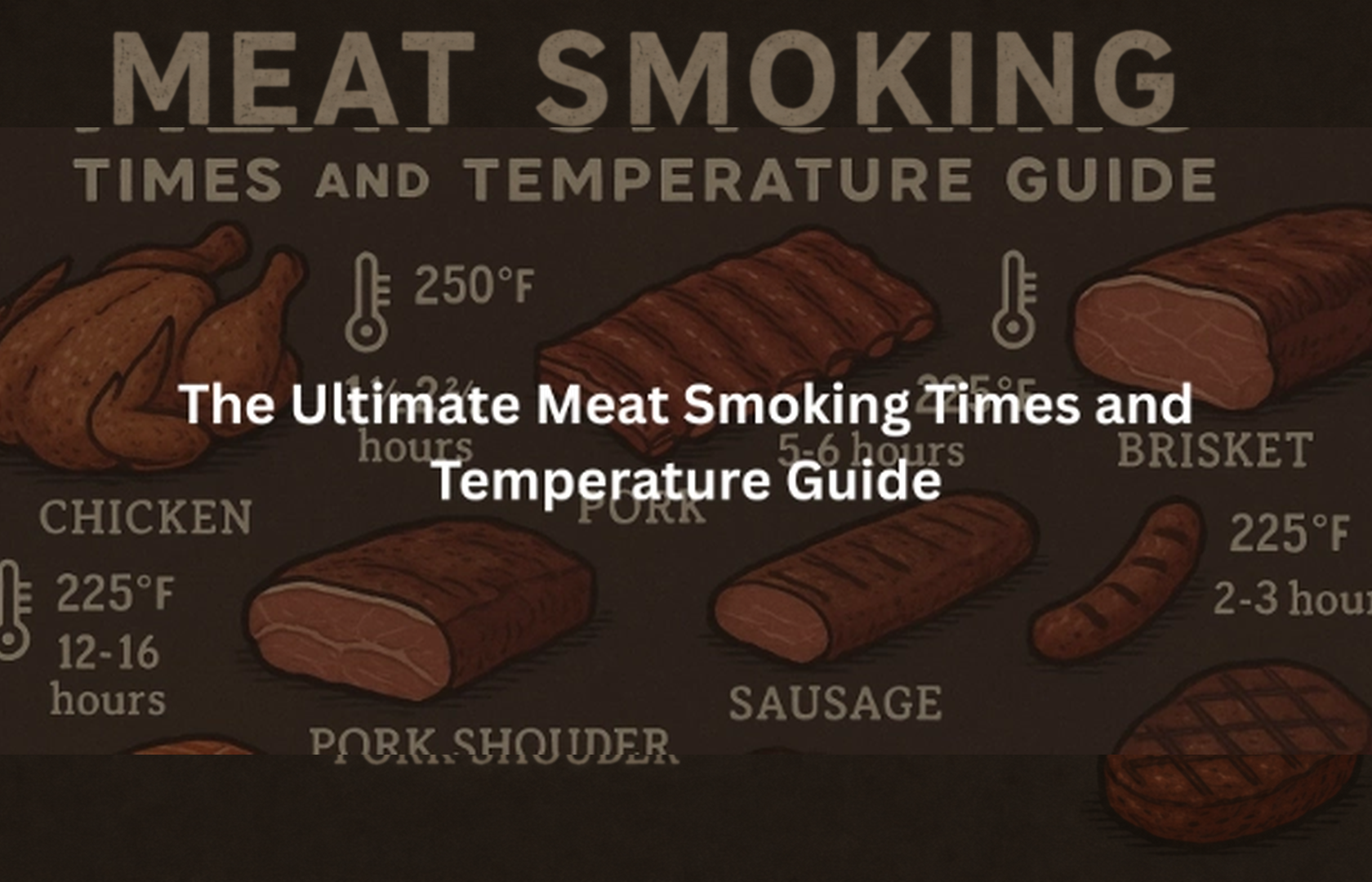
When people search for The Ultimate Meat Smoking Times and Temperature Guide, they want clear numbers, simple steps, and safe cooking ranges.
They also want to know how long each cut needs and what temperature to use for low and slow cooking.
This guide covers all of that in a simple, friendly way.
Subscribe to Our YouTube Channel :)
Why Smoking Temperature Matters
The temperature you set on your smoker controls how the meat cooks.
Low heat breaks down fat and connective tissue.
This is what makes meat soft and full of flavor.
If the heat is too high, the outside can burn before the inside is done.
Most meats smoke best between 225°F and 250°F.
This range gives you the juicy texture people love.
It also helps the meat absorb smoke in a slow, steady way.
If you want a quick way to compare temps for different cuts, you can also check the Smoking Times and Temps Cheat Sheet here:
Safe Internal Temperatures
Even if the outside looks great, the inside must reach a safe level.
Every type of meat has a minimum internal temperature:
-
Chicken and turkey: 165°F
-
Pork shoulder and pork butt: 195–205°F for pulling
-
Pork chops and loin: 145°F
-
Brisket: 200–205°F
-
Ribs: 190–203°F
-
Beef roast: 135–145°F depending on style
-
Fish: 145°F
These numbers keep your food safe and help you get the texture you want.
How Long You Should Smoke Each Type of Meat
There is no single time that works for every smoker.
Weather, wood, and the thickness of the meat all make a difference.
Still, there are helpful averages that work for most people.
Brisket
Brisket needs patience.
At 225°F, it usually takes 1 to 1.5 hours per pound.
A 12-pound brisket may take 12–16 hours.
You know it is done when it reaches 200–205°F and feels soft when you probe it.
Pork Shoulder (Pork Butt)
This cut is great for pulled pork.
At 225–250°F, smoke it for 1.5 to 2 hours per pound.
It needs to reach 195–205°F so the fat melts and the meat shreds.
Ribs
There are many rib styles, but most follow a similar pattern.
At 225°F, ribs take around 5–6 hours.
Many cooks follow the “3-2-1 method”, but the exact time depends on your rack size.
Ribs are done when the meat pulls back from the bone and hits 190–203°F.
Chicken
Chicken cooks faster.
A whole chicken smoked at 250°F takes 3–4 hours.
Chicken breasts take about 1 hour.
No matter the cut, the internal temperature must be 165°F.
Turkey
Turkey is lean, so low heat helps it stay juicy.
At 250°F, a whole turkey needs 30–40 minutes per pound.
A 12-pound turkey may take 6 hours.
Always check for 165°F in the thickest part.
Beef Roast
Roasts like chuck or round smoke well between 225–250°F.
Most take 4–6 hours depending on size.
Internal temperature depends on the style:
135°F for medium rare or 145°F for medium.
Fish
Fish cooks fast, so watch it closely.
At 225°F, most fillets take 1 hour or less.
Once it reaches 145°F, it is ready.
Keeping Track of Times and Temps
Meat smoking includes many numbers.
Remembering them during a cook can be tough.
A simple way to make things easier is to keep a quick-look guide near your grill.
One helpful tool for this is the Easy Function Meat Smoking Guide Magnet, which lists times, temps, and meat types in a clear, easy format.
It sticks to most metal surfaces, so you can check it while you cook without pulling out your phone.
Buy Easy Function Meat Smoking Guide - Amazon Canada
Buy Easy Function Meat Smoking Guide - Amazon USA
How to Control Your Smoker Temperature
Holding steady heat is key.
If the temperature jumps too high or drops too low, the meat will not cook right.
Here are a few simple ways to keep your smoker stable:
Keep the lid closed as much as possible.
Add small amounts of wood instead of large piles.
Check your vents to control airflow.
Do not overload the smoker.
Slow, even heat gives the best texture and the most smoke flavor.
If you want a simple walk-through on running your smoker, this guide helps:
👉 How to Use Smoker for BBQ Grill Cooking
Choosing the Right Wood for the Right Meat
Wood adds flavor, and every type tastes different.
Hickory is strong.
Applewood is sweet.
Oak is balanced and works with almost anything.
Pork loves fruit woods.
Brisket works well with oak or hickory.
Chicken tastes great with maple or apple.
You do not need to overthink it.
Pick one wood and learn how it behaves.
Over time, you will learn your favorite combos.
Letting the Meat Rest
Once the meat reaches the right temperature, let it rest before slicing.
This helps the juices settle so the inside stays moist.
Brisket and pork shoulder can rest for an hour.
Chicken or ribs need only 10–20 minutes.
Resting is simple, but it makes a big difference in tenderness.
Final Thoughts
Smoking meat takes time, but it does not have to be hard.
When you follow safe internal temperatures and watch your cooking range, you get better results every time.
Keep this guide close when you smoke brisket, ribs, pork shoulder, chicken, turkey, or fish.
Over time, you will learn how your smoker behaves and how each meat responds.
Click the image to check out our products and explore tools that make barbecue simple and fun.
P.S - After you read The Ultimate Meat Smoking Times And Temperature Guide, check out The Best Guide To Grilling Bone In Pork Chops On A Gas Grill for another easy way to cook juicy pork at home.
Every Easy Function product ships with a free lifetime replacement warranty.