The quick answer
How do you fix rust on a Blackstone grill top?
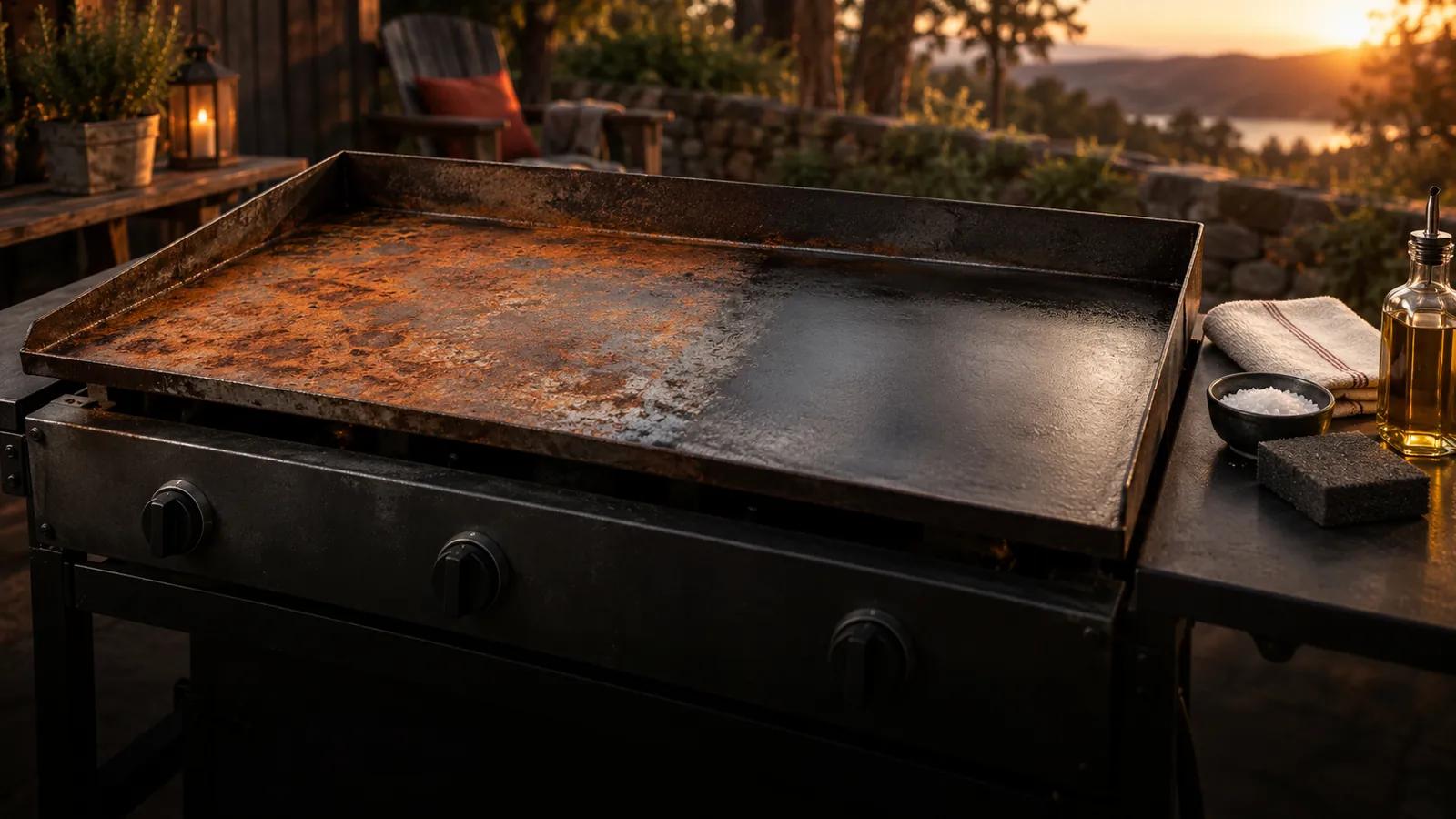
For a standard steel Blackstone top, scrape away loose rust, scrub the affected spots with cooking oil and a griddle stone, and wipe off all debris. Use minimal water to clear any residue, then dry fully. Re-season the clean steel with thin coats of oil before cooking, and keep it dry, lightly oiled, and covered between meals.
Lifting the hood and finding orange patches can spoil your cookout plans. But surface rust usually means your griddle needs some care, rather than a whole new top. The key is to remove the rust before rebuilding the protective seasoning.
At Behind the Grill, we use Blackstone's official rust-removal method as the starting point. Here is how to work through the repair and keep moisture from undoing your work.
Check your surface first: This guide covers traditional, uncoated steel Blackstone griddle tops. E-Series and other coated models need different care. Do not use metal scrapers, abrasive blocks, or this high-heat seasoning process on a coated surface. Follow your model's manual.
Affiliate disclosure: Some links below are affiliate links. As an Amazon Associate, we earn from qualifying purchases at no extra cost to you.
Check whether you have rust or worn seasoning
A healthy steel cooktop does not have to be jet black from corner to corner. Brown areas can be normal seasoning. Look at the texture and any loose material before you start scrubbing.
| What you see | Likely issue | Next step |
|---|---|---|
| Orange or reddish powder with rough patches | Surface rust | Remove it, clean the steel, and re-season. |
| Smooth brown or black areas without loose flakes | Seasoning that varies in color | Keep up normal cleaning and oiling. |
| Black chips or a sticky, gummy surface | Loose seasoning or excess oil buildup | Remove loose buildup and apply thinner seasoning coats. |
| Deep pits, cracks, or holes | Possible damage beyond surface rust | Stop and ask Blackstone about repair or replacement. |
Seasoning is a thin layer of oil bonded to steel by heat. It helps block moisture and makes food less likely to stick. Rust removal takes away some of that layer, so the repair needs fresh seasoning at the end.
Gather your rust-removal supplies
Set everything beside the griddle before you begin. You will need:
- A flat metal scraper made for steel griddles.
- A griddle stone or cleaning block suitable for uncoated steel.
- Food-grade cooking oil, such as canola or vegetable oil.
- Paper towels or clean cotton cloths.
- A little clean water, long tongs, and heat-resistant gloves for seasoning.
Blackstone also lists steel wool and medium-grit sandpaper as rust-removal options. Any abrasive can remove seasoning, so save it for restoration. Routine cleanup should be gentler.
For the scrubbing stage
EarthStone Grill Cleaning Block
This bristle-free abrasive block is made for surfaces including flat tops and griddles. For this repair, use it only on suitable uncoated steel, follow the package directions, and remove all block dust before re-seasoning.
View the EarthStone cleaning blockRemove rust from the Blackstone top
Start with a cool griddle, the burners off, and the gas supply shut off. If you have just used it, wait until the plate has cooled before working on the rust.
- Scrape loose rust and flakes. Hold the scraper at a shallow angle and use steady strokes. Clear away material that lifts off. Avoid digging a corner into the steel.
- Add a little cooking oil. Spread it over the rusty patches to help you scrub and collect the loose debris.
- Work the rusty areas. Use your suitable griddle stone with gentle, even pressure. Wipe away the dirty oil so you can check your progress. Repeat as needed.
- Clear all residue. Use fresh towels to lift away rust particles, old oil, and abrasive dust. Use minimal clean water to remove anything left, then wipe again.
- Dry the plate completely. Check the corners, edges, and grease opening. Move straight into seasoning once the top is clean and dry.
Your goal is a clean, stable cooking surface with no loose rust or cleaning grit. You do not need to grind the whole top into shiny silver metal. If a rough orange patch remains, work on that patch again before adding seasoning.
Skip the quick fixes: Heating alone will not clear away rust. Do not coat over it with oil or use automotive rust converters, paint, or nonfood protective sprays on the cooking plate.
Re-season the clean steel with thin oil coats
Restore seasoning on the griddle using its own burners. Follow Blackstone's seasoning instructions and your owner's manual. Use a propane griddle outdoors in a well-ventilated space.
- Heat the dry top. Light the griddle as directed in the manual. Heat on high until the plate starts to change color.
- Spread a very thin oil layer. Use tongs and a towel to coat the cooking area and inner walls. Wipe away puddles; the top should have a light sheen.
- Let the coat bond. Heat until it stops smoking. Blackstone gives about 15 minutes as a guide, but weather and griddle size affect timing.
- Build more thin layers. For a full restoration to bare steel, follow the initial seasoning process of three to five coats. Avoid leaving the empty top heating long after the smoke stops.
- Cool and protect. Shut off the burners and gas supply. Once cool, wipe on a thin protective film of cooking oil before covering.
Canola and vegetable oil are practical choices. A thick oil coat can leave sticky patches, so adding more oil at once will not speed up the job. Corners may stay lighter at first and darken with regular cooking.
Keep your hands away from the hot plate. Long tongs and properly rated BBQ gloves help with handling tools; gloves do not make hot steel safe to touch. Handle and dispose of oily towels as directed in the manual.
Prevent rust after every cook
Moisture can reach steel through worn seasoning. Leftover food, standing water, and wet storage all add to the problem. A short cleanup after dinner helps protect the surface you just restored.
- Remove food while the top is warm. Turn off the burners and gently scrape scraps toward the grease opening.
- Use small amounts of water for stuck bits. Watch for steam. Do not flood the plate or pour cold water onto very hot steel.
- Wipe and dry fully. Clear dirty water and crumbs before putting the griddle away.
- Oil once cool. Spread a very thin film over the cooking surface and inner walls.
- Cover a cool, dry griddle. Use a fitted hood or hard cover with a suitable soft cover. If you use only a soft cover, tent its center so rain runs off.
- Check during storage. After wet weather or a long break, look for trapped moisture and early orange spots.
For a fuller cleanup routine, read our Blackstone griddle cleaning guide. For outdoor storage, see how to keep a Blackstone grill from rusting.
Build your care kit
EWFEN griddle accessories
If your tools need replacing, compare this griddle accessory set with what you already own. Check the included scraper and other pieces before buying. Choose tools suited to your steel top and keep them clean and dry between cooks.
Explore EWFEN griddle accessoriesCommon questions about Blackstone rust
Can I cook on the top while it is rusty?
Remove the rust and loose debris first, then restore the seasoning before cooking. Do not use food to scrub the plate or try to hide rusty patches beneath fresh oil.
Should I use vinegar and baking soda?
We use Blackstone's oil-and-abrasive method for this job. Mixing vinegar and baking soda reduces their acid and alkaline action, while vinegar can also affect seasoning. Avoid long acid soaks and follow the care directions for your model.
Why does rust come back under a cover?
A cover cannot fix a damp cooktop. Trapped moisture, leaks, or rain pooling above the plate can allow rust to return. Dry and oil the steel first, then check that your cover sheds water.
Do I need to strip the whole top for one rusty spot?
Start with the affected area and remove the rust completely. Keep sound seasoning where possible and re-season the exposed steel. Widespread rust or loose seasoning across the plate may need a full restoration.
When should I replace the griddle top?
Orange surface rust alone does not mean you need a new top. If cleaning reveals deep pits, cracks, holes, or other damage, send photos to Blackstone support and ask whether the plate can still be used.
Make the next cleanup easier: Keep a scraper, towels, and cooking oil close by. A few minutes spent cleaning, drying, and oiling after each meal helps protect your repair and keeps the griddle ready for the next cookout.
Every Easy Function product ships with a free lifetime replacement warranty.