The quick answer
What is the best way to clean a Blackstone griddle?
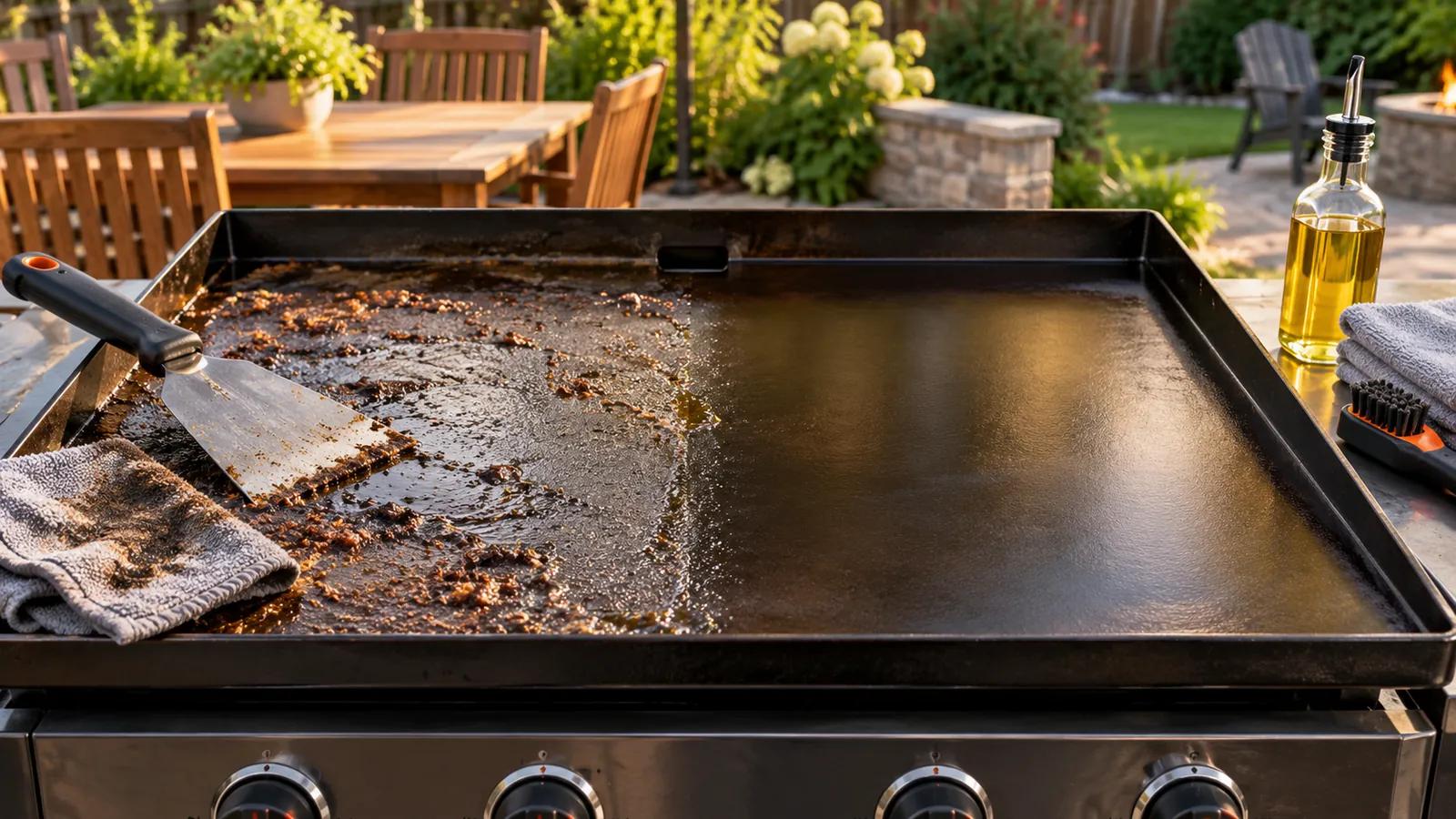
For a seasoned steel Blackstone, scrape off food while the plate is warm, loosen stuck bits with a little water, and wipe it completely dry. Once cool, spread a very thin coat of cooking oil over the surface. Clean after each cook, saving abrasive rust removal and full reseasoning for when they are needed.
A good cleanup should leave your griddle ready for breakfast, burgers, or the next family cookout. At Behind the Grill, we start with Blackstone's official care guide. The dark finish is seasoning: oil bonded to the steel by heat. Keep that sound layer while removing leftover food and grease.
Check your surface first. These steps cover traditional, seasoned steel gas griddles. E-Series and other coated plates need their own care routine. Avoid metal scrapers, abrasive stones, and high-heat seasoning on those surfaces. Use the cleaning method in your model's manual.
Affiliate disclosure: As an Amazon Associate, we earn from qualifying purchases through links in this guide, at no extra cost to you.
Gather a few simple cleaning supplies
Keep these within reach before you start. A flat scraper and clean towels do most of the work.
- A metal griddle scraper: Choose a straight edge suited to a steel flat top.
- A squeeze bottle of warm water: Use it to wet stubborn spots in small amounts.
- Paper towels or clean cotton cloths: Keep fresh ones for drying and oiling.
- Cooking oil: Canola or vegetable oil works for a thin protective coat.
- Long tongs and heat-resistant gloves: Keep your hands away from the warm plate.
Tool option for steel flat tops
EWFEN griddle accessories kit
This set includes a scraper, spatulas, tongs, and squeeze bottles. Those pieces can cover scraping, spot-cleaning, and cooking. If you already own them, there is no need to buy a full kit. Use only tools suited to your plate.
View the EWFEN kit on AmazonHow to clean your Blackstone after each cook
Start once the food is off the plate. Let fierce cooking heat fade before you add water or wipe the surface.
- Shut off the heat. Turn off the burners and gas supply as your manual directs. Let the plate cool until it is warm.
- Scrape away food and grease. Hold the scraper at a shallow angle. Push loose scraps toward the grease opening. Keep the edge flat rather than digging in a corner.
- Spot-clean stuck bits. Add a little warm water to the dirty areas. Let it loosen the residue, then scrape gently. Stand back from rising steam and avoid flooding the top.
- Wipe and dry. Lift away dirty water and loosened food with towels held in long tongs. Check the edges and corners for moisture.
- Oil the cool plate. Spread a very thin film of cooking oil over the clean surface and inner walls. Wipe away visible pools.
- Check the grease cup. Once the grease has cooled, empty the cup or replace its liner. Clear food from the drain opening before putting the griddle away.
For more everyday care tips, see our guide to cleaning a Blackstone after cooking.
Choose the right fix for the mess
A sticky patch, loose black flakes, and orange rust need different care. Check what is on the surface before reaching for an abrasive block.
| What you see | What to do |
|---|---|
| Food scraps or cooked-on sauce | Scrape gently, spot-clean with warm water, wipe dry, and oil lightly. |
| Brown, gummy oil buildup | Remove the thick, tacky layer, then rebuild seasoning with thinner oil coats. |
| Loose seasoning flakes | Remove loose material, clean away debris, dry, and reseason the affected steel. |
| Orange rust or rough rusty patches | Remove rust with a scraper, cooking oil, and a suitable griddle stone. Clear all grit, dry, and reseason. |
For rust, work with a cool plate and the gas off. Save a griddle stone for restoration, since it removes seasoning along with buildup. Our guide to cleaning rust off a Blackstone walks through that repair.
When should you use soap?
Wash a brand-new steel griddle with mild dish soap and water before its first seasoning. Rinse away the soap and dry the plate fully. This clears dust and residue from shipping and storage.
For routine cleanup on seasoned steel, follow Blackstone's water-and-scraper method. Keep household degreasers and oven cleaners off the cooking plate unless your manual allows a specific product. You can clean the cool exterior with mild detergent and a soft cloth, then wipe it dry.
Reseason after rust removal or worn seasoning
A light storage coat of oil is different from building fresh seasoning. After a full restoration, follow Blackstone's seasoning instructions and your owner's manual.
- Start clean and dry. Remove food, rust dust, loose flakes, and any cleaning grit.
- Heat the steel. Light the griddle as directed and heat on high until the plate begins to change color. Use gas griddles outdoors.
- Spread a very thin oil coat. Use tongs and a towel to cover the cooking surface and inner walls. Wipe out puddles.
- Let that layer finish smoking. Blackstone gives about 15 minutes as a guide. Watch the surface rather than relying only on a timer.
- Build thin layers. Blackstone recommends three to five rounds for initial seasoning. Then shut off the heat and gas supply and allow the plate to cool.
Avoid adding thick oil coats to speed things up. They can stay gummy when the oil does not bond fully.
For handling tools near heat
RAPICCA heat-resistant BBQ gloves
These insulated gloves have long cuffs for added coverage. Pair them with long tongs when spreading oil. Follow their use limits, keep clear of steam, and never treat gloves as permission to touch the hot plate.
View RAPICCA gloves on AmazonKeep moisture off between meals
Once the griddle is cool, clean, dry, and lightly oiled, close its hood or fit the correct hard cover. Add a properly fitted weather cover for outdoor storage. Keep water from pooling on top, and check underneath after heavy rain or damp weather.
A cover helps, but it cannot fix a wet cooking plate. Dry the surface before covering it. For more ways to protect the finish, read our guide to fixing Blackstone rust and preventing damage.
Blackstone griddle cleaning FAQs
Should I clean my Blackstone hot or cold?
For everyday cleanup, use the plate's remaining warmth after cooking. Let it cool from cooking heat first, and keep hands clear. Rust removal is a separate job that starts with a cool plate.
Do I need to reseason after every use?
You usually need a cleanup and thin protective oil film. Save a full seasoning session for a new steel top or a surface that needs restoration.
Why is my griddle sticky after cleaning?
Thick oil or oil that did not bond fully can leave tacky buildup. Remove that residue and rebuild with very thin coats, letting each finish smoking before adding another.
Can I use these steps on a Blackstone E-Series?
Follow the coated plate's manual instead. Blackstone advises mild dish soap and gentle cleaning for those surfaces. Metal scrapers, abrasive pads, and the steel seasoning method can damage the coating.
Keep your scraper, water bottle, and towels close to the cooking station. A regular cleanup makes it easier to spot trouble early and have the griddle ready for your next meal.
Every Easy Function product ships with a free lifetime replacement warranty.