A grill brush works best immediately after a cookout, not worse.
When the grates are still warm, grease and food residue are softer and easier to remove, which makes brushing faster and more effective.
Most grill owners wait until the next day.
That is where cleaning becomes harder.
Burnt-on grease turns into a stubborn layer that requires more force, more time, and sometimes extra tools.
Subscribe to Our YouTube Channel :)
Why Cleaning Right After Grilling Matters
Heat is your advantage.
Right after cooking, the grill grates are still warm enough to loosen stuck-on food.
This makes brushing less about scraping and more about light cleaning.
If you wait too long, grease cools and hardens.
It bonds to the metal surface, especially on stainless steel and cast iron grates.
At that point, even a strong brush struggles.
Cleaning right after grilling also helps prevent:
-
Flavor transfer to your next cook
-
Grease buildup that can cause flare-ups
-
Long-term grill wear
For a deeper look at safe and effective tools, this guide on top stainless steel grill brushes for safe clean grilling explains what separates good brushes from risky ones.
Does a Grill Brush Work on a Hot vs Cold Grill?
A grill brush works in both cases, but the difference is noticeable.
On a Warm Grill
-
Grease is soft and lifts easily
-
Fewer strokes needed
-
Less pressure required
-
Better overall cleaning
On a Cold Grill
-
Grease becomes sticky and hardened
-
Requires scraping, not just brushing
-
Takes longer and feels less effective
The takeaway is simple.
A grill brush still works after a cookout, but it works best within 10 to 15 minutes after cooking, once flames are off but the grates are still warm.
How Well Grill Brushes Actually Remove Grease and Debris
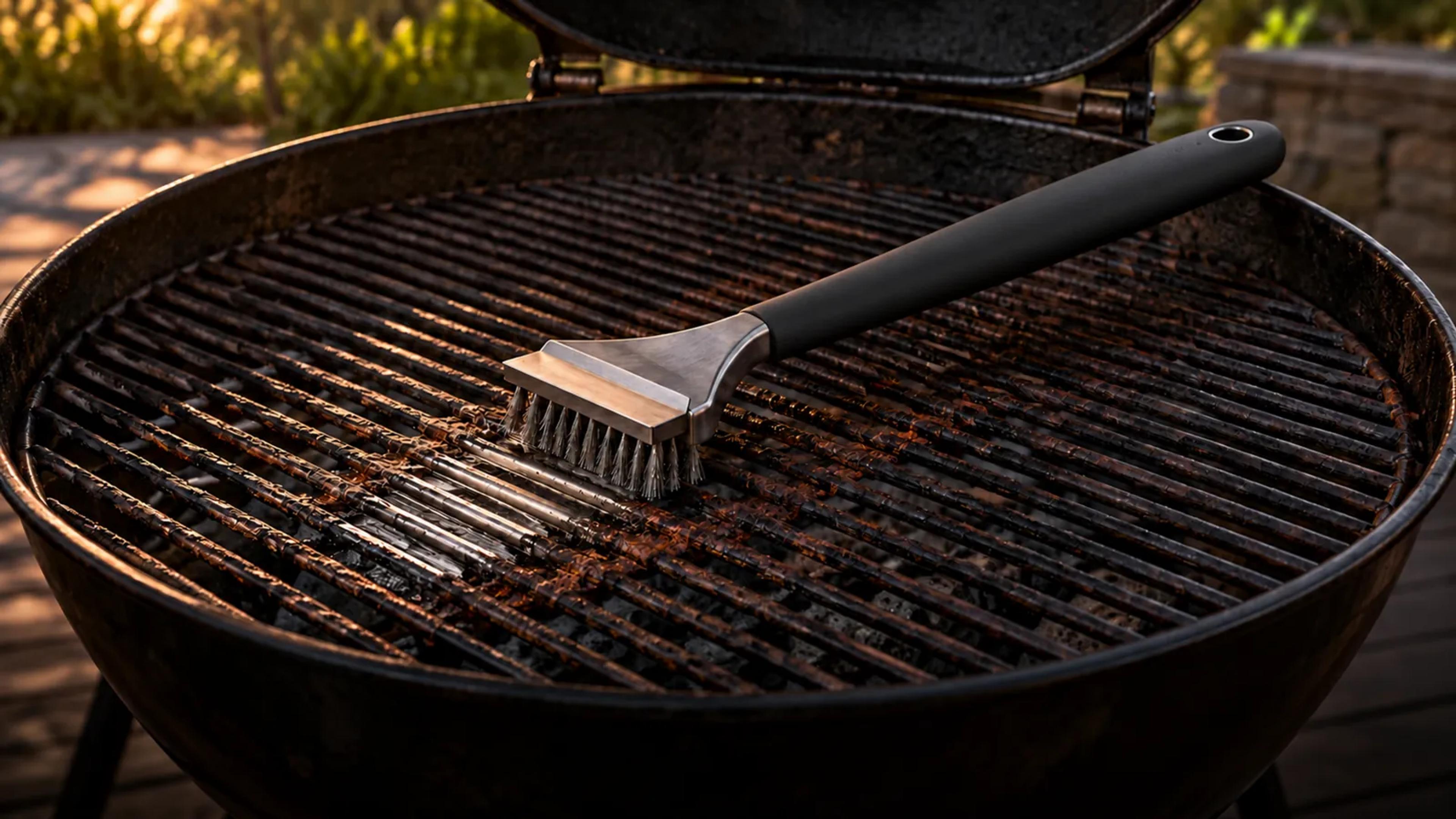
A grill brush is not just for loose crumbs.
A good one removes three things:
-
Surface debris, like burnt food bits
-
Grease film, especially when warm
-
Carbon buildup, with repeated use
But there is a limit.
A brush will not fully deep-clean heavy grease layers in one pass.
It works best as part of a routine.
Clean lightly after each cook, and you avoid heavy buildup later.
Best Grill Brushes Worth Using After a Cookout
Not all brushes perform the same when used right after grilling.
Some are better on warm grates, while others handle tougher residue.
GRILLART Grill Brush and Scraper
The GRILLART Grill Brush and Scraper stands out for post-cook cleaning because it combines stiff bristles with a metal scraper.
It works well when grease is still soft.
The bristles sweep away residue, while the scraper handles stuck-on bits.
What we like
-
Strong scraping edge for stubborn spots
-
Dense bristles clean multiple grate sides at once
-
Good reach for larger grills
The downside
- Like most bristle brushes, it requires careful inspection to avoid loose wires
Buy GRILLART Grill Brush and Scraper on Amazon
BBQ-Aid Grill Brush and Scraper for Barbecue
The BBQ-Aid Grill Brush and Scraper for Barbecue takes a more traditional approach.
It uses stainless steel bristles with a solid wooden handle.
It performs best on warm grills, where light brushing removes most residue quickly.
What we like
-
Comfortable grip, especially during longer cleaning
-
Balanced pressure control
-
Reliable for everyday use
The downside
- Not as aggressive on heavy buildup compared to wider scraper designs
Buy BBQ-Aid Grill Brush and Scraper for Barbecue on Amazon
GRILLART Grill Brush and Scraper Bristle Free
The GRILLART Grill Brush and Scraper Bristle Free is designed for safety first.
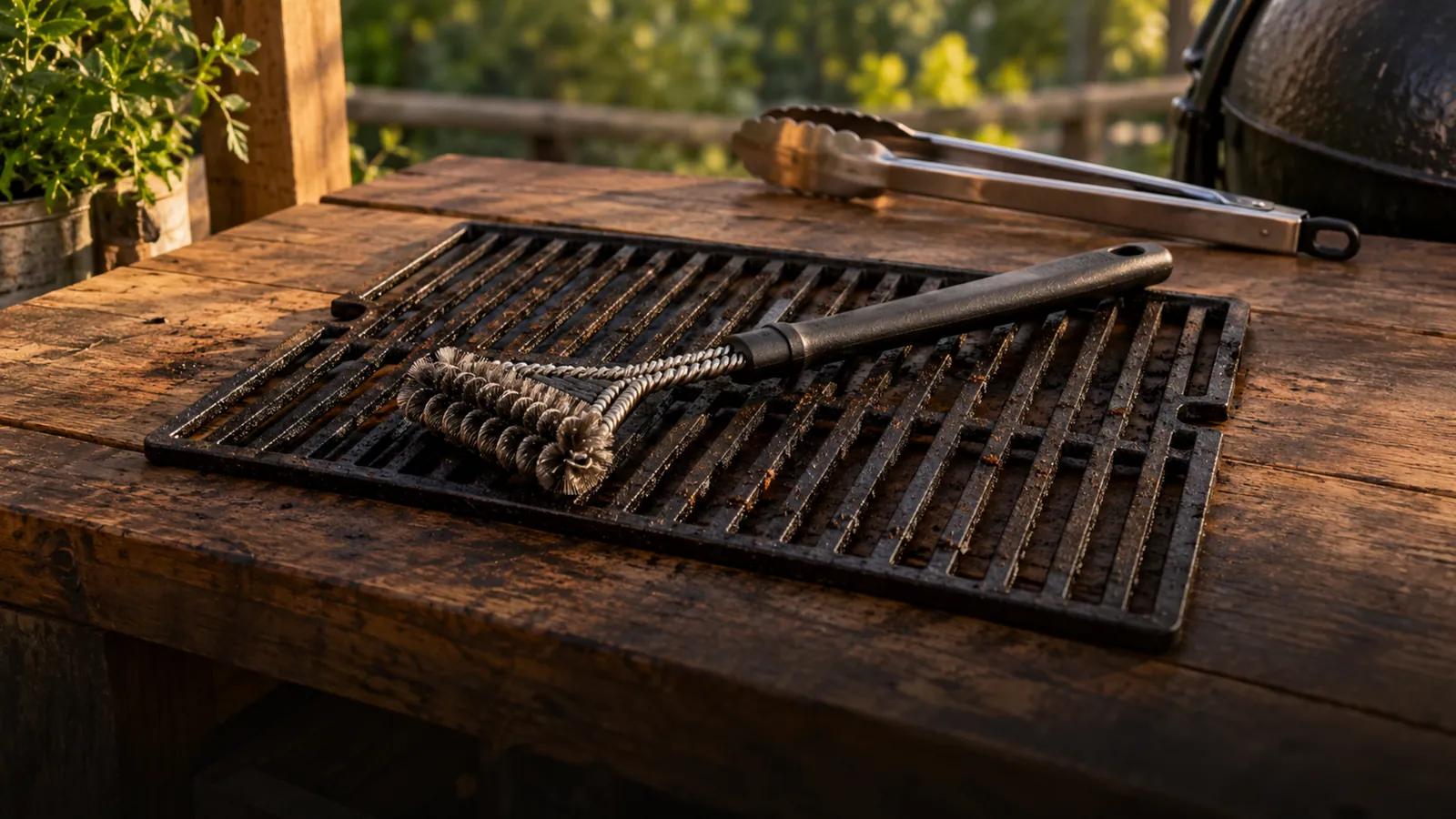
Instead of bristles, it uses coiled wire.
It works well right after a cookout but requires a slightly different technique.
You need slower, more deliberate strokes.
What we like
-
No bristle shedding risk
-
Safer for frequent use
-
Works well on warm grates
The downside
- Takes more passes to remove tough debris compared to bristle brushes
Buy GRILLART Grill Brush and Scraper Bristle Free on Amazon
How to Properly Use a Grill Brush After Cooking
Using a grill brush right after a cookout is simple, but small mistakes reduce effectiveness.
Start by turning off the grill and letting the flames die down.
Wait a few minutes so the grates are hot but not dangerously glowing.
Then:
-
Brush in steady, straight strokes
-
Focus on one section at a time
-
Use light pressure first, then increase if needed
-
Wipe the grates with a damp cloth if possible
This approach removes most residue without damaging the surface.
Common Mistakes That Make Grill Brushes Less Effective
Even a good brush can feel useless if used the wrong way.
The most common issues include:
-
Waiting until the grill is completely cold
-
Using too much force too early
-
Skipping regular cleaning after each cook
-
Using worn-out brushes
Consistency matters more than strength.
A quick clean after every cook keeps your grill in better shape than occasional deep scrubbing.
Safety Considerations: Bristles vs Bristle-Free Options
Grill brushes work well after a cookout, but safety matters just as much as cleaning power.
Bristle brushes, like the GRILLART Grill Brush and Scraper and the BBQ-Aid Grill Brush and Scraper for Barbecue, clean faster.
Buy GRILLART Grill Brush and Scraper on Amazon
Buy BBQ-Aid Grill Brush and Scraper for Barbecue on Amazon
They dig into grease and carbon with less effort.
But there is a known risk.
Over time, metal bristles can loosen and stick to the grates.
That risk is small if you inspect your brush regularly.
Still, it is something to take seriously, especially if you grill often.
Bristle-free options, like the GRILLART Grill Brush and Scraper Bristle Free, remove that concern entirely.
Instead of sharp bristles, they use coiled wire or loops.
Buy GRILLART Grill Brush and Scraper Bristle Free on Amazon
The trade-off is simple:
-
Bristle brushes clean faster
-
Bristle-free brushes clean safer, but slower
For most backyard grillers, either option works after a cookout.
It comes down to how much you value speed versus peace of mind.
When a Grill Brush Is Not Enough
A grill brush works best for routine cleaning.
But sometimes, it is not enough.
If you skipped a few cleaning sessions, grease can build up into a thick, sticky layer.
At that point, brushing alone struggles.
You may notice:
-
Dark, shiny grease patches that do not come off
-
Strong burnt smells during preheating
-
Uneven heat due to blocked grates
In these cases, you may need:
-
A deeper cleaning session with heat and scraping
-
A grill-safe degreaser
-
Repeated brushing cycles instead of one pass
A brush is still part of the solution, but it works best when used consistently, not occasionally.
Final Verdict: Should You Clean Right After a Cookout?
Yes.
A grill brush absolutely works after a cookout, and it is the best time to use it.
Cleaning while the grill is still warm:
-
Makes grease easier to remove
-
Reduces effort and time
-
Keeps your grill in better condition long term
If you wait until the next day, the same brush will feel less effective.
Not because the tool failed, but because the conditions changed.
A simple habit, brushing for one to two minutes after every cook, makes a noticeable difference.
FAQ: Does a Grill Brush Work After a Cookout?
Is it safe to use a grill brush right after cooking?
Yes, as long as the flames are off and you wait a few minutes. The grill should be warm, not dangerously hot.
How long should I wait before brushing the grill?
Wait about 5 to 10 minutes after turning off the grill. This keeps the surface warm but safer to clean.
Does a grill brush remove grease completely?
It removes most surface grease, especially when warm. But heavy buildup may need deeper cleaning.
Are bristle-free grill brushes effective after a cookout?
Yes, but they require more passes. They are safer but slightly less aggressive than bristle brushes.
Can I clean my grill the next day instead?
You can, but it will take more effort. Grease hardens as it cools, making brushing less effective.
P.S. - If you want a deeper look at how grill brushes handle grease over time, this guide on can a grill brush clean grease breaks it down step by step.
Every Easy Function product ships with a free lifetime replacement warranty.