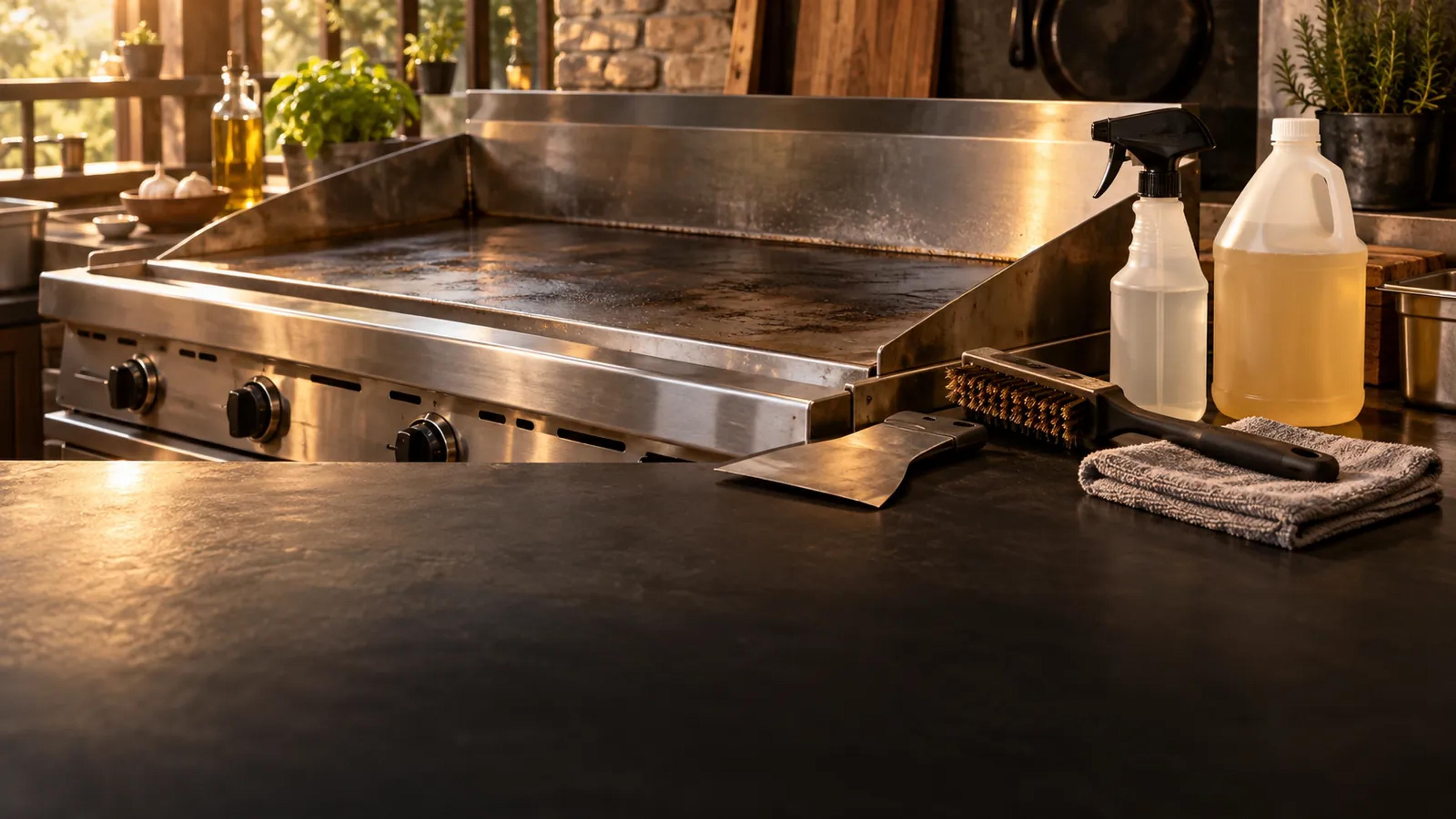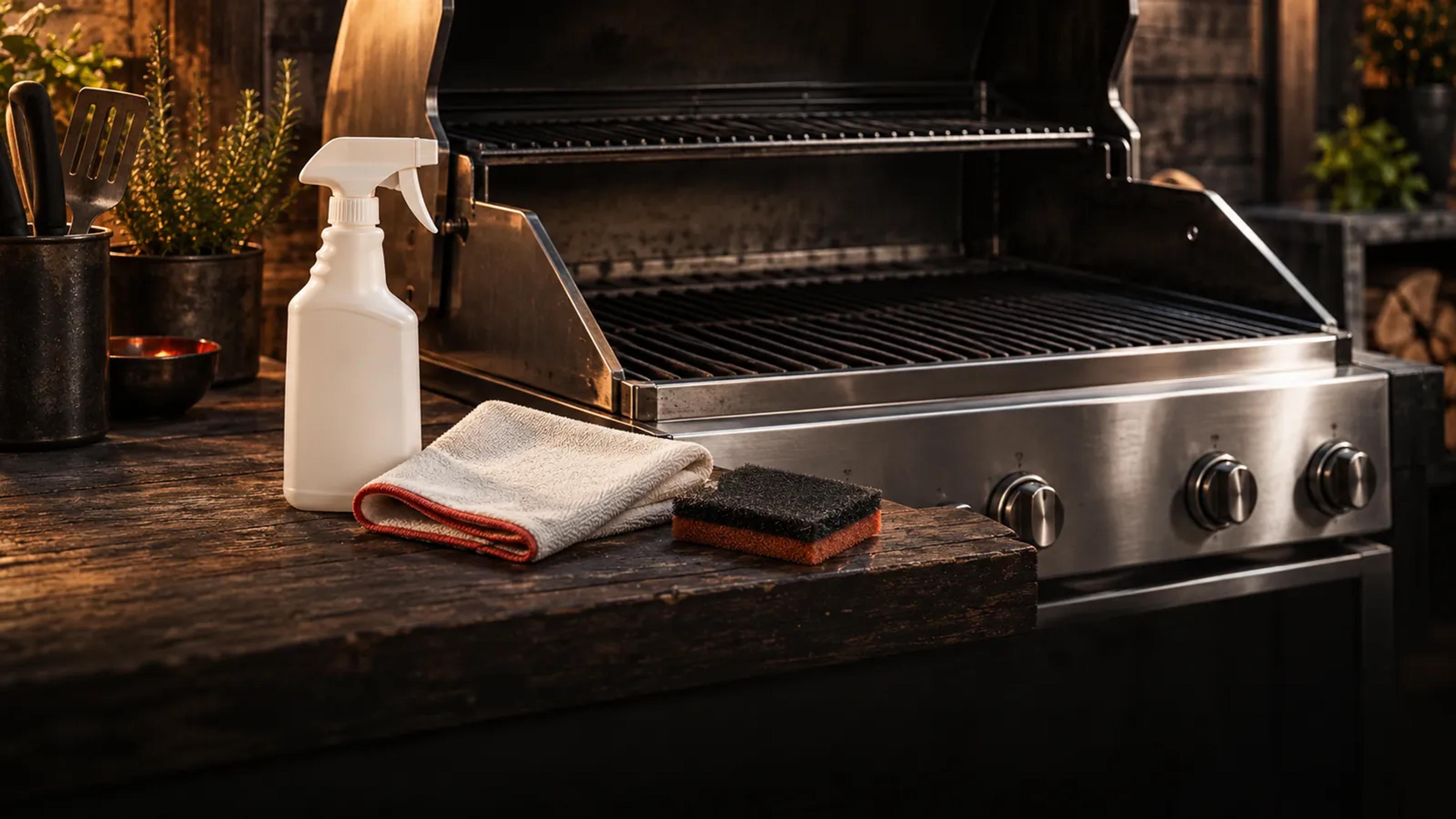
A grill brush can clean grease, but not completely on its own.
It works best for loosening and scraping off surface grease, especially when the grill is still warm.
But for thick, sticky buildup, a brush needs help from heat, technique, or a cleaning agent.
That’s the short answer.
The real story is how well it works, and where it falls short.
Subscribe to Our YouTube Channel :)
Why Grease Is Harder to Remove Than Burnt Food
Burnt food turns into dry, flaky carbon.
Grease does the opposite.
It melts, spreads, and sticks.
When grease cools, it forms a thin, oily layer that clings tightly to grill grates.
Over time, this layer mixes with ash and food residue, creating a stubborn coating.
A grill brush can scrape debris.
But grease often needs more than scraping.
It needs to be softened or broken down first.
If grease buildup is your primary concern, understanding proper cleaning methods and using the right tools is essential.
A deeper look at this is covered in this guide on grill-safe degreasers: Top Grill Grease Removers for a Clean and Safe Grill
How a Grill Brush Actually Handles Grease
A grill brush works in three ways:
-
Scraping: Removes thick, stuck-on residue
-
Agitation: Breaks apart grease layers
-
Spreading (unintended): Sometimes smears grease instead of removing it
Here is the key: heat makes the biggest difference.
On a warm grill, grease softens.
That’s when a brush becomes effective.
On a cold grill, grease stays sticky, and brushing alone struggles.
Best Grill Brushes for Cutting Through Grease
Not all brushes deal with grease the same way.
Some rely on stiff bristles.
Others use scraping edges or bristle-free coils.
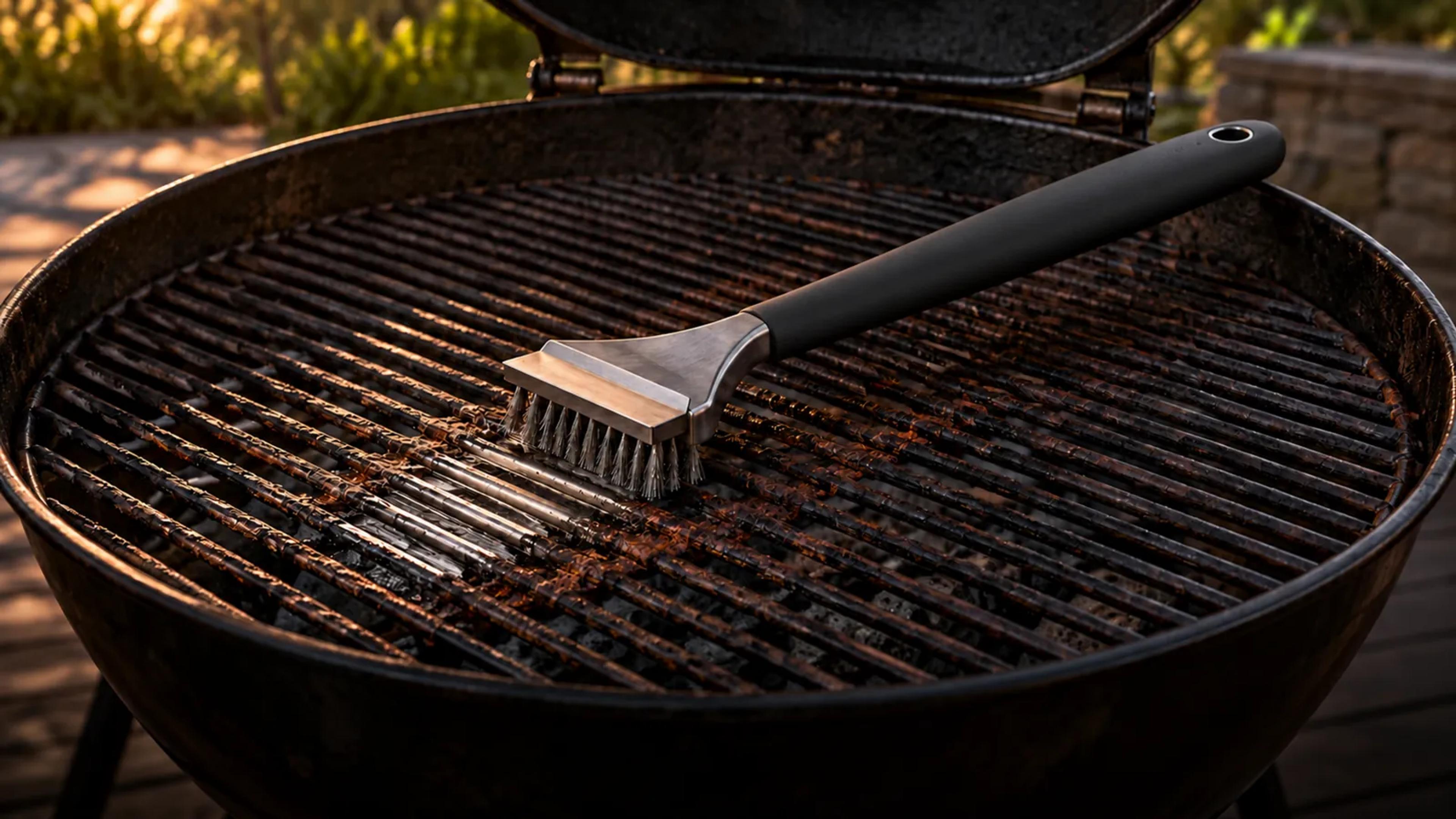
GRILLART Grill Brush and Scraper
This is one of the more aggressive options for grease removal.
It combines dense stainless steel bristles with a wide scraper, which helps break through thick grease layers quickly.
On a hot grill, it does a strong job of lifting softened grease and pushing it off the grates.
Here is why it works:
-
Wide scraping edge removes heavy buildup fast
-
Triple-row bristles cover more surface area
-
Works best right after cooking
But there is a catch.
The stiff bristles can struggle with thin, oily films and may spread grease if the grill is cold.
Like most bristle brushes, it also requires regular inspection to avoid wear.
Buy GRILLART Grill Brush and Scraper on Amazon
BBQ-Aid Grill Brush and Scraper for Barbecue
This brush leans more toward control than aggression.
It uses firm bristles and a solid scraper, but the design focuses on steady pressure rather than force.
That makes it useful for routine grease cleaning, especially when buildup is moderate.
Why it stands out:
-
Comfortable handle helps apply consistent pressure
-
Scraper works well for grease lines along grates
-
Good for regular maintenance cleaning
The downside is speed.
It can take longer to cut through thicker grease layers compared to more aggressive brushes.
Buy BBQ-Aid Grill Brush and Scraper for Barbecue on Amazon
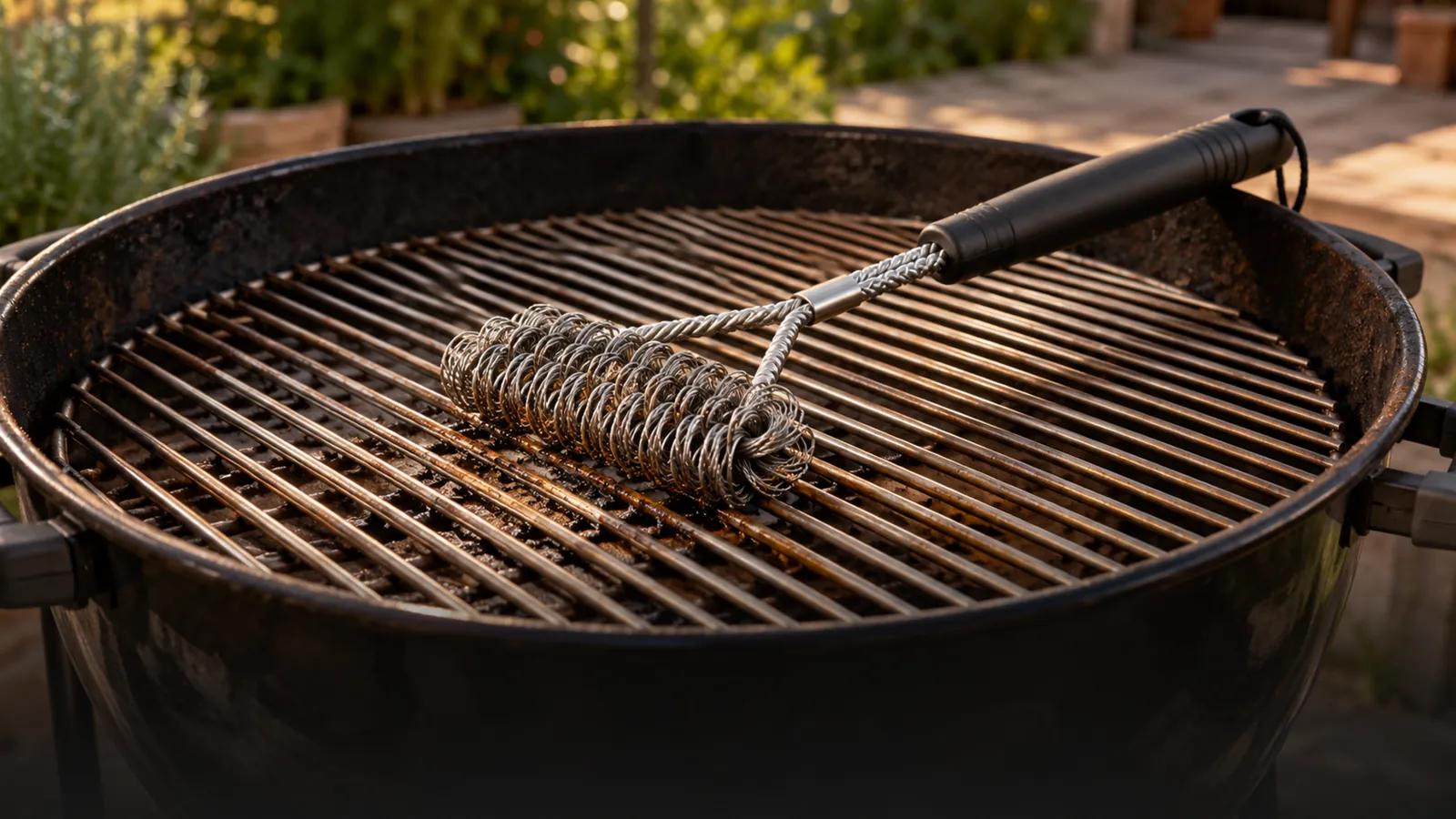
GRILLART Grill Brush and Scraper Bristle Free
This one takes a different approach.
Instead of bristles, it uses coiled stainless steel wires.
These coils glide along grates and are safer for those concerned about loose bristles.
For grease, it behaves differently:
-
Good at wiping and lifting softened grease
-
Works well on warm grills
-
Less likely to smear compared to stiff bristles
But there is a trade-off.
It lacks a sharp scraping edge, so it struggles with thick, baked-on grease layers.
Buy GRILLART Grill Brush and Scraper Bristle Free on Amazon
What Grill Brushes Get Right, and Where They Fall Short
A grill brush is a strong first step, but not a complete solution.
Where it works well:
-
Removing loosened grease after cooking
-
Breaking up light to moderate buildup
-
Maintaining clean grates between deep cleans
Where it falls short:
-
Thick, sticky grease layers
-
Cold grill surfaces
-
Deep cleaning after long neglect
This is why brushing alone rarely restores a heavily greased grill.
How to Properly Clean Grease Off Grill Grates
To get the most out of a grill brush, the method matters more than the tool.
Step-by-step approach:
-
Heat the grill for 10 to 15 minutes
-
Turn off heat but keep grates warm
-
Scrape with a grill brush using steady pressure
-
Wipe with a damp cloth or paper towel
-
Repeat if needed
This method softens grease first, then removes it.
For smaller tools like grill baskets, cleaning grease needs a slightly different approach.
This guide explains it clearly: How to Clean Grill Basket (Easy Grease Removal Guide)
When You Need More Than Just a Brush
If grease feels sticky even after brushing, it means it hasn’t broken down.
That is when you need:
-
Heat plus brushing
-
A mild degreaser
-
Steam cleaning (using a damp cloth on warm grates)
A brush alone cannot dissolve grease.
It only removes what has already loosened.
Common Mistakes That Leave Grease Behind
Many people assume brushing harder will fix the problem. It doesn’t.
Common issues include:
-
Cleaning on a cold grill
-
Using light pressure
-
Skipping the wipe-down step
-
Relying only on brushing without heat
These mistakes lead to grease spreading instead of being removed.
Bottom Line
A grill brush can clean grease, but only partially.
It is best for loosening and removing softened grease, not fully breaking it down.
For light cleaning, it works well.
For heavy buildup, it needs support from heat or cleaning agents.
Among the options:
- GRILLART Grill Brush and Scraper is best for heavy grease
Check it out on Amazon ↗️
- BBQ-Aid offers balanced, steady cleaning
Check it out on Amazon ↗️
- GRILLART Bristle-Free is safer and better for light grease
Check it out on Amazon ↗️
The right choice depends on how much grease you are dealing with.
FAQ: Grill Brushes and Grease Removal
**Can a grill brush remove thick grease buildup?
**
Not completely.
It can break it apart, but thick grease usually needs heat or a degreaser first.
Should I clean grease on a hot or cold grill?
Warm is best.
Heat softens grease, making brushing more effective.
Do bristle-free brushes work on grease?
Yes, but mainly for light grease.
They are less effective on heavy buildup.
How often should I clean grease off grill grates?
Light brushing after every cook helps prevent buildup.
Deep cleaning can be done every few weeks.
Is a scraper better than bristles for grease?
Scrapers are better for thick grease.
Bristles help with general cleaning and coverage.
P.S. - If you are also dealing with stubborn residue beyond grease, this guide on burnt food removal explains the next step clearly: Can a grill brush remove burnt food
Every Easy Function product ships with a free lifetime replacement warranty.