The quick answer
What is the best way to clean gas grill racks at home?
For a deep clean, turn off the gas, let the racks cool, then scrub them with warm water, mild dish soap, and a tool approved for their surface. Rinse well and dry right away. Skip soaking bare cast iron, and oil it lightly after drying. Between deep cleans, remove food bits after each cookout using your grill maker’s care instructions.
Sticky sauce, burnt burger bits, and greasy bars can make your next cookout harder than it needs to be. You can tackle most of that mess with a few basic supplies and a method that suits your racks.
“Grill racks” usually means the cooking grates that hold your food. The smaller warming rack needs care too. Start with your owner’s manual; Weber’s gas grill cleaning guide is a useful example of how a maker sets out care for its grills.
A quick disclosure
Easy Function is our brand. Some links below are affiliate links, so we may earn a commission at no extra cost to you. As an Amazon Associate, we earn from qualifying purchases. Read our full disclosure.
Check what your grill racks are made of
The surface matters more than the size of the grill. Check the manual or parts list rather than guessing by color. Some cast iron racks have a porcelain coating, which changes how you should clean them.
| Rack material | Best starting method | Main thing to avoid |
|---|---|---|
| Stainless steel | Warm soapy water and an approved scrubber. A short soak may help if the manual allows it. | Harsh cleaners and scrapers that the maker does not approve. |
| Bare cast iron | A brief hand wash when needed, immediate drying, then a thin coat of cooking oil. | Soaking or leaving the iron wet. |
| Porcelain or enamel coated | Mild soap and a soft, non-scratch tool on cool racks. | Chipping the coating with sharp tools or hard scraping. |
Do not assume coated cast iron needs the same oil treatment as bare iron. Follow its care guide. Weber’s porcelain grate care advice, for example, warns that scraping with metal tools can damage the enamel.
Gather a simple cleaning kit
Set everything nearby before you start. For most jobs, you will need:
- Warm water and mild dish soap without citrus cleaning agents.
- A soft sponge or non-scratch pad.
- A grill scraper or brush suited to your rack material.
- A large wash tub, plus clean towels for drying.
- Heat-resistant grill gloves for any warm cleaning.
- A little cooking oil if your racks need seasoning.
Keep warm scraping and wet washing as separate steps. A tool made for cool racks may not be safe on hot metal. Never pour cold water onto hot racks to speed things up.
For regular scraping
Easy Function Wood Grill Scraper
Prefer a tool without wire bristles? Our wood scraper’s edge forms grooves with use. Check your grill’s tool guidance and follow the scraper’s heat and break-in instructions. You will still need to clean the sides and underside of the racks.
Make a quick clean part of every cookout
A little work each time keeps loose food from piling up. Use the heat level and cleaning tool listed in your grill manual.
- Finish cooking and move the food away. If your manual calls for a short post-cook burn-off, follow its timing and stay beside the grill.
- Turn off the burners and fuel supply. Clean while the racks are warm only if both the grill and tool instructions allow it. Use heat-resistant gloves and keep the racks in place.
- Work along the bars. Use steady strokes to loosen food. Avoid digging into a coating. A nylon brush should be used only after the racks have cooled.
- Check the cooking surface. Remove loose scraps and any tool fragments before the next cook. Replace a brush or scraper that is damaged.
If sauce still coats the bars or grease feels sticky once cool, it is time for a hand wash. More heat is not always the answer.
How to deep clean gas grill racks, step by step
Choose a time when you can wash, dry, and put everything back in one session. Do not leave wet racks sitting in a tub while you tackle other chores.
- Shut down and cool the grill. Turn all controls off and close the fuel supply. Follow the manual’s directions for disconnecting it before a deep clean. Wait until the racks are cool enough to handle safely.
- Lift out the racks. Remove loose food over a bin. Note how the main grates and warming rack fit so you can put them back correctly.
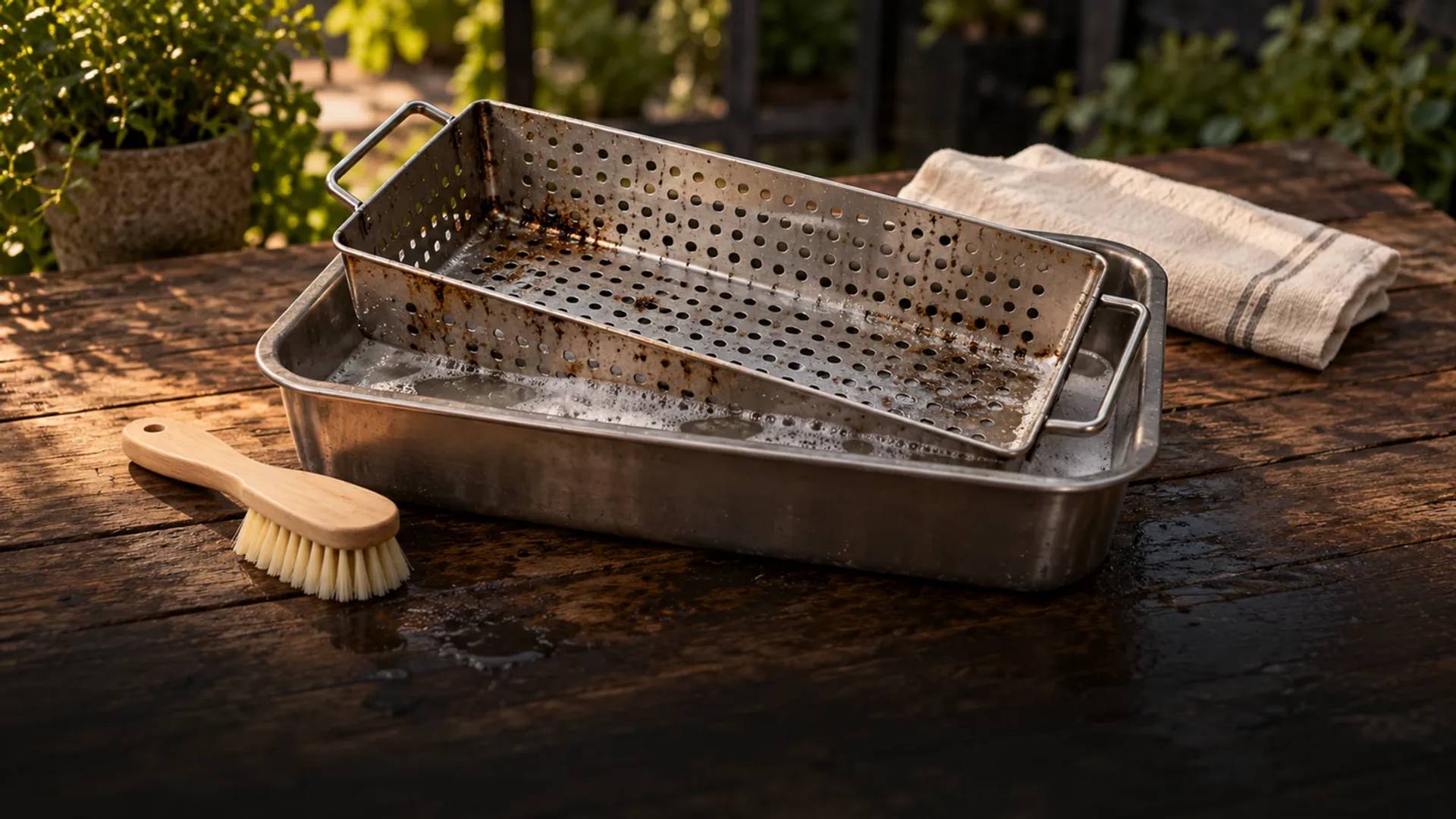
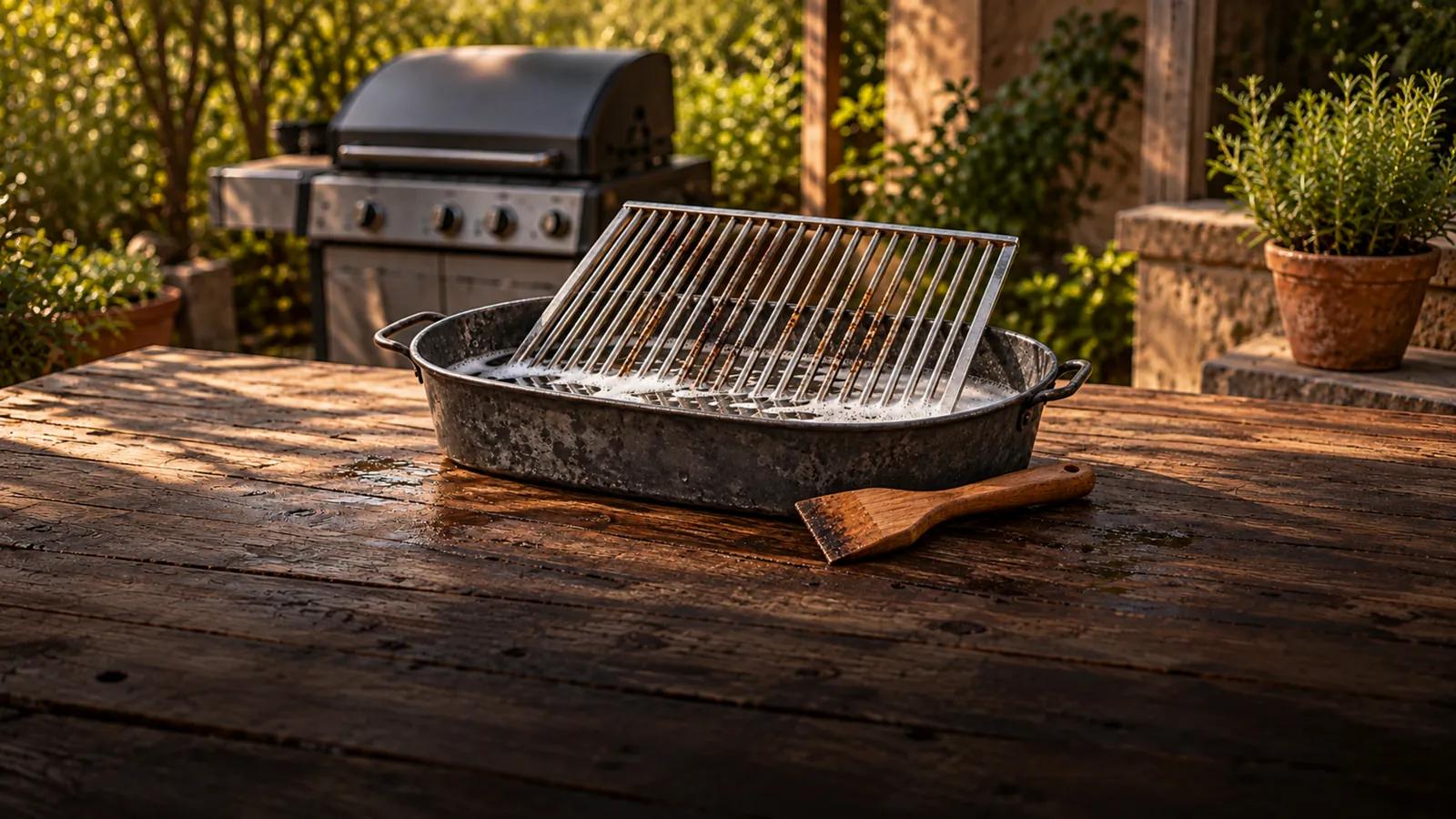
- Loosen the grease. Wash with warm water and a little mild dish soap. If your stainless rack manual permits soaking, use a short soak. For its stainless grids, Napoleon describes a 30-minute soak. Skip soaking bare cast iron; wash it briefly instead.
- Scrub both sides. Use a suitable pad or brush along each bar, then clean the edges and corners. Work gently on coated racks. Treat the warming rack according to its own material, which may differ from the main grates.
- Rinse and dry right away. Rinse off soap and loosened food. Towel dry every surface, including joints and undersides. For bare iron, follow the maker’s method to remove any last moisture.
- Protect and refit. If required, wipe on a very thin layer of cooking oil and follow the seasoning directions. Refit the dry racks securely. Before cooking, complete any leak check and preheat steps listed in your manual.
For bare cast iron, “seasoning” means a protective layer of baked-on oil. A heavy, wet coat can turn sticky. Lodge’s cast iron care guide explains the basic wash, dry, and thin-oil routine. Use your grill maker’s heat instructions for its racks.
Check below the racks too. Cleaning the bars does not empty the grease tray. Once the grill is cool, check the tray and grease cup and clean them as directed. Keep wash water away from burners and ignition parts.
Another cleaning option
Easy Function Bristle Free Brush
If you prefer a brush-style tool, compare our bristle free brush with your grill’s care rules. Bristle free does not mean metal free or suitable for every coating. Check the listing for its surface and heat guidance, and inspect the tool before each use.
What if burnt-on grease or rust remains?
For stubborn food, repeat a gentle scrub after softening the spot with warm soapy water. If that fails, choose a grate cleaner that your grill maker approves for the exact surface. Follow the label’s contact time and rinse directions. An exterior stainless steel polish is not the same as a cooking-grate cleaner.
Light rust on bare cast iron can often be removed before drying and restoring its seasoning. Rust coming through chipped enamel needs a different approach: check with the maker about repair or replacement. Do not keep scraping until the damaged area gets larger.
Aim for racks free of loose food and grease. Some dark staining can remain after cleaning. You do not need to grind the bars back to a bright finish.
Skip shortcuts that can damage the racks
- No foil blanket over a lit grill. Covering the grates with foil and running the burners on high can trap heat and damage parts. Weber warns against this cleaning method.
- Avoid overnight soaking. Long water exposure can cause corrosion, especially on iron or damaged coatings.
- Skip oven cleaner and self-cleaning oven cycles. Use only cleaners and heat methods approved for your racks.
- Hand wash unless the manual says otherwise. Do not assume heavy grill racks are dishwasher safe.
- Do not spray cooking oil onto lit burners. Apply any needed oil using the method in your care guide.
Common questions about cleaning gas grill racks
How often should I deep clean the racks?
Remove loose food each time you grill. Deep clean when cooled racks feel greasy or still hold stuck-on food after routine cleaning. Check more often if you cook several times a week or use sticky sauces.
Is it better to clean grill racks hot or cold?
Warm scraping can help when your grill and tool instructions allow it. Remove racks for washing only after they have cooled. Use nylon brushes on cool racks, and never dunk hot metal into water.
Can I use dish soap on cast iron grill racks?
A brief wash with mild dish soap is an option for bare cast iron when needed. Do not soak it. Rinse, dry fully, and apply a thin oil coat as directed. Check separate care rules for enamel-coated iron.
Are vinegar and baking soda better than dish soap?
They are not a universal fix for grill racks. Acidic cleaners may be unsuitable for some surfaces. Start with mild soap, water, and an approved tool; use other products only when your grill’s care guide allows them.
Make the next cookout easier
Keep your cleaning tool close, deal with food bits each time you grill, and dry racks fully after washing. Once the grill is cool and dry, cover it for storage. These small habits make the next cleanup much less of a project.
Planning a smoking session?
Getting ready for ribs or a weekend smoke? Take a look at the Easy Function Meat Smoking Guide as you plan your next BBQ setup.
Smoking guide — Amazon USA Smoking guide — Amazon CanadaMore from Easy Function
Browse our BBQ tools or subscribe to our YouTube channel for more grilling content.
Explore all our products Subscribe on YouTubeEvery Easy Function product ships with a free lifetime replacement warranty.