Deep frying a turkey is fast, fun, and gives you crisp skin with juicy meat.
But to do it right, you need to know the correct oil temperature, the safe internal temperature, and the proper cook time.
This guide gives you The Best Deep Fry Turkey Temperature & Time Chart in a clear, easy way.
It is simple to follow, even if this is your first time frying a turkey.
This chart is based on common fryer setups, food-safety rules, and what home cooks search for most.
The goal is to help you fry your bird safely and get the best taste every time.
Subscribe to Our YouTube Channel :)
Why Turkey Frying Needs Accurate Temps
Deep frying cooks the outside fast.
If your oil is too hot, the skin burns before the inside cooks.
If the oil is too cool, the turkey soaks in oil and turns greasy.
With the right heat, the skin gets crisp, and the meat stays tender.
The safe internal temperature for turkey is 165°F (74°C) in the breast and 175°F–180°F in the thigh.
If you want a full step-by-step guide on setup, prep, and safety, you can explore this helpful walk-through from Behind The Grill:
How to Deep Fry a Turkey? Temperature & Timing Guide:
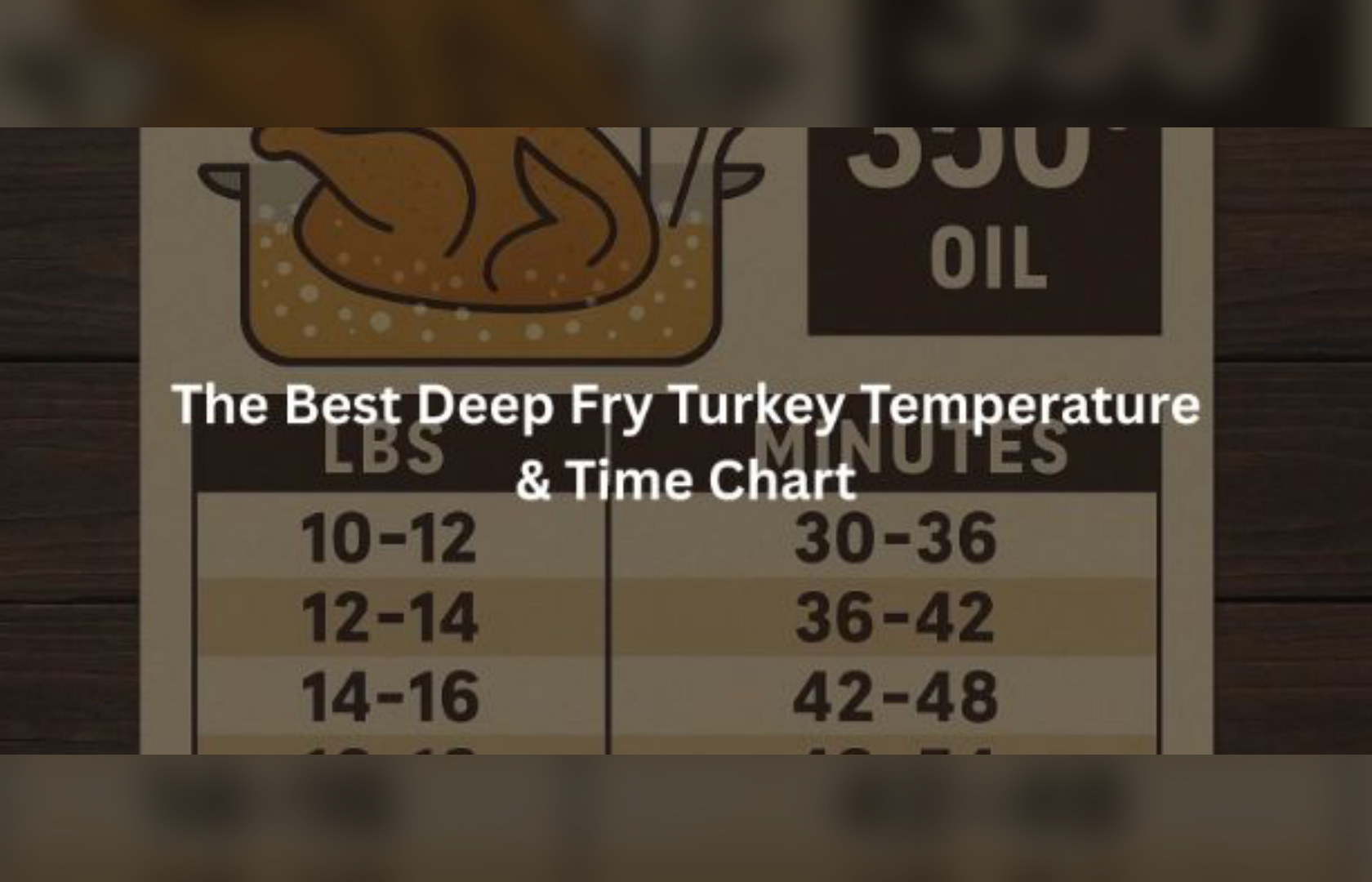
The Best Deep Fry Turkey Temperature & Time Chart
Use this chart as a quick guide:
<table><tbody><tr><td><span>Turkey Weight</span></td><td><span>Oil Temp</span></td><td><span>Fry Time</span></td><td><span>Safe Internal Temp</span></td></tr><tr><td><span>10–12 lb</span></td><td><span>350°F (177°C)</span></td><td><span>35–42 min</span></td><td><span>165°F breast; 175–180°F thigh</span></td></tr><tr><td><span>12–14 lb</span></td><td><span>350°F (177°C)</span></td><td><span>42–49 min</span></td><td><span>165°F breast; 175–180°F thigh</span></td></tr><tr><td><span>14–16 lb</span></td><td><span>350°F (177°C)</span></td><td><span>49–56 min</span></td><td><span>165°F breast; 175–180°F thigh</span></td></tr><tr><td><span>16–18 lb</span></td><td><span>350°F (177°C)</span></td><td><span>56–63 min</span></td><td><span>165°F breast; 175–180°F thigh</span></td></tr></tbody></table>Simple Rule
A basic rule is 3 to 3.5 minutes per pound at 350°F; this rule helps you estimate quickly, but always check the internal temp to make sure it is safe to eat.
How to Keep Oil Temperature Steady
Hot oil drops in temperature when the turkey goes in.
This is normal.
A large fryer will recover faster.
Try these steps to keep heat even:
Keep the oil at 350°F.
Lower the turkey slowly to avoid splashes.
Check the heat every few minutes.
Do not put a lid on the fryer.
Steady heat is the secret to even browning and juicy meat.
How to Check the Internal Temperature
Stick a meat thermometer into the thickest part of the breast.
Avoid hitting bone.
Check the thigh next to make sure it reads at least 175°F.
This helps you avoid undercooking or overcooking.
A magnetic guide can help you remember safe poultry temps.
An option many cooks find handy is the Easy Function Meat Temperature Guide Magnet it sticks right on your fridge or grill shelf, making temp checks quick and simple while you cook.
Buy Easy Function Meat Temp Guide - Amazon Canada
**
Buy Easy Function Meat Temp Guide - Amazon USA**
If you also enjoy smoking meat and want fast reference charts, you can use this handy guide from Behind The Grill:
Smoking Times and Temps Cheat Sheet – Quick Guide & Chart:
Tips for a Better Fry
Let the turkey dry fully; water causes splatter.
Remove the neck and giblets.
Do not brine a turkey you plan to deep fry unless you dry it completely.
Turn off the burner when lowering the turkey; then turn it back on after it is fully in the oil.
Small steps like these make a big difference in safety and taste.
How to Know When the Turkey Is Done
The skin should be deep golden brown.
The thermometer should show 165°F in the breast.
The thigh should be at least 175°F.
When done, let the turkey rest for 20–30 minutes; this keeps the juices inside the meat.
Oil Type for Deep Frying Turkey
Use an oil with a high smoke point:
Peanut oil
Canola oil
Corn oil
Peanut oil gives the best flavor, but any of these can work well.
Fresh oil always cooks better than old oil.
Safety Notes for Outdoor Frying
Keep the fryer outside on flat ground.
Keep pets and kids away.
Never leave the fryer alone.
Set up far from walls, cars, or trees.
Turkey frying is safe when you stay alert and use the right temperature.
Final Thoughts
This Deep Fry Turkey Temperature & Time Chart gives you the clear steps you need for crisp skin, juicy meat, and safe frying.
Keep the oil at 350°F, follow the minutes-per-pound guide, and check your internal temps before serving.
If you want help remembering safe temps while you cook, click the image below to check out our Easy Function Meat Temperature Guide Magnet, or explore our other products designed to make outdoor cooking easier.
Every Easy Function product ships with a free lifetime replacement warranty.
![How Long to Barbecue Boneless Chicken Breast [Explained]](https://cdn.sanity.io/images/ulc97050/production/5f0e5a3bb35b5a88c92416fccb7177502cd477ca-1920x1080.png?w=3840&h=2160&fit=crop&auto=format&q=75)