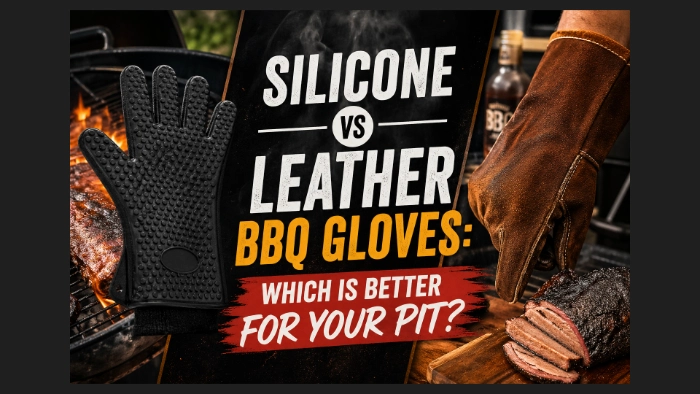
Silicone vs Leather BBQ Gloves: Which is Better for Your Pit?
-
Silicone Gloves: The Waterproof Heavyweights
-
Leather Gloves: The Dexterity Kings
-
The Hybrid Option: Rapicca 932°F Gloves
-
Clean-up and Durability: The Long-Term Reality
-
The Bottom Line
-
Common Questions: BBQ Glove FAQ
Disclosure: Some of the links in this article may be affiliate links, which can provide compensation to me at no cost to you if you decide to purchase. This site is not intended to provide financial advice and is for entertainment only.
When you’re reaching over a hot fire to flip a brisket, the choice between silicone and leather comes down to one thing: how you actually use your grill.
Silicone gloves are best for handling greasy meats and wet messes because they are waterproof and easy to wash, while leather gloves offer better protection against high, dry heat and provide more finger movement for using tongs.
If you are tired of getting burned while pulling pork or moving hot grates, the right pair of gloves makes the job much safer.

Silicone Gloves: The Waterproof Heavyweights
Silicone gloves act like a rubberized shield for your hands.
Their biggest advantage is being completely waterproof and oil-proof.
This makes them the primary choice for "low and slow" pitmasters who need to reach into a smoker to move a greasy pork shoulder or a rack of ribs.
Because they don't absorb liquid, you can simply wash them under the sink with soap while still wearing them.
They are also incredibly helpful for maintenance.
When you are using heat-resistant gloves
Bbq cleaning tools to scrub down a messy pit, you don't have to worry about grease soaking through to your skin.
However, silicone can feel "gummy" or slippery if it gets too hot, and the lack of airflow means your hands will likely get sweaty during a long cook.
Leather Gloves: The Dexterity Kings
Leather is the traditional choice for a reason.
High-quality suede or cowhide is naturally resistant to the dry, intense heat of charcoal sparks and glowing embers.
If you spend most of your time moving heavy cast-iron grates or adjusting burning logs, leather is usually more comfortable and offers better protection against "puncture" heat.
The main benefit here is dexterity.
Leather gloves typically have a softer lining and more flexible seams, which means you can actually feel your tools.
It is much easier to pick up a small thermometer or use a pair of fine-point tongs with leather than it is with bulky silicone.
The downside is that leather hates water; if grease soaks in, the material can stiffen and crack over time.
The Hybrid Option: Rapicca 932°F Gloves
Specialized products like the Rapicca BBQ gloves try to bridge the gap.
These use a food-grade neoprene coating that acts like silicone - keeping out the grease and water - but they are built with a double-layered soft cotton liner for comfort.
These are rated for extreme temperatures, but they do have a flaw: they are quite long and bulky.
While the length protects your forearms from the edge of a hot smoker, the thickness makes it hard to do delicate tasks like handling small skewers.
Clean-up and Durability: The Long-Term Reality
Silicone gloves will almost always outlast leather in a messy environment because they don't degrade when exposed to fat and salt.
To keep leather gloves in shape, you have to use a dedicated leather cleaner, whereas silicone just needs dish soap.
Proper maintenance doesn't stop with your gloves; keeping your grates spotless is just as important for flavor and safety: The Easy Way to Clean Your BBQ Grill.
The Bottom Line
If you primarily handle large cuts of meat (like brisket or pulled pork) and do a lot of wet cleanup, go with silicone.
If you are a "fire-tender" who primarily moves charcoal, wood, and metal tools, leather is the better investment.
Common Questions: BBQ Glove FAQ
Can I wash BBQ gloves in the dishwasher?
You can wash 100% silicone gloves in the top rack of a dishwasher, but never put leather or fabric-lined gloves in there, as it will ruin the inner lining.
Are these gloves fireproof?
No glove is "fireproof."
They are heat-resistant, meaning they slow down the transfer of heat.
You should never hold a burning log or a hot grate indefinitely.
What size should I get?
For BBQ, a slightly loose fit is better than a tight one.
If the gloves are too tight, heat transfers to your skin faster, and they are harder to pull off in an emergency.
P.S. – If you frequently work with searing hot grates or cast iron, our guide on grill gloves for high temperature handling breaks down the best options for extreme heat protection.
-
Silicone Gloves: The Waterproof Heavyweights
-
Leather Gloves: The Dexterity Kings
-
The Hybrid Option: Rapicca 932°F Gloves
-
Clean-up and Durability: The Long-Term Reality
-
The Bottom Line
-
Common Questions: BBQ Glove FAQ
Disclosure: Some of the links in this article may be affiliate links, which can provide compensation to me at no cost to you if you decide to purchase. This site is not intended to provide financial advice and is for entertainment only.