BBQ chicken looks easy.
But one small choice can change everything.
That choice is simple but powerful.
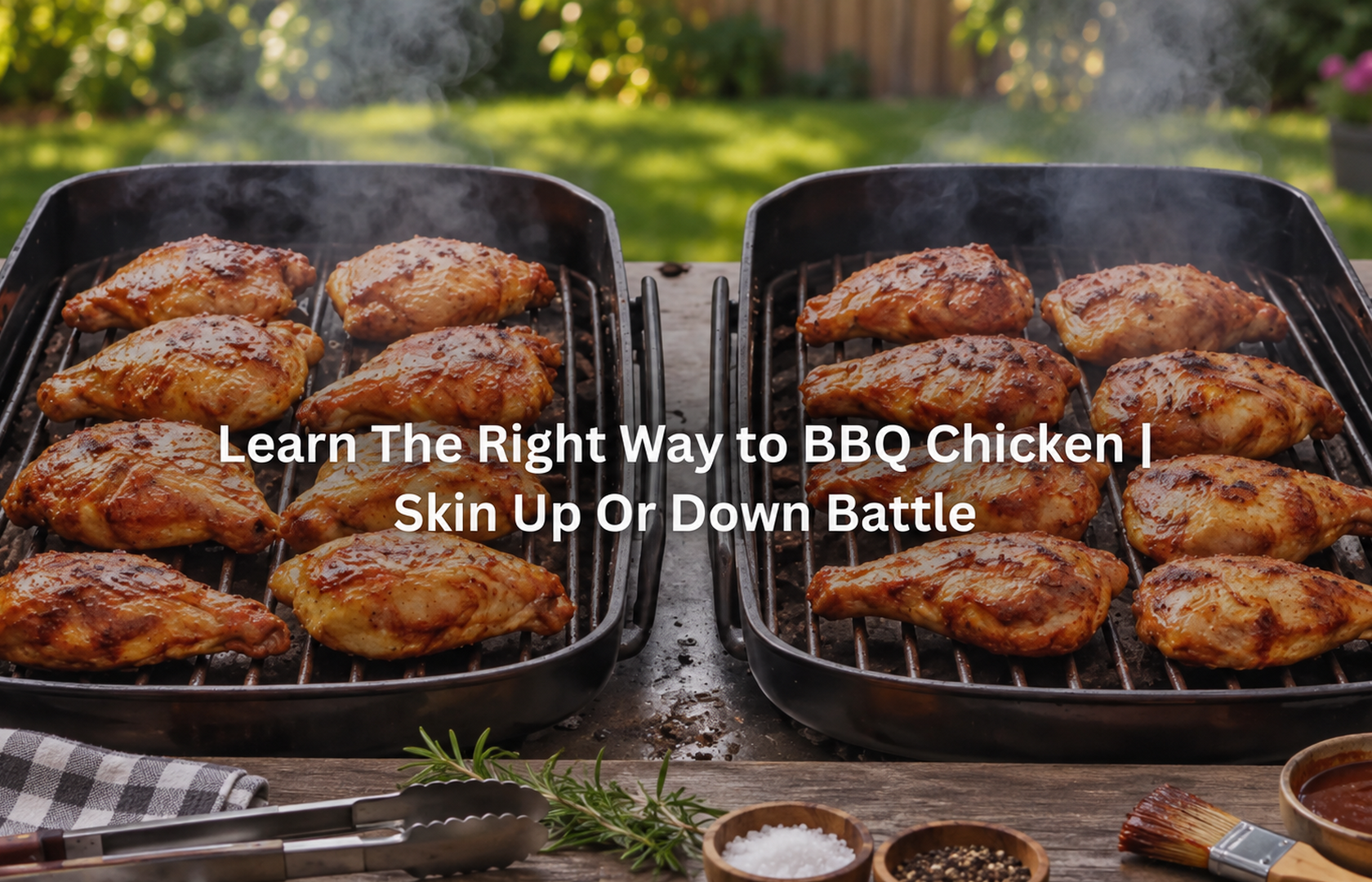
Do you grill chicken skin up or skin down?
Many backyard cooks argue about this.
Some say skin down first.
Others say skin up the whole time.
The truth is not extreme.
The right way depends on heat, timing, and what you want from the skin.
This guide breaks it all down in plain words.
By the end, you will know when to grill chicken skin up, when to grill it skin down, and how to get juicy meat with good skin.
Subscribe to Our YouTube Channel :)
Why Chicken Skin Matters on the Grill
Chicken skin is mostly fat.
When heat hits it, the fat melts.
This can help or hurt your cook.
If done right, the skin protects the meat.
It keeps moisture inside.
It adds flavor.
It can turn golden and tasty.
If done wrong, the skin burns fast.
Fat drips onto flames.
Flare-ups happen.
The skin turns black while the meat stays raw.
That is why the skin up or down battle matters so much when you BBQ chicken.
Start With One Simple Rule: Control the Heat
Before talking about skin position, we need to talk about heat.
Chicken does not like high, direct heat for a long time.
It burns fast.
The inside cooks slow.
The best setup is two-zone grilling.
One side of the grill is hot;
One side is cooler.
This gives you control.
You can move chicken as needed.
This matters more than skin position alone.
If you are grilling larger cuts like leg quarters, cook time and heat control matter even more.
You can dive deeper into timing and doneness in our detailed guide on
👉 Barbecue Chicken Quarters: How Long They Take to Cook.
Skin Down: When and Why It Works
Grilling chicken skin down is not wrong.
It just needs the right moment.
Skin down works best at the start of the cook.
Here is why.
The skin has fat.
That fat can render when it meets heat.
This helps the skin tighten and take on color.
Short time.
Medium heat.
No rushing.
Place the chicken skin down over indirect or medium heat, not strong flames.
Let it sit for a few minutes.
Do not move it too much.
This step helps the skin firm up.
It also gives light grill marks.
But this step is short.
Leaving skin down too long causes burning.
Skin Up: The Safe and Smart Middle
After the skin starts to render, flip the chicken skin up.
This is where most of the cooking should happen.
Skin up protects the meat.
Heat rises and cooks the chicken gently.
Fat inside the meat stays where it belongs.
With skin up, you lower the risk of flare-ups.
You also reduce bitter, burnt taste.
This is the phase where chicken slowly cooks through.
Lids closed work best here.
If you use sauce or a marinade, this is the time to apply it.
Sauce burns fast on direct heat; skin up keeps it safer.
For step-by-step help with flavor without burning, see
👉 Learn How to BBQ Marinated Chicken.
So… Which One Is Right?
The honest answer is both.
Start skin down for a short time;
Finish skin up for most of the cook.
This balance wins the skin up or down battle.
It gives you:
-
Better texture
-
Juicy meat
-
Fewer burns
-
More control
People who say “always skin down” often burn chicken.
People who say “never skin down” miss out on rendered skin.
The right way uses timing, not sides.
What About Crispy Skin?
Many people want crispy chicken skin on the grill.
This is where things get tricky.
True crisp skin is hard on a grill.
Grills use moist heat with smoke; crispy skin loves dry heat.
You can still improve your chances.
Keep the skin dry before grilling.
Avoid heavy marinades on the skin.
Use medium heat, not high heat.
Finish skin side down briefly if needed.
That final skin-down move should be quick.
Watch closely.
Seconds matter here.
Chicken Cuts Change the Answer
Not all chicken cooks the same.
Thighs and drumsticks handle skin down better.
They have more fat.
They forgive mistakes.
Breasts are lean.
Skin burns fast.
Meat dries out.
These should spend more time skin up.
Whole chicken parts work best when moved around the grill.
Do not lock them into one spot.
Clean Grates Matter More Than You Think
Chicken skin sticks.
Old grease causes tearing.
Burnt bits ruin flavor.
A clean grill helps skin release easily.
It also lowers flare-ups.
Many grill owners now avoid metal bristles due to safety concerns.
A wood grill scraper is a simple option that shapes to your grates over time and cleans without loose wires.
The Easy Function Wood Grill Scraper is one example often used by backyard cooks who want a safer way to clean before cooking chicken.
Clean grates make flipping easier and results more predictable.
Buy Easy Function Wood Grill Scraper - Amazon USA
Buy Easy Function Wood Grill Scraper - Amazon Canada
Internal Temp Ends the Debate
No matter how you cook, chicken must be safe.
Chicken is done at 165°F (74°C) in the thickest part.
Do not guess.
Do not rely on color.
Use temperature as the final judge.
Once it hits temp, pull it off.
Let it rest for a few minutes.
Juices will settle.
Final Verdict on the Skin Up Or Down Battle
There is no single side that wins every time.
The right way to BBQ chicken is about sequence.
Skin down briefly to start;
Skin up to finish cooking;
Optional quick skin-down finish for color.
This method works on gas grills, charcoal grills, and smokers.
It keeps chicken juicy.
It lowers burn risk.
It gives you control instead of stress.
Ready to Grill Better Chicken?
Great BBQ starts before the food hits the grill.
Clean tools, smart heat, and simple steps make the biggest difference.
👉 Click the image to check out our BBQ tools and guides, and explore our full range of products designed to make grilling easier and safer every time.
P.S. - Cooking leg quarters in the oven? Read BBQ Chicken Leg Quarters Oven Recipe – Juicy & Easy. It shows simple steps for tender, flavorful chicken.
Every Easy Function product ships with a free lifetime replacement warranty.
![How Long to Barbecue Boneless Chicken Breast [Explained]](https://cdn.sanity.io/images/ulc97050/production/5f0e5a3bb35b5a88c92416fccb7177502cd477ca-1920x1080.png?w=3840&h=2160&fit=crop&auto=format&q=75)