The quick answer
Is cleaning grill grates with ammonia safe?
Cleaning grill grates with ammonia is only an option when both your grill manual and the cleaner label allow it. It is not a good default for every grate. Fumes can irritate your eyes and lungs, and mixing ammonia with bleach creates dangerous gas. For routine care, start with an approved cleaning tool and the washing method for your grate material.
A layer of sticky grease can make a strong cleaner seem like the quickest fix. But grill grates touch your food, so removing the mess is only part of the job. You also need to protect the surface and remove any cleaner as directed.
The CDC's ammonia safety guidance explains the risks to eyes, skin, and breathing. Our approach is simple: check your grate type, use the mildest suitable method, and save yourself a bigger cleanup problem.
Affiliate disclosure
Behind The Grill is an Easy Function publication. Some links are affiliate links, and we may earn a commission at no extra cost to you. Read our earnings disclaimer.
Why ammonia needs extra care on grill grates
Ammonia is used in some cleaners to help cut grease. That explains its appeal for a dirty grill. Yet a cleaner that works on a household surface is not automatically right for a cooking grate. Poison Control's cleaning advice stresses reading labels, allowing fresh air to circulate, and keeping cleaners separate.
There are exceptions. An older KitchenAid outdoor grill manual allows diluted ammonia for certain models. That does not make the same method suitable for your grill. The exact model, grate finish, and cleaner directions still matter.
Before considering ammonia, check that your own manual permits it and the product label allows the intended use. Follow all directions for dilution, protective gear, ventilation, and rinsing. If either source is unclear, ask the manufacturer or choose another approved method.
We suggest skipping online tips that seal grates and ammonia inside a trash bag overnight. Opening the bag can bring trapped fumes close to your face. A popular cleaning hack also may not match the care rules for your grate.
Never mix ammonia with bleach or other cleaners.
Ammonia and bleach can create harmful chloramine fumes. Transport Canada explains this risk. Do not add vinegar or another product to try to neutralize ammonia. Keep cleaning products separate and follow their labels.
Choose the cleaning method for your grate material
Check the manual or product listing before you scrub. Porcelain-coated cast iron needs different care from bare cast iron. Stainless steel also needs a cleaner and tool suited to the cooking surface.
| Grate type | Start here | Main care point |
|---|---|---|
| Stainless steel | Use the manual's approved tool and washing method. Mild detergent and warm water may be allowed. | Stainless steel does not mean every cleaner or rough pad is suitable. |
| Porcelain-coated grates | Choose a tool approved for the coating. Use mild soap and a soft pad if the manual permits. | Avoid hard scraping that can chip or damage the finish. |
| Bare cast iron | Hand wash as directed, dry promptly, and apply a thin oil layer where required. | Protect the seasoning and avoid leaving the grate wet. |
For example, Weber's grate-care advice warns that metal scraping can damage porcelain enamel. It also describes mild dish soap, soft cleaning tools, and thorough drying when washing is needed.
For bare iron, Lodge's cast iron grill guide calls for hot water, a nylon brush, prompt drying, and a thin coat of oil. Follow your own model's care steps rather than treating every dark grate as bare iron.
For regular upkeep
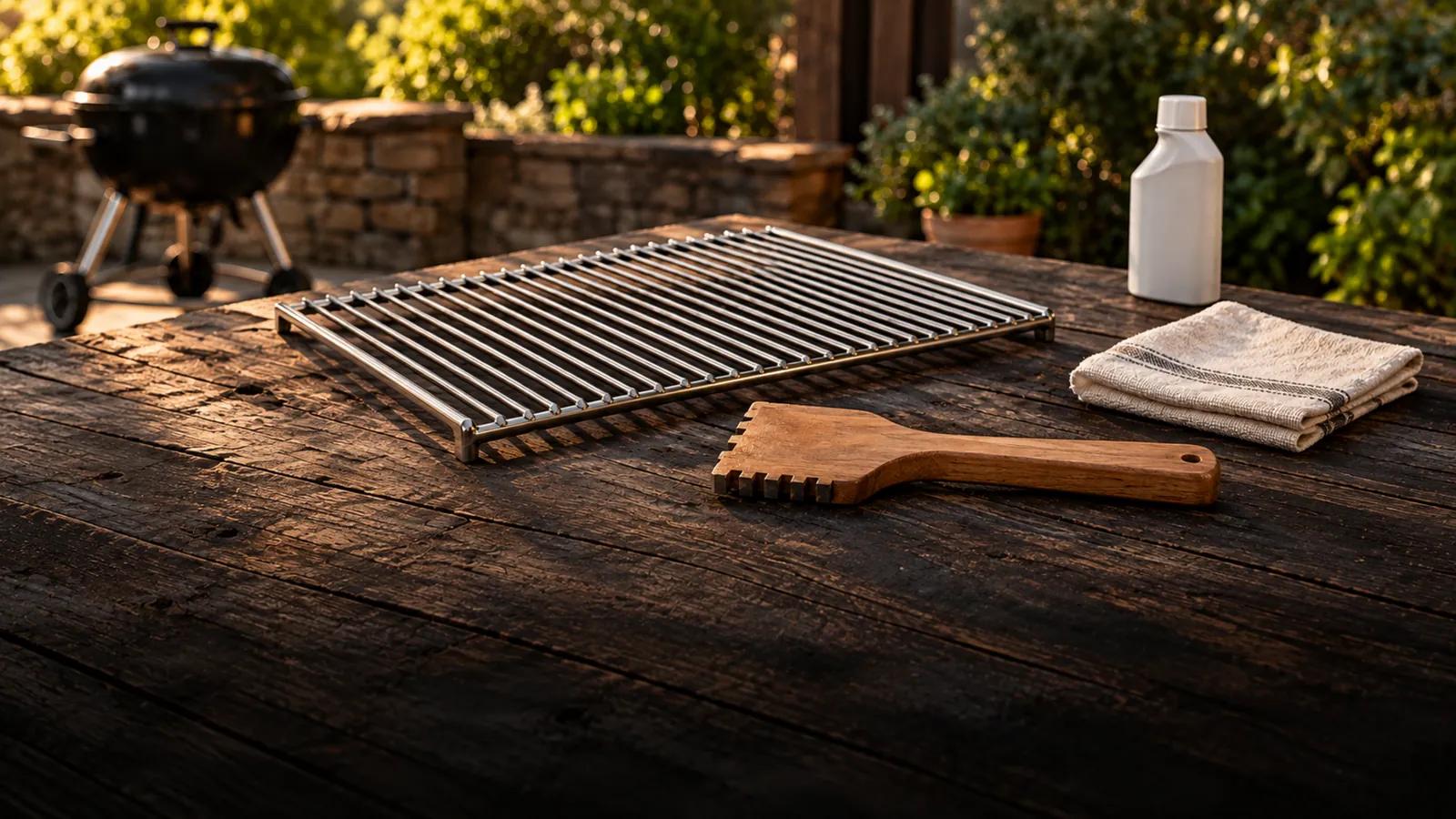
Try the Easy Function Wood Grill Scraper
A wood scraper is one option for lifting stuck-on food without wire bristles. Check that it suits your grate and follow the scraper's use instructions. It helps with debris removal; it does not replace washing or rinsing after a cleaner.
How to clean grill grates without ammonia
Start with this routine, adjusting each step to your grill manual. Gather an approved cleaning tool, a soft cloth, and any washing supplies your grate allows.
- Make the grill ready for cleaning. For this washing routine, turn the grill off and let the grates cool fully before removal. Follow the manual's fuel or power shutoff steps. Do not spray cleaner onto a hot grate.
- Lift off loose food. Use a tool approved for your grate. Work gently instead of forcing a sharp edge under burnt-on sauce. Use nylon tools only on cool surfaces. If a scraper requires warm grates, follow its separate instructions before cooling the grill for washing.
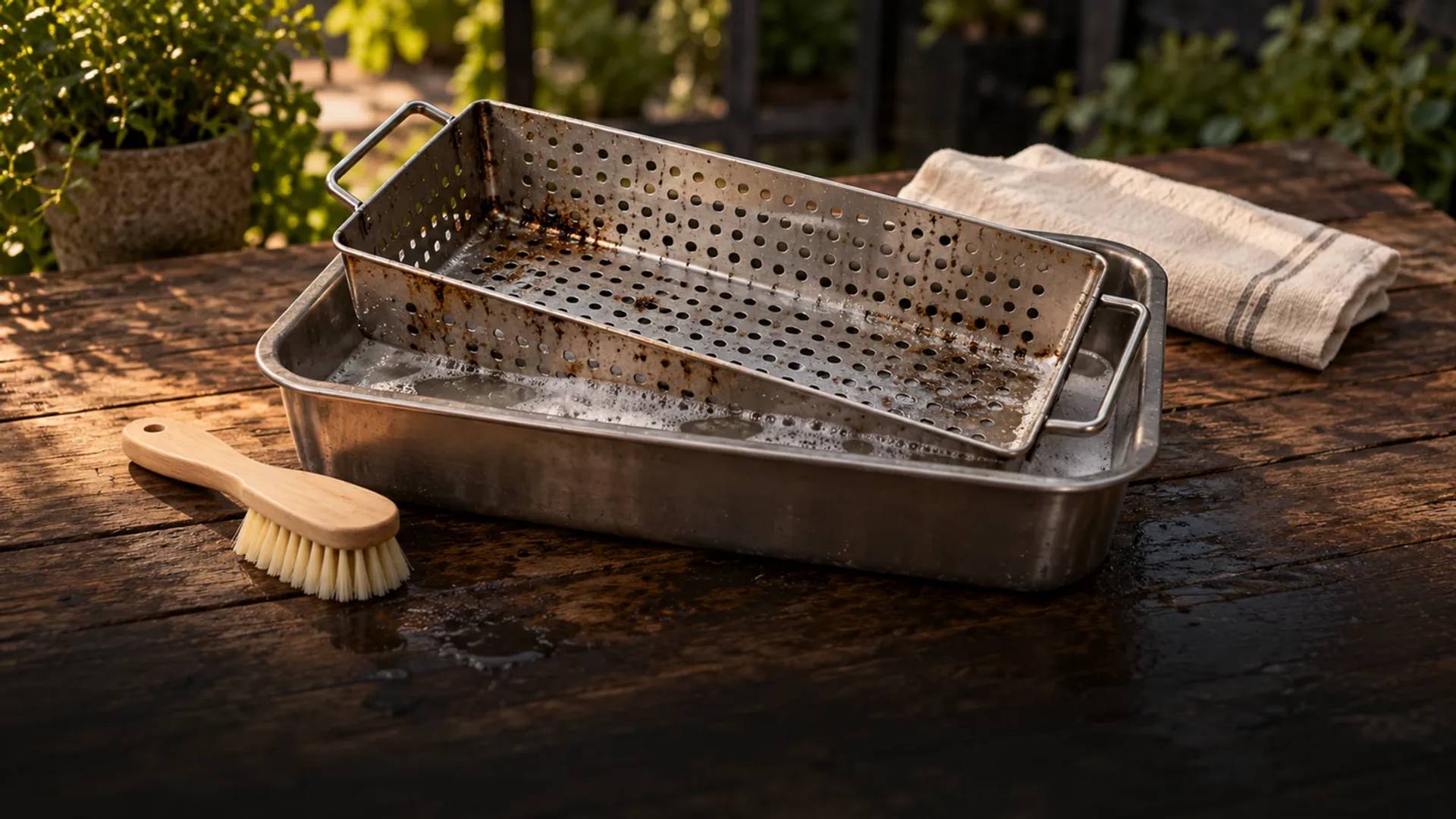
- Wash as the material allows. Where permitted, use warm water and mild dish soap with a soft pad. For bare cast iron, use its own care routine. Avoid a long soak unless the manufacturer allows it.
- Rinse and check both sides. Remove loosened bits and all soap or cleaner as directed. Check edges, joints, and the underside, where greasy residue can hide. Do not put food on a surface that still has cleaner on it.
- Dry and finish the care steps. Towel dry promptly. Apply a thin oil layer to bare cast iron when required, then follow any seasoning steps in its manual. Put the clean grates back in place and preheat normally before cooking.
Still seeing a few stubborn spots? Repeat the approved gentle method on those areas. If you need a stronger product, choose one labeled for your cooking grates and finish, then follow its full directions. More cleaner and more soaking time are not always better.
Need help picking a tool? Our guide to grill cleaning tools explains options for regular maintenance.
Already used ammonia? Check before you cook
Keep food off the grates while you check the cleaner label and your grill manual. Complete the required washing and rinsing steps. Do not add another cleaner or try to fix the situation by heating the grill.
A missing smell is not proof that the surface is ready for food. The CDC notes that longer exposure can reduce your ability to smell ammonia. Use the written cleaning directions rather than a sniff test.
If you used an unknown product, cannot confirm that it is suitable, or notice damage, contact the cleaner maker and grate manufacturer before cooking. Keep the bottle or its label handy so they can identify the product.
If fumes or a splash affect you
Leave the fumes and get fresh air. For an eye splash, start rinsing right away with plenty of lukewarm running water for at least 15 minutes. Remove contact lenses if easy to do. Rinse exposed skin with water.
Get advice from Poison Control; in the US, call 1-800-222-1222. Call emergency services for trouble breathing or other severe symptoms. Keep people and pets away from the affected area.
Common questions about ammonia and grill grates
Can I burn off ammonia residue before grilling?
Do not use heat as a shortcut for the label's washing and rinsing steps. Complete the required cleanup first. If you cannot confirm that the grates are ready for food, ask the manufacturer before using them.
Is ammonia safe for porcelain-coated grill grates?
There is no single rule for every coating and product. Check your exact grate instructions and cleaner label. A gentle, approved tool and mild washing method are a better starting point than guessing about a strong cleaner.
Can I use ammonia-based window cleaner instead?
Do not assume a glass cleaner is suitable for cooking grates. It may contain other ingredients, and its label may not allow that use. Choose a product and method approved for your grate and a surface that touches food.
How often should I clean grill grates?
Remove leftover food each time you use the grill, using its approved routine. Give the grates a deeper clean when grease or food remains. Regular attention makes the next cleanup easier and reduces the urge to reach for a harsh shortcut.
Keep your cleaning kit simple
Make regular grate care easier
Choose tools that suit your grate, clear away leftover food, and follow the care instructions. If you want a bristle-free scraping option, explore our wood scraper or browse the rest of our grilling tools.
Join us on YouTube
Find more from Easy Function and keep your next cookout in mind.
Subscribe to Easy FunctionEvery Easy Function product ships with a free lifetime replacement warranty.