Most people use a grill brush wrong.
They either wait too long, scrub too hard, or clean at the wrong temperature.
The result?
Burnt residue that won’t come off and a grill that gets dirtier over time.
Here’s the truth: the right way to use a grill brush after cooking is while the grill is still warm, using controlled pressure, and cleaning in short passes.
Do it right, and your grill stays clean with almost no effort.
Subscribe to Our YouTube Channel :)
Why Cleaning Right After Cooking Matters
Heat is your best cleaning partner.
When the grill is still warm, grease and food residue are softer and easier to remove.
If you wait until the grill cools completely, everything hardens.
That means more force, more scraping, and more wear on your grill.
Cleaning right after cooking helps:
-
Prevent grease buildup
-
Reduce flare-ups in future cooks
-
Keep flavors from mixing between meals
For a deeper look at safer tools, this guide on metal-free options explains why many grillers are switching: Best Metal-Free Grill Brushes for Safe & Effective Cleaning
Step-by-Step: How to Use a Grill Brush Safely and Effectively
1. Let the Grill Cool Slightly, Not Completely
Wait about 5 to 10 minutes after cooking.
The grates should still be hot, but not blazing.
If it's too hot, you risk damaging the brush.
Too cold, and residue hardens.
2. Turn Off the Grill (Or Lower Heat)
For gas grills, turn burners to low or off.
For charcoal, let flames die down.
This keeps things safe while still using residual heat.
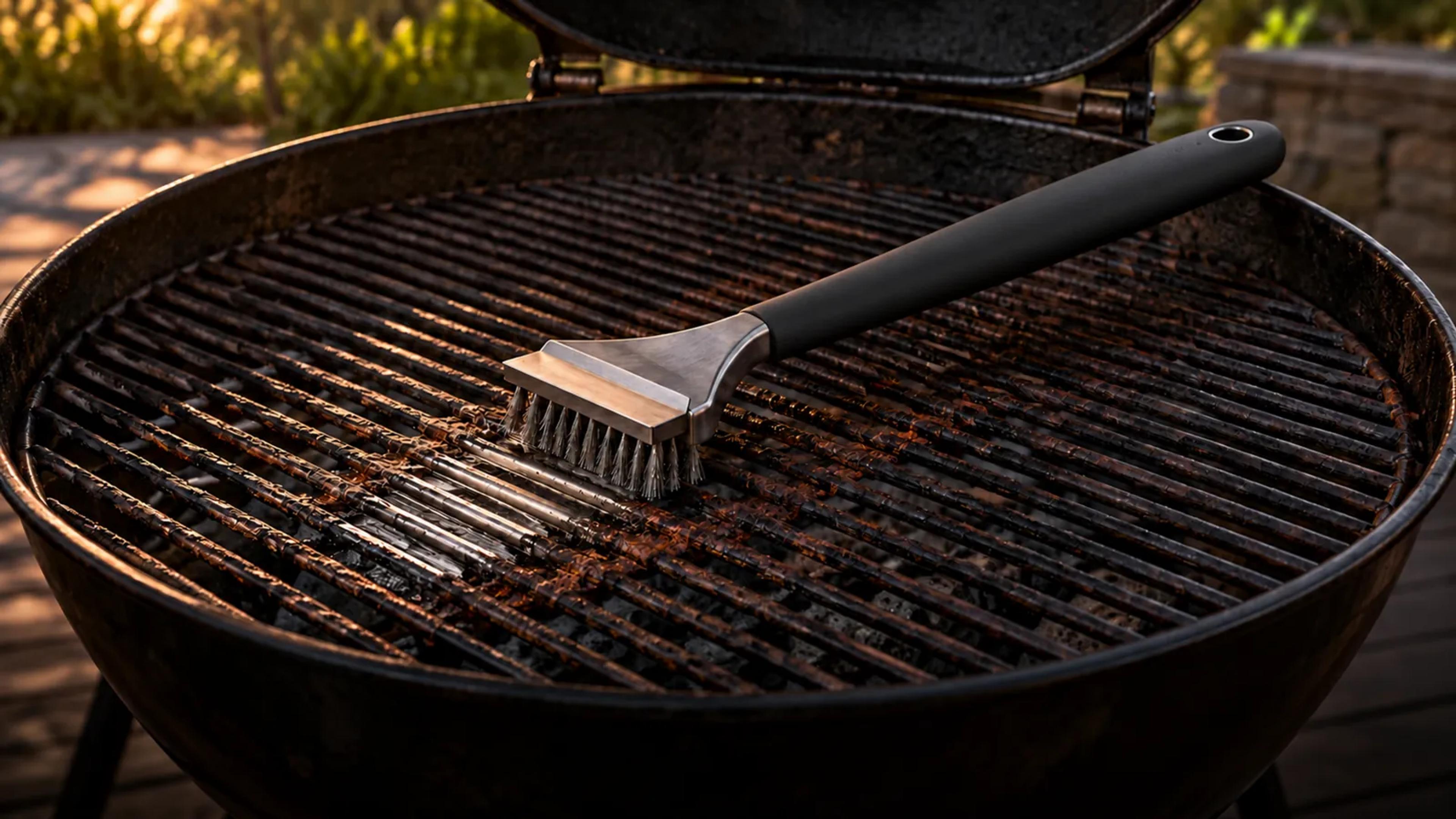
3. Start Brushing in the Direction of the Grates
Always brush along the grates, not across them.
This does two things:
-
Prevents bristles from snapping off
-
Cleans deeper between the bars
Use steady, moderate pressure. No need to force it.
4. Use Short, Controlled Strokes
Avoid long, aggressive scrubbing.
Instead:
-
Work in small sections
-
Focus on visible debris
-
Repeat if needed
This reduces wear on both your grill and brush.
5. Wipe Down After Brushing
After brushing, use a damp cloth or paper towel (held with tongs) to wipe the grates.
This removes:
-
Loose debris
-
Any potential bristle fragments
-
Remaining grease film
Best Types of Grill Brushes to Use (With Real Examples)
Bristle-Free Option (Safer Pick)
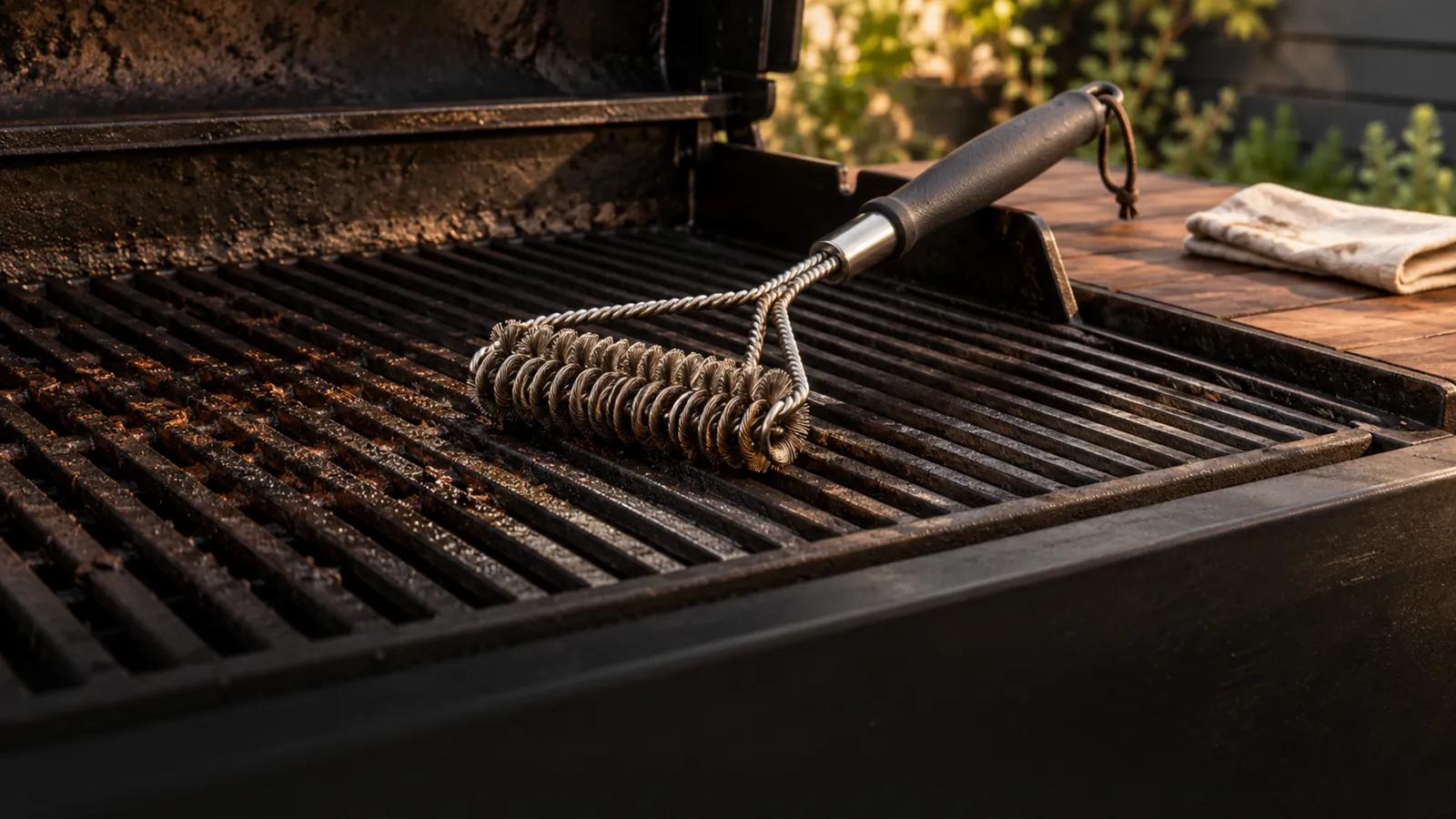
The GRILLART Grill Brush Bristle-Free uses a coiled metal design instead of sharp bristles.
Buy GRILLART Grill Brush Bristle-Free on Amazon
Why it stands out:
-
No loose bristles, safer for food
-
Works well on all grill types
-
Durable and long-lasting
The downside:
It may take a bit more effort on heavily burnt residue compared to stiff bristle brushes.
Classic Bristle Brush (Faster Cleaning)
The GRILLART Grill Brush and Scraper is built for faster, aggressive cleaning.
Buy GRILLART Grill Brush and Scraper on Amazon
Why people like it:
-
Cuts through tough grease quickly
-
Built-in scraper for stuck-on food
-
Wide head covers more surface
The downside:
Bristles can wear out over time, and safety requires regular inspection.
Budget-Friendly All-in-One Brush
The Barbecue Grill Brush and Scraper Stainless Steel is a simple, no-frills option.
Buy BBQ-Aid Grill Brush and Scraper Stainless Steel on Amazon
Why it works:
-
Affordable and widely available
-
Gets the job done for casual grillers
-
Lightweight and easy to use
The downside:
Not as durable as premium brushes, and may need replacing sooner.
Common Mistakes to Avoid When Using a Grill Brush
Most grill problems come from small habits that add up over time.
Avoid these:
-
Brushing a completely cold grill
-
Using too much force
-
Not checking for loose bristles
-
Skipping the wipe-down step
-
Using a worn-out brush
These mistakes can lead to damaged grates or even unsafe cooking surfaces.
Are Bristle-Free Grill Brushes Better?
Short answer, for most people, yes.
Bristle-free brushes reduce the risk of metal wires ending up in food.
That is the main reason many grillers are switching.
But there is a trade-off.
They usually:
-
Require a bit more effort
-
Work best when the grill is still warm
-
May take longer on heavy buildup
If safety is your priority, they are a strong choice.
If speed matters more, traditional brushes still have a place.
Extra Tips to Keep Your Grill in Top Shape
Using a grill brush the right way is only part of the equation.
A few small habits can make a big difference in how long your grill lasts and how your food tastes.
First, oil your grates lightly after cleaning.
Use a paper towel with a bit of cooking oil, held with tongs, and wipe the surface.
This helps prevent rust and keeps food from sticking during your next cook.
Second, clean every time you grill.
Even a quick 30-second brush is better than letting grease build up over multiple sessions.
Third, store your brush in a dry place.
Moisture weakens bristles and can cause rust, especially on cheaper models.
If you're already leaning toward safer tools, this guide explains the best metal-free grill brushes in detail: Best Metal-Free Grill Brushes for Safe & Effective Cleaning
When You Should Replace Your Grill Brush
A grill brush is not a lifetime tool.
You should replace it if:
-
Bristles are bent, loose, or falling out
-
The head looks uneven or worn down
-
Cleaning becomes less effective
For most regular grillers, that means every few months for bristle brushes, and longer for bristle-free models.
Ignoring this step is where most safety risks come from.
A Quick Reality Check on Grill Brush Safety
There is a reason grill brush safety gets attention.
Loose wire bristles can stick to grates and end up in food.
It is rare, but it happens enough to be worth taking seriously.
That is why many people are switching to alternatives or at least inspecting their brush before each use.
If you want to explore safer cleaning methods beyond brushes, this guide covers solid alternatives: Discover What to Use to Clean Grill Instead of Wire Brush
How This Fits Into Your Grilling Routine
Think of grill brushing as the final step of cooking, not a separate chore.
A simple routine looks like this:
-
Finish cooking
-
Let the grill cool slightly
-
Brush the grates while still warm
-
Wipe clean
-
Lightly oil
This takes less than a minute once you get used to it.
But it keeps your grill ready at all times.
Bottom Line
Using a grill brush after cooking is less about scrubbing hard and more about timing and control.
Clean while the grill is still warm.
Use steady strokes, not force.
Always wipe down after brushing.
And most importantly, keep your brush in good condition.
If safety is your top concern, a bristle-free option like the GRILLART Grill Brush Bristle-Free is a reliable choice.
Buy GRILLART Grill Brush Bristle-Free on Amazon ↗️
If you want faster cleaning, the GRILLART Grill Brush and Scraper gets through heavy residue quickly, but needs more care.
Buy GRILLART Grill Brush and Scraper on Amazon ↗️
There is no perfect tool.
But there is a right way to use whichever one you choose.
P.S. - If you're working with grill baskets, cleaning them properly is just as important. This guide on how to clean a grill basket walks you through the easiest method without damaging the surface.
Every Easy Function product ships with a free lifetime replacement warranty.