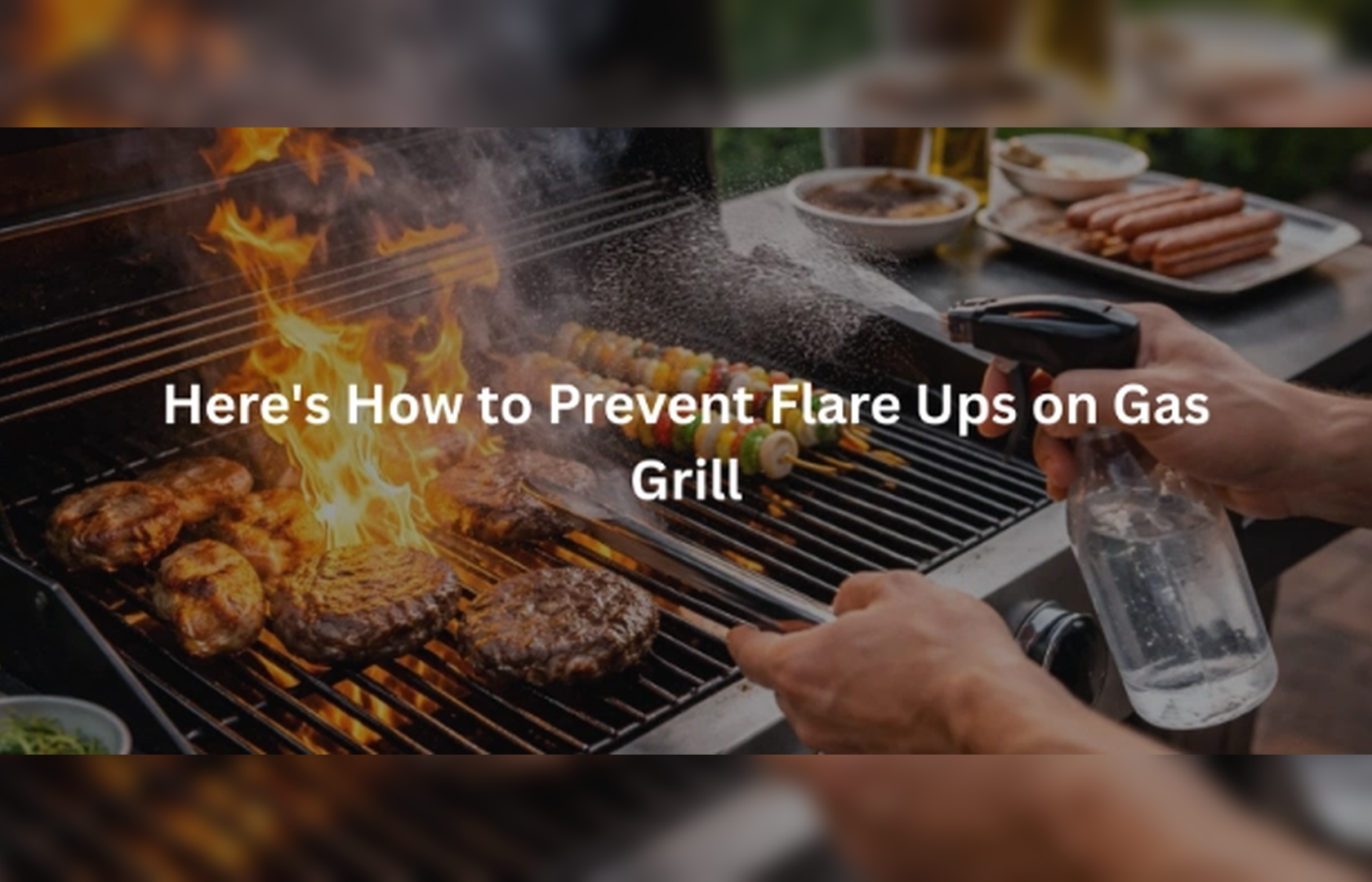
Flare ups on a gas grill can turn a fun cookout into a stressful mess.
One second your food is cooking fine.
The next, tall flames shoot up and burn it fast.
If this keeps happening, you are not alone.
This guide explains here’s how to prevent flare ups on gas grill in a simple and clear way.
You will learn why flare ups happen, what mistakes cause them, and what you can do right now to stop them.
No complex steps.
No confusing terms.
Just clear help you can use every time you grill.
Subscribe to Our YouTube Channel :)
What Is a Flare Up on a Gas Grill?
A flare up happens when grease or fat drips onto hot burners or flames; the fat catches fire and creates sudden flames.
These flames can burn your food on the outside while leaving the inside undercooked.
Small flames are normal.
Big, fast flames that jump up and scorch food are not.
Why Flare Ups Happen So Often
Flare ups usually come from a few common causes.
Greasy grates are the biggest reason.
Old food and fat stay on the grill after past cooks.
When the grill heats up, that grease burns fast.
Fatty foods also cause flare ups.
Burgers, steaks, chicken thighs, and sausages drip a lot of fat as they cook.
High heat makes things worse.
When the grill is too hot, even small drips can turn into big flames.
Poor airflow can also play a role.
Closed lids and blocked vents trap heat and fuel the fire.
Clean Grates Are the First Defense
If you want fewer flare ups, start with a clean grill.
Dirty grates are like fuel waiting to burn.
Clean your grill grates before and after each cook.
This removes grease before it can drip and catch fire.
If you are not already doing this, it helps to follow a proper routine like this guide on how to clean your gas grill before use so buildup never becomes a problem.
A simple and safe option is a wooden grill scraper; it clears buildup without metal bristles breaking off.
The Easy Function Wood Grill Scraper is designed to shape to your grates over time and remove stuck-on grease without scratching.
Clean grates mean less fuel for flames and more control during cooking.
After cleaning, lightly oil the grates.
This helps prevent food from sticking and reduces tearing, which can cause extra dripping.
Buy Easy Function Wood Grill Scraper - Amazon USA
Buy Easy Function Wood Grill Scraper - Amazon Canada
Control the Heat from the Start
Many flare ups start because the grill is too hot.
Preheat your gas grill, but do not turn all burners to high.
Medium heat works better for most foods.
You can always turn heat up later if needed.
Use the lid the right way.
Closing the lid helps cook evenly, but if flames rise, open it briefly to reduce heat.
Know your grill zones; turn one side hotter and keep the other cooler.
This gives you a safe place to move food if flames start.
Trim Fat Before You Grill
Fat equals flavor, but too much fat equals fire.
Trim excess fat from meat before placing it on the grill.
You do not need to remove it all.
Just cut off thick edges and loose pieces that drip fast.
For chicken, remove extra skin or poke small holes so fat can drain slowly instead of all at once.
This simple step can cut flare ups by a lot.
Avoid Sugary Marinades Too Early
Sweet sauces and marinades burn fast; they drip and flare just like fat.
If your marinade has sugar, honey, or syrup, wait to add it near the end of cooking.
This lowers the chance of flames and keeps food from burning.
Dry rubs are safer at the start.
Sauces are better later.
Use Indirect Cooking When Needed
Indirect heat is one of the best ways to prevent flare ups on gas grill.
Turn on one burner and leave the other off.
Place food over the unlit side.
The heat circulates and cooks food without direct flames below.
This works great for thick cuts, chicken, and foods that take longer to cook.
You still get grill flavor, but with far less fire risk.
Watch the Food, Not the Clock
Flare ups happen fast; staying close matters.
Do not walk away for long periods.
Keep tongs nearby so you can move food quickly if flames start.
If a flare up happens, do not spray water.
Water can spread grease and make things worse.
Instead, move the food to a cooler zone.
Close the lid to limit oxygen.
Lower the heat if needed.
Keep the Inside of the Grill Clean
Grates are not the only place grease hides.
Grease trays and drip pans fill up over time.
When they overflow, flare ups become more likely.
Burners can also get blocked by grease and debris; this affects airflow and heat control.
A detailed walkthrough like The Best Guide to Grill Burner Cleaning: Step-by-Step Tips makes this task much easier and safer.
Check and empty grease trays often.
Clean the inside walls of the grill when buildup is visible.
A clean grill works better, heats evenly, and is safer to use.
Final Thoughts on Preventing Flare Ups
Flare ups are common, but they are not unavoidable.
Most come from grease, high heat, and poor setup.
Clean your grates often.
Control your heat.
Trim excess fat.
Use indirect cooking when needed.
Stay alert while grilling.
When your grill is clean and your heat is balanced, cooking becomes easier and more enjoyable.
Food tastes better, cooks evenly, and stays safe from burning.
If you want to make grill care simpler and safer, click the image to check out our products and explore the full Easy Function range designed to support better grilling every day.
Every Easy Function product ships with a free lifetime replacement warranty.