The quick answer
How do you clean a stainless steel gas grill for a streak-free shine?
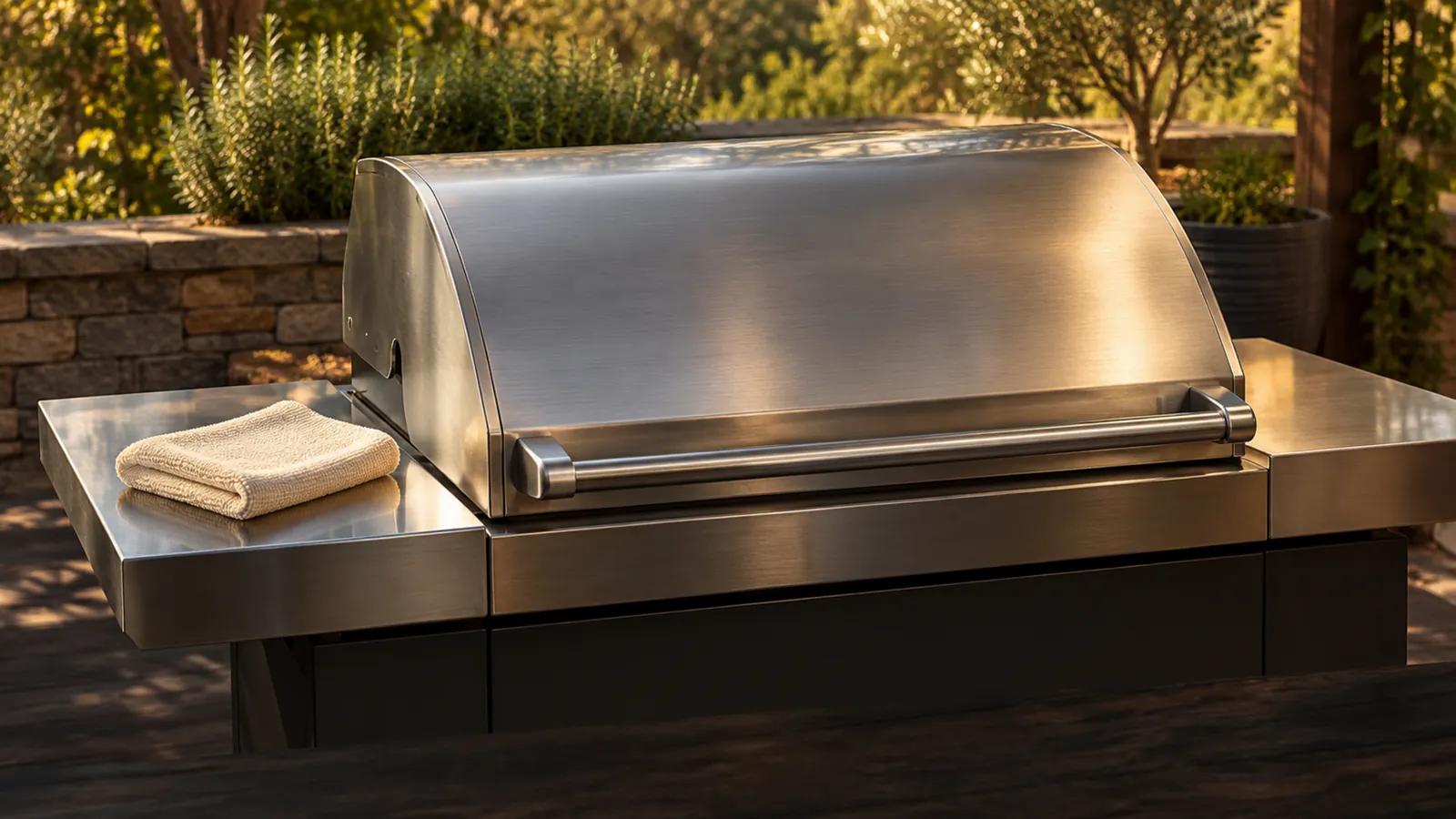
Let the grill cool and turn off the gas. Wash the stainless steel exterior with warm water, mild dish soap, and a soft microfiber cloth. Wipe with the grain, rinse away the soap, and dry well. If needed, finish with a nonabrasive stainless steel polish made for outdoor grills. Clean the grates and grease tray separately.
Grease spots, fingerprints, and dried sauce can leave a good grill looking tired. The fix usually starts with a gentle wash. Scrubbing harder can scratch the finish and leave you with a bigger problem.
At Behind the Grill, we like a simple routine: clear the mess inside, then finish the outside. For the exterior, Napoleon's stainless steel care guide starts with warm water, mild soap, and a soft cloth. Your own grill manual should guide any steps that vary by model.
Affiliate disclosure: Some product links below are affiliate links. We may earn a commission if you buy through them, at no extra cost to you.
Gather your supplies and make the grill safe
Keep two sets of tools ready. Greasy grate tools should stay away from the outside panels.
For the exterior
- Clean microfiber cloths
- Warm water and mild dish soap
- A soft, non-scratch sponge
- Optional outdoor stainless steel cleaner or polish approved for your finish
For the cooking area
- A grate-safe scraper or grill brush
- A plastic scraper for the cookbox
- Gloves and a container for greasy waste
- Your grill's care and assembly guide
For this deep clean, let the grill cool fully. Turn all burner knobs off and shut off the gas supply. Follow your manual for disconnecting a propane tank. For a natural gas grill, close its supply shutoff valve. Take a photo before lifting out parts so you can put them back in order.
Work on a stable surface outdoors. Keep cleaning liquid away from the igniter, wiring, gas fittings, and burner openings. Weber's gas grill cleaning instructions also stress keeping water off the burner tubes and drying parts before reassembly.
Clean the stainless steel exterior in five simple steps
If you are doing the whole grill, finish the inside first using the sections below. That way, greasy drips will not undo your final polish.
- Find the grain. Look for the fine lines in each steel panel. They may run in different directions on the lid and doors. Wipe along those lines. Check that your cloth is clean before it touches the metal.
- Wash gently. Add a little mild dish soap to warm water. Dampen a soft cloth and wipe one small area at a time. Use light pressure. Wash the handle and side shelves too, using the method suited to their material.
- Give stuck grease time to soften. Hold the warm, soapy cloth against the spot, then wipe again. If it stays put, try a nonabrasive outdoor stainless steel cleaner approved by the grill maker. Test a hidden area and follow the label. Skip razor blades and rough pads.
- Rinse and dry. Wipe away the soap with a second cloth dampened with clean water. Then dry with a fresh microfiber cloth, following the grain. Soap left behind can cause haze; water left to dry can leave spots.
- Polish only if needed. A clean, dry panel may already look great. For an extra shine, use a small amount of suitable grill stainless steel polish as its label directs. Buff off excess. Keep exterior polish off grates, burners, and other food-contact or hot interior parts.
Go gently around the controls. Printed labels can rub off. Use mild soapy water and a soft cloth around markings. Do not flood the knobs or spray cleaner into gaps.
Weber's exterior care advice recommends microfiber cloths, wiping with the grain, and nonabrasive products designed for outdoor grills.
Clean the grates with the right tool
A stainless steel lid does not mean you have stainless steel grates. Check whether yours are bare stainless, cast iron, or coated. The right brush and washing method depend on that surface.
For this cool-grill clean, lift out the grates and remove loose food with an approved tool. If the manual allows washing stainless steel grates, use warm, soapy water and a suitable non-scratch pad. A short soak may help loosen stuck food where allowed. Rinse off all soap and dry both sides before putting them back.
Follow separate care steps for cast iron and coated grates. Do not put grates in the dishwasher unless the maker allows it. Napoleon's grate care guide explains why the grate material matters.
Some tools need warm grates to work as designed. Follow both the grill and tool instructions for routine use. Never assume a brush is safe on hot metal, and inspect the cooking surface for debris before adding food.
For your grate-cleaning kit
Easy Function Wood Grill Scraper
Prefer a wooden grate-cleaning tool? Explore our Wood Grill Scraper and check its fit and use instructions for your grill. Use it for the grates; keep a soft cloth for the shiny lid and doors.
Clear grease from inside the gas grill
A shiny lid is only part of the job. Old grease in the cookbox and tray can feed flare-ups. With the grill cool and gas off, work from the lid down.
- Inside the lid: Gently remove loose grease and carbon with a tool approved for that surface. Black flakes are often cooked-on deposits. Do not scrape off an actual coating or try to repaint the inside.
- Heat shields: Remove them as the manual directs. Scrape loose debris with a suitable plastic scraper. Wash only if allowed, then dry well.
- Cookbox: Clear loose food and grease toward the drain using a plastic scraper. Collect the waste. Keep the grease path open.
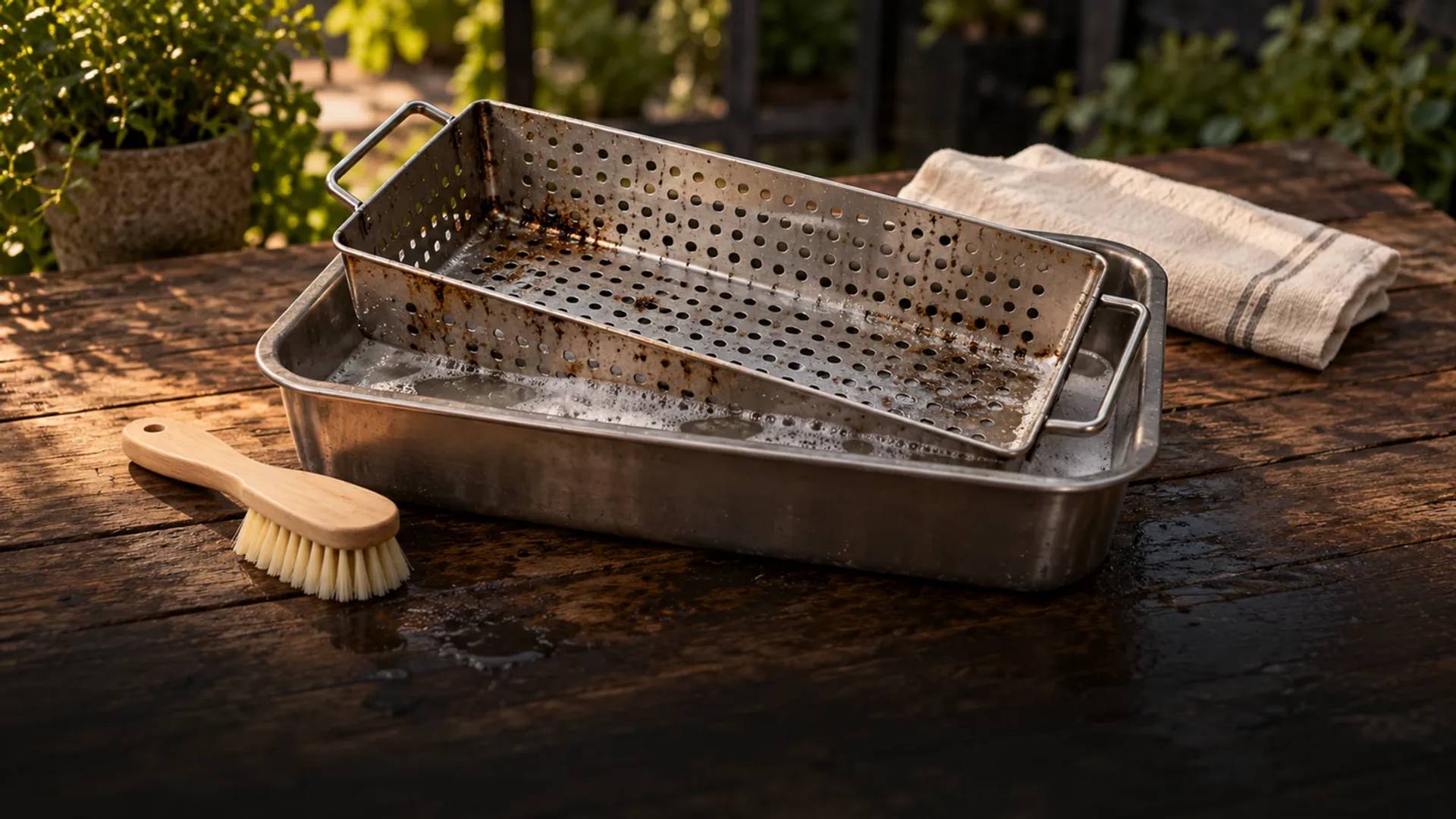
- Grease tray and cup: Remove cooled grease, clean reusable parts, and replace full disposable pans. Do not block drainage with foil or makeshift liners.
Take extra care with burners. Their small gas ports need a model-specific cleaning method. Use a separate, clean brush as directed; do not transfer grease from a grate brush. Protect the igniter and never push pins or nails into the ports. Weber's burner tube guide explains these precautions.
Do not hose down the assembled grill or use a pressure washer. Dry all cleaned parts and put them back correctly before use. If you disturb a gas connection, follow the manual's leak-test steps before lighting. Do not use the grill if you smell gas.
Fix streaks, water spots, and stubborn marks
Start with the mildest method and check the result before doing more. A used grill may have heat marks or scratches that cleaning cannot erase.
| What you see | What to try | What to avoid |
|---|---|---|
| Greasy smears or fingerprints | Wash gently, rinse, and buff dry with a clean cloth. | Spreading grease with a dirty cloth. |
| White haze or water spots | Remove soap residue, then dry. Use an approved cleaner for marks that remain. | Adding more polish over residue. |
| Small orange spots | Clean promptly with the maker's approved stainless steel treatment. | Steel wool, bleach, or harsh rust removers. |
| Golden or brown heat tint | Wash off surface dirt. Some heat color may remain. | Sanding the finish to chase a perfect silver color. |
Salt, pool chemicals, and damp conditions can increase staining. Weber recommends treating early stains promptly. Deep pits, flaking metal, or damaged grates need inspection by the maker or a qualified service person.
Keep the shine between cookouts
You can save the bigger scrub for later by dealing with small messes early. Once the grill has cooled, wipe away sauce splashes and greasy handprints. Clean the grates after each cook using the right tool and temperature for your setup.
Check the grease cup before each use and empty it as needed. Plan a deeper clean based on how often you grill and what the manual says. Fatty foods and heavy use can fill a tray faster than you expect.
Let the grill cool and dry before covering it. Clean the exterior more often near the sea or a pool. Keep bleach, chlorine cleaners, steel wool, oven cleaner, and rough scouring pads away from the stainless finish. Avoid long, high-heat burn-offs as a shortcut for a grease-filled grill.
For regular grate care
Explore the Easy Function Bristle Free Brush
If you prefer a bristle-free brush, take a look at our option for your cleaning kit. Check the listing and instructions for grate fit and cleaning temperature. Inspect the tool and grates each time you use it.
Stainless steel gas grill cleaning FAQs
Can I use vinegar or baking soda on the outside?
Start with mild soap and water. Use vinegar or any paste only if your grill maker approves it for that exact finish. Acidic cleaners and abrasive pastes can harm some surfaces. A suitable nonabrasive stainless steel cleaner is a better next step for stubborn marks.
Should I oil the lid to make it shine?
Follow the grill maker's exterior care steps. Cooking oil is not our first choice for polishing the lid. Wash, rinse, and dry it first. If you want a finishing product, choose a stainless steel polish made for outdoor grills and follow its label.
Can I use my grate brush on the stainless steel lid?
Keep it for the grates. A dirty or rough brush can scratch the lid and spread grease. Use a clean microfiber cloth on the exterior, with gentle pressure along the grain.
Do clean grates have to look silver again?
No. Used stainless steel grates can keep dark or heat-colored areas. Focus on removing loose food, grease buildup, cleaner residue, and tool debris. Do not grind away the surface just to restore its first-day color.
Ready for your next cookout?
A gentle wash, a clean grease tray, and a dry finish go a long way. Explore our grilling tools or join us on YouTube for more backyard BBQ ideas.
Every Easy Function product ships with a free lifetime replacement warranty.