The quick answer
How do you clean a grill with lemon?
Lemon can help with light food residue on grates approved for citrus cleaning. Let the grill cool, scrape away loose bits, rub gently with half a lemon, then rinse and dry. Skip lemon on bare cast iron and any surface whose maker warns against acids. Use an approved cleaner for thick grease.
A cut lemon is a handy kitchen leftover, so it makes sense to wonder whether it can help after a cookout. The key is knowing what your grill can handle. Lemon juice is acidic, and a cleaning trick that suits one surface may damage another.
Start with your grill manual. For example, Weber's Spirit cleaning guidance warns against cleaners that contain acid. If your manual gives a similar warning, save the lemon for your food and use the approved cleaning method.
Affiliate disclosure: Behind the Grill is an Easy Function publication, and the wood scraper featured here is our product. We may earn a commission from qualifying purchases made through affiliate links, at no extra cost to you.
Check your grate material before using lemon
A shiny grate is not always stainless steel. Some grates have a coating over another metal. Check the product details rather than guessing from the color.
| Grate surface | Should you use lemon? | Better starting point |
|---|---|---|
| Stainless steel | Only if the maker allows citrus or acidic cleaners on the cooking grate. | Approved grate cleaner and a suitable cleaning tool. |
| Bare cast iron | Skip it to protect the seasoning. | Scrape, clean as directed, dry fully, and oil as required. |
| Porcelain or enamel coating | Use only with the grill maker's approval. Avoid harsh scrubbing. | A non-scratch pad and the recommended cleaner. |
| Aluminum or an unknown finish | Skip lemon unless the maker specifically permits it. | Identify the surface and follow its care guide. |
Seasoning is the thin layer of baked-on oil that protects bare cast iron. Lodge explains that acidic ingredients can affect this layer, especially when seasoning is weak or contact lasts a long time. A quick splash does not mean a grate is ruined, but lemon is a poor choice for routine cast iron cleaning.
There is also a reason to be careful with aluminum: Nordic Ware's aluminum care advice notes that prolonged contact with acidic ingredients can darken or pit the metal. That is material-care guidance, rather than a test of lemon on grill grates.
What you need for a simple cleanup
- One fresh lemon, if citrus cleaning is approved for your grate.
- A grate-safe scraper or brush for stuck food.
- A soft cloth or non-scratch sponge.
- Clean water for rinsing and a clean towel for drying.
- Mild dish soap or an approved grate cleaner for greasy areas.
Start with the stuck-on bits
Our Easy Function Wood Grill Scraper is an option for the scraping part of your routine. Its wooden edge has no wire bristles. Check that it suits your grate and follow the scraper's use instructions, including any first-use shaping steps.
New to wooden scrapers? Read our wood grill scraper instructions.
How to clean grill grates with lemon, step by step
Use these steps only when your grill maker allows lemon on the cooking surface. This is a light cleanup method, and there is no universal lemon recipe or soaking time that suits every grate.
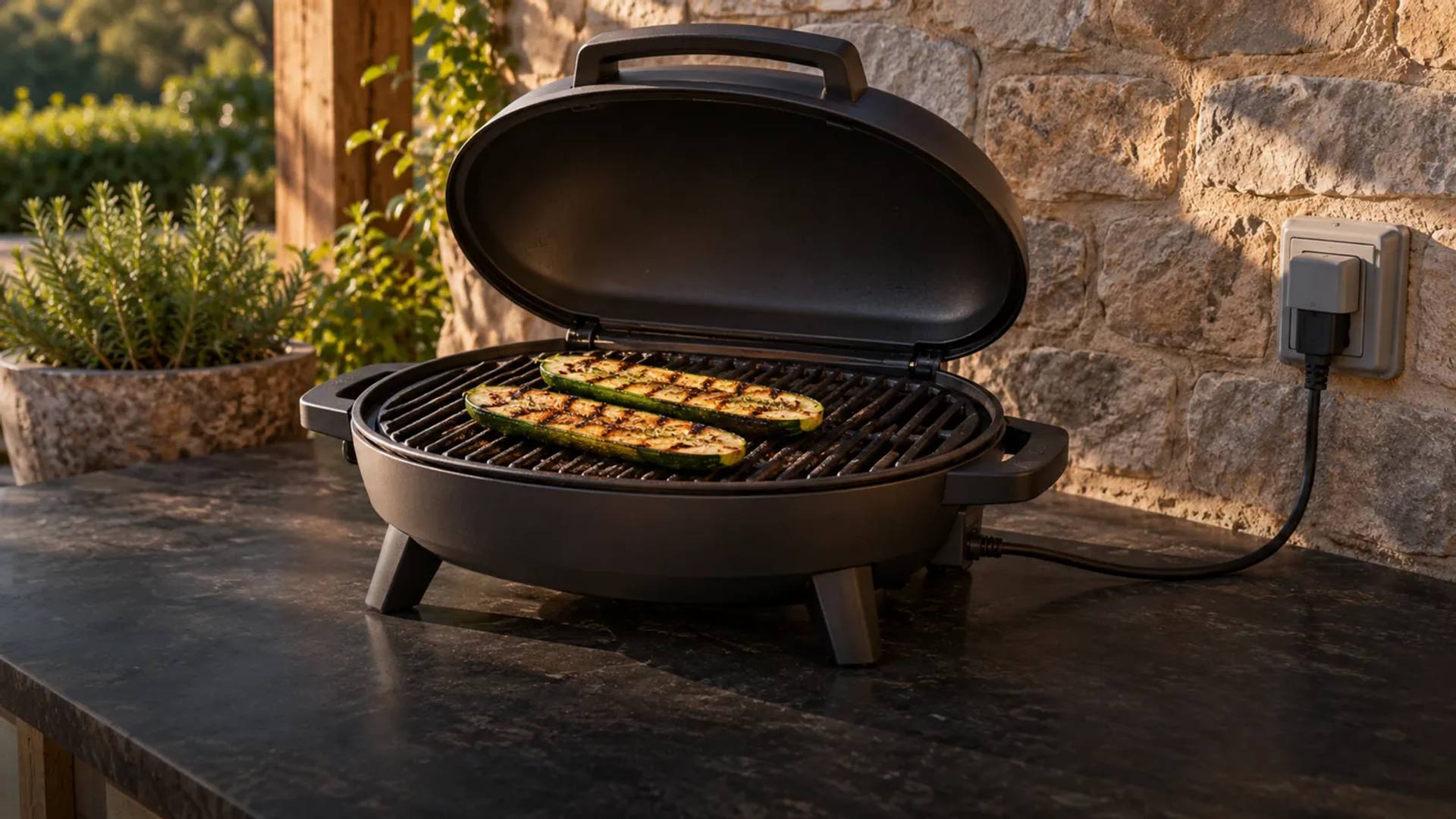
- Turn off the grill and let it cool. Shut off the gas supply on a gas grill. For charcoal, wait until the coals are fully out. Unplug an electric grill once switched off. Keep liquids away from electrical parts, burner openings, and fuel components.
- Remove loose food first. Use a tool approved for your grate. Work along the bars with controlled strokes. If a wood scraper needs heat for shaping or use, complete that separate task according to its instructions, then let the grill cool before the lemon step.
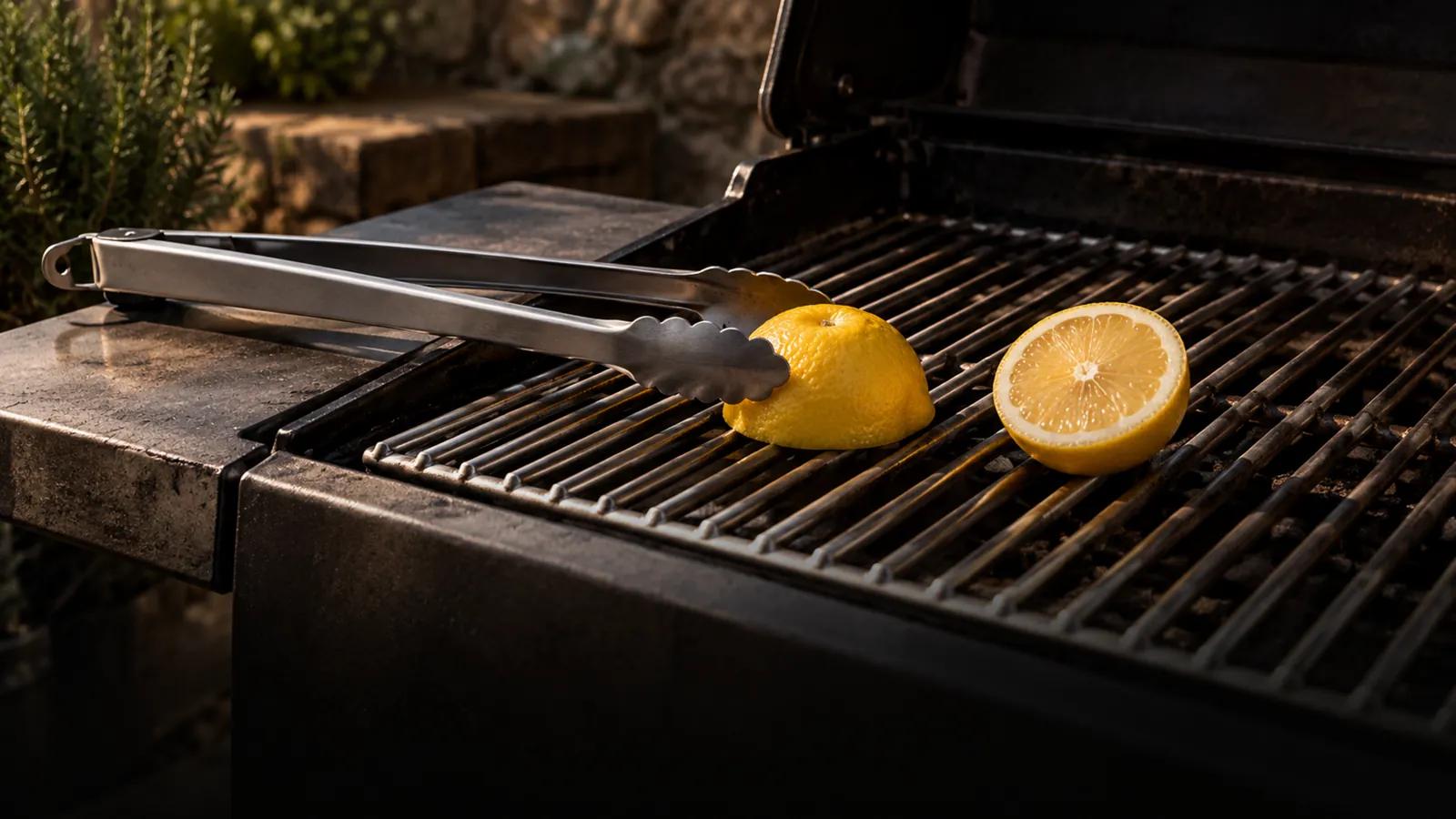
- Rub lightly with a lemon half. Cut a fresh lemon across the middle. Hold the rind and move the cut side over a small area of the cool grate. Use gentle pressure. Avoid flooding the grill with juice or leaving lemon halves sitting on the metal.
- Wipe away the loosened bits. Lift food residue with a damp, non-scratch sponge or cloth. Remove seeds and pulp from between the bars. If a patch stays greasy, move to the maker's approved cleaner instead of scrubbing harder.
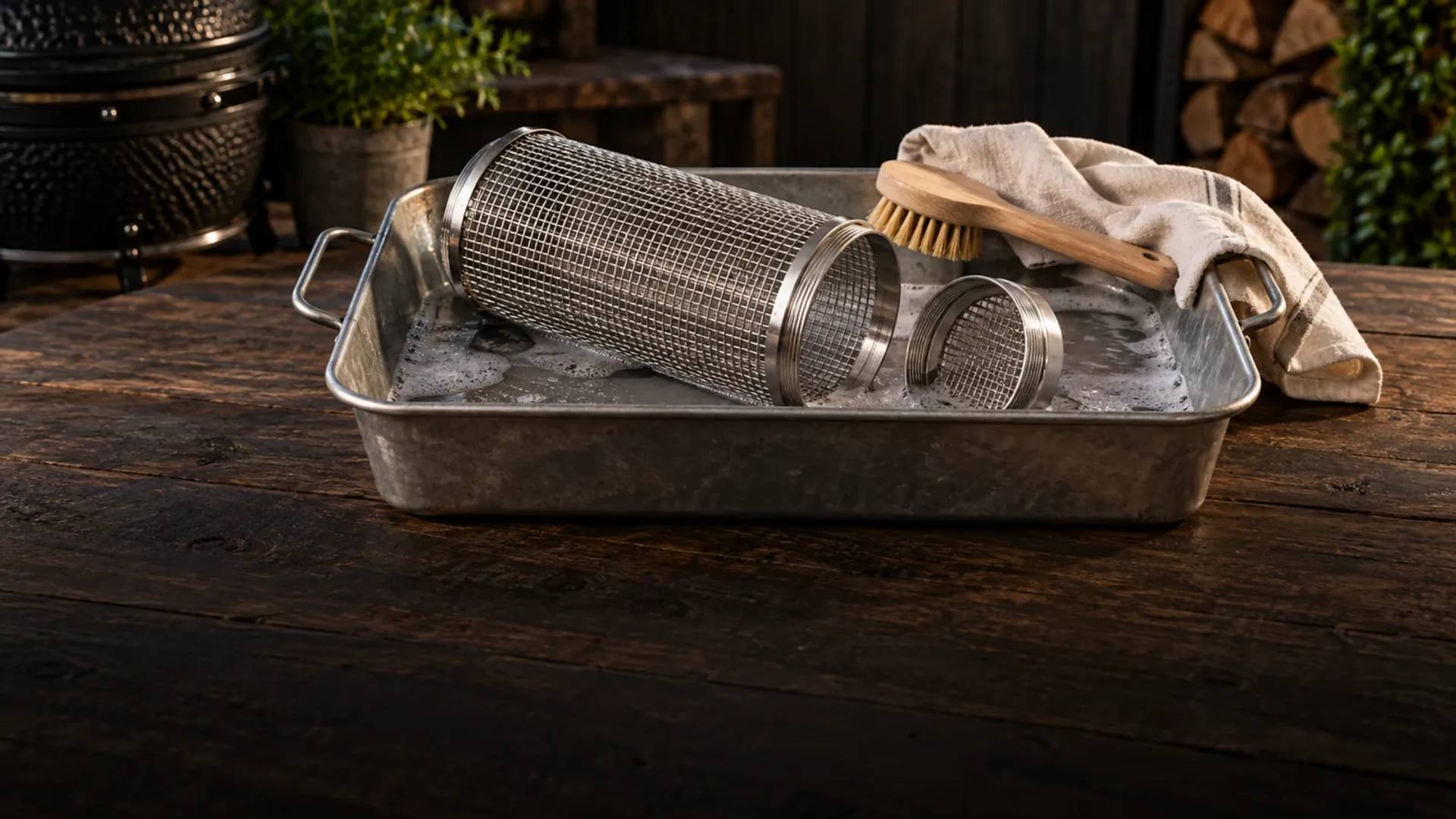
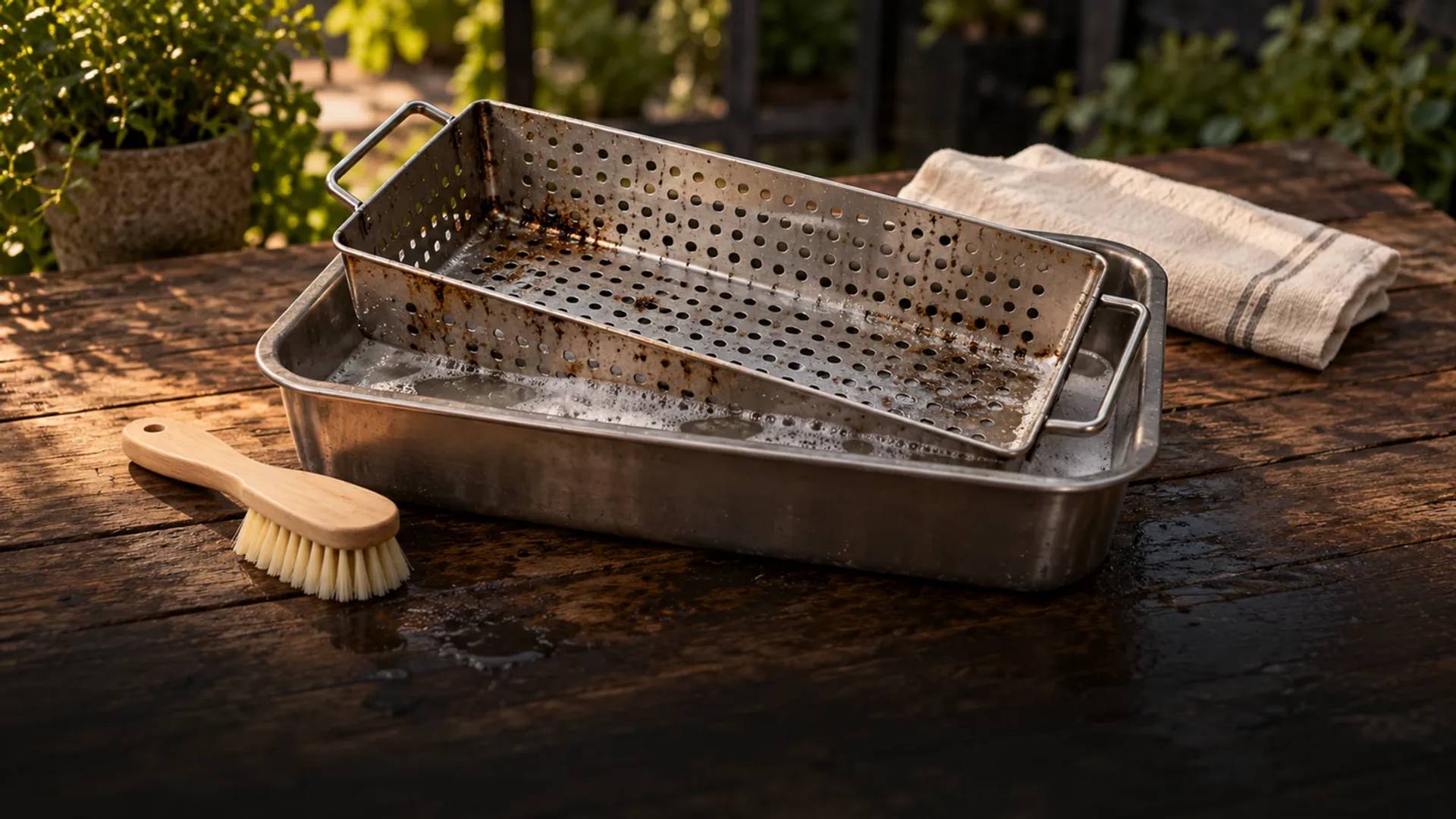
- Rinse promptly and dry fully. For removable grates that can be washed, rinse away the juice and food debris. For grates cleaned in place, use repeated clean-water wipes without soaking the grill. Dry well, including the edges and underside where you can safely reach.
Check the surface before cooking again. It should be free of pulp, loose debris, and cleaner residue. Follow the grill's normal preheating instructions for your next cook.
Keep the finish step simple: Rinsing removes lemon residue; drying helps prevent moisture problems. For grates that need seasoning, follow the maker's oiling directions after cleaning. Use a thin coat rather than leaving oil pooled on the surface.
What if the grill is still greasy?
After sticky ribs or several rounds of burgers, a lemon half may make little difference. Thick grease and hard, baked-on food need scraping and a cleaner designed for the surface. Use mild soapy water where the manual permits it, then rinse and dry.
Bare cast iron needs its own care routine. Lodge's cast iron cleaning method uses washing, complete drying, and a thin coat of oil. It also advises against soaking. Check your grate manual for the right tools and seasoning steps.
Give the grease tray and areas under the grates attention too. Clean them as directed once the grill is cool. A wipe across the cooking bars does not remove grease collected below them.
Small mistakes worth avoiding
- Adding salt for extra scrubbing. Start with a non-scratch tool. An abrasive pantry mix is not suitable for every coating.
- Leaving juice to soak. Keep contact brief and rinse it away. Extra soaking is not a shortcut to a cleaner grill.
- Mixing cleaning products. Use one method at a time. Never mix lemon juice with bleach.
- Using lemon on every grill part. Handles, painted panels, burners, and electrical parts can need different care.
- Trusting a fresh smell. Remove the food and grease you can see and feel. A citrus scent does not prove the surface is clean or sanitized.
For easier cleanup next time, remove food debris after each cook using the method your grill maker recommends. Wash and dry your cleaning tools too. Keep a wooden scraper dry between uses and avoid soaking it.
Keep a scraper ready for your next cookout
Build your routine around a suitable scraping tool, the right cleaner, and a thorough rinse and dry. Explore our Easy Function Wood Grill Scraper for the food-removal step.
Common questions about cleaning a grill with lemon
Does lemon juice sanitize grill grates?
No. Queensland Health says lemon juice is not an effective sanitizer. Sanitizing is a separate step after cleaning. Follow your equipment's approved heat or food-contact sanitizing method when needed.
Should the grill be hot for lemon cleaning?
For the lemon method described here, let the grill cool first. A hot grate adds a burn risk, and liquid can spit or steam. Follow separate temperature instructions for any scraper or brush you use.
Can I leave lemon juice on the grill overnight?
Avoid it. Long contact with acid and moisture can be a problem for some metals and finishes. Remove the juice promptly, rinse or wipe with clean water, and dry the surface.
Will lemon clean rust off grill grates?
Use the grate maker's rust-removal method. Rust on bare cast iron may call for cleaning and fresh seasoning. A chipped or flaking coating needs a different response, so check with the maker before cooking on it.
More tools and tips for your grill
Choose tools that suit your grates and make cleanup part of your cookout routine. Browse our BBQ products or join us on YouTube for more from Easy Function.
Every Easy Function product ships with a free lifetime replacement warranty.