The quick answer
How do you clean grill grates after cooking fish?
Shut down the grill and let the grates cool. Lift off fish skin and flakes with a compatible scraper. Wash removable grates with warm, soapy water, rinse, and dry well. Lightly oil bare cast iron as directed. Follow your grill manual, and never rely on heat alone to remove fish allergens.
Grilled salmon is great. Finding last night's salmon skin stuck to the grate before cooking burgers is less fun. A little care after dinner keeps that mess from becoming your next cleanup project.
Start by checking your grate material. Weber's official grate-care guide explains why gentle tools and thorough drying matter. Your own grill's care instructions should guide the method you use.
Affiliate disclosure: Some links below are affiliate links. We may earn a commission if you buy through them, at no extra cost to you. Read our full disclosure.
What you'll need before you start
Keep the kit simple. You do not need a strong chemical cleaner for every fish dinner.
- A scraper or brush approved for your grate surface.
- Mild dish soap, warm water, and a non-scratch sponge.
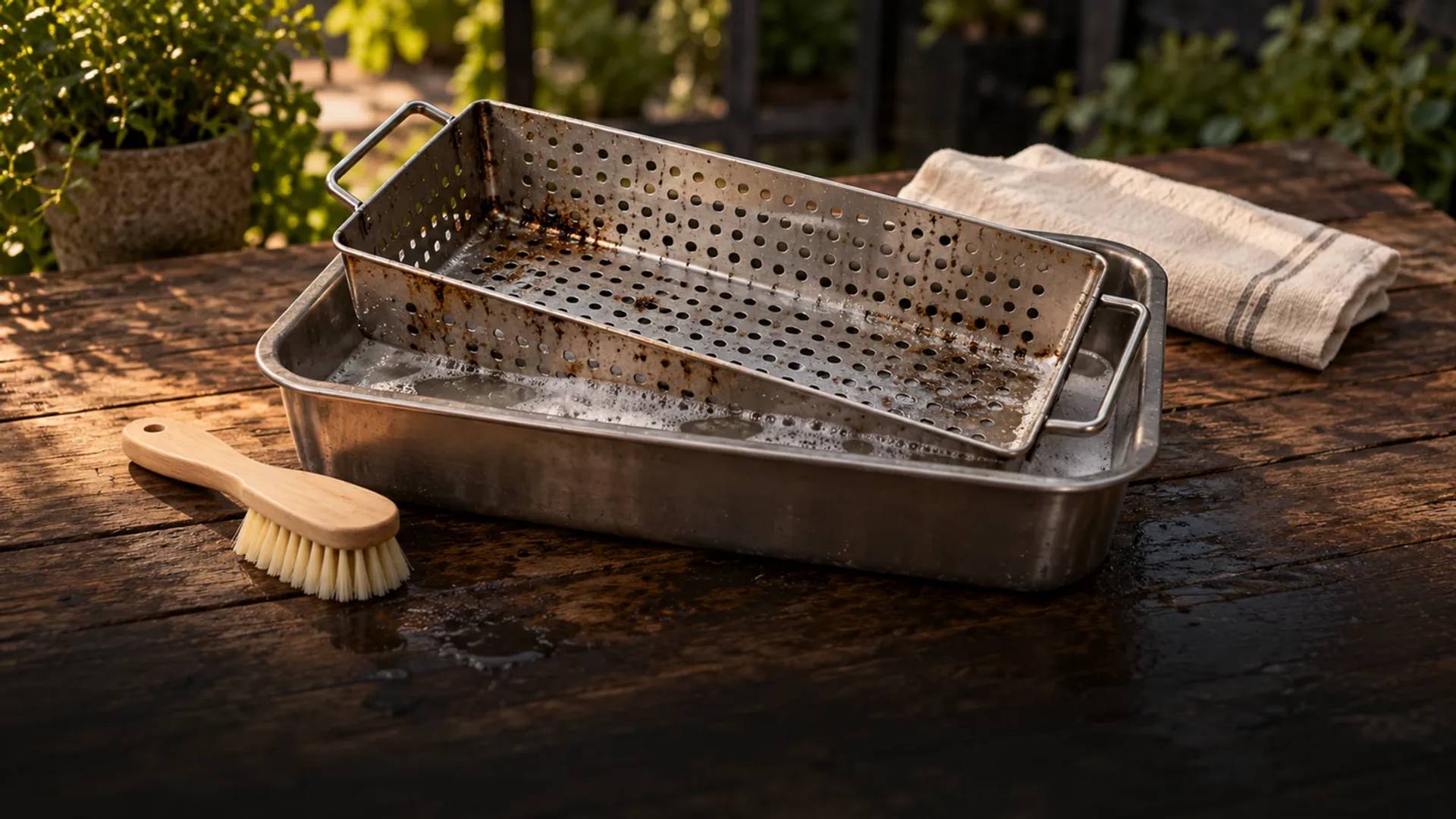
- A tray or basin for removable grates.
- Clean towels and a little cooking oil for bare cast iron.
Check your tool before using it. Replace loose, broken, or badly worn parts. The CDC has reported injuries from swallowed grill-brush bristles, so inspect the grates for debris before cooking, too.
Try our Easy Function Wood Grill Scraper
Want a wooden scraping edge instead of wire bristles? Explore our wood scraper for your cleanup kit. Check that it suits your grates, and follow its instructions for use and heat limits.
Clean fish residue off grill grates in five steps
For a full cleanup, work with cool grates. A quick scrape lifts loose bits; washing removes the greasy film left behind.
- Shut down and cool. Turn off gas burners and close the fuel supply as your manual directs. Run a pellet grill's full shutdown cycle. For charcoal, follow the shutdown instructions and wait until the coals and grates are cold. Do not pour water onto hot grates.
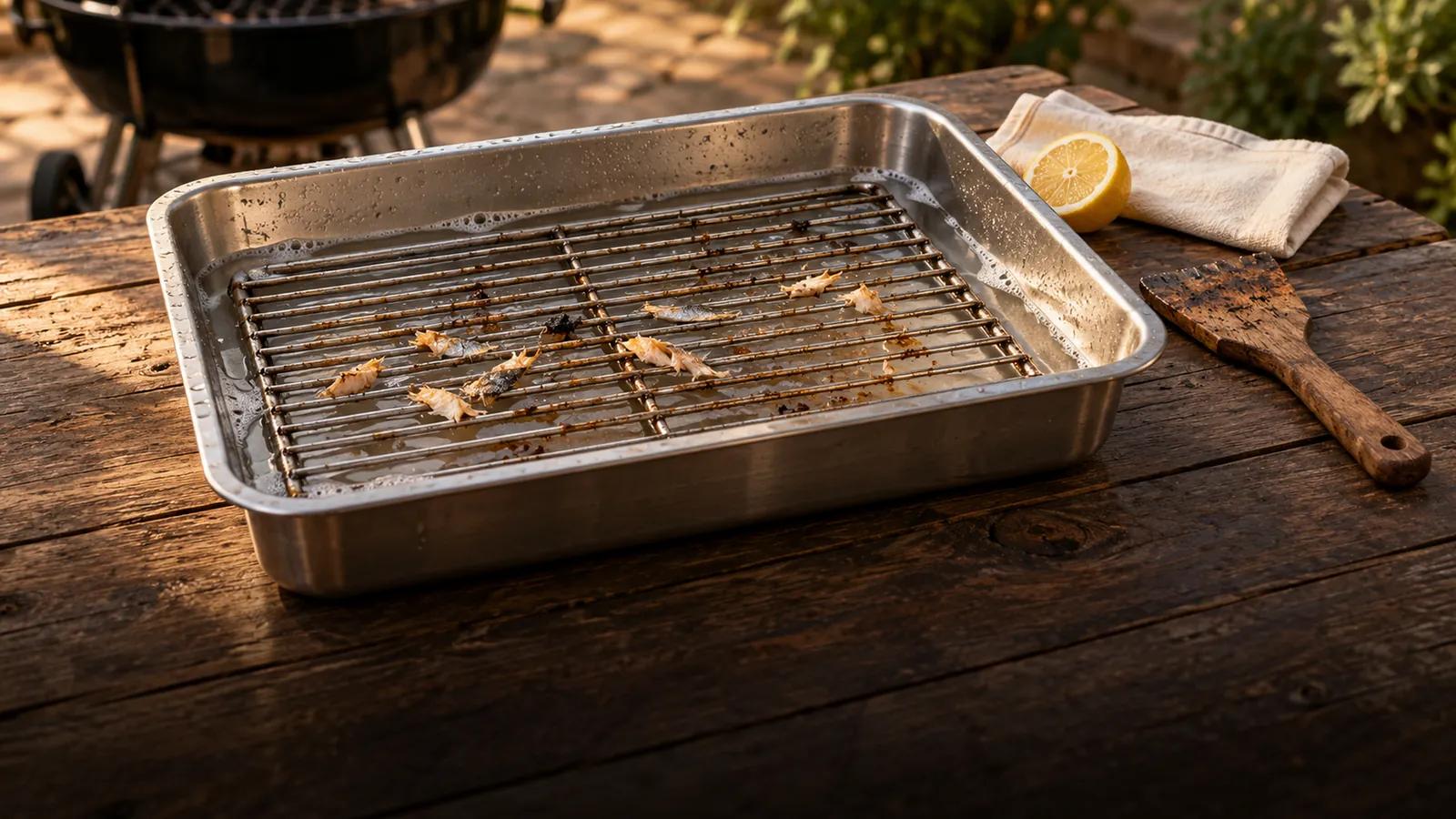
- Lift off skin and flakes. Remove the cool grates if your grill allows it, and set them on a tray. Work a compatible scraper along the bars with light pressure. Check the undersides and edges, where small scraps are easy to miss.
- Wash away the oily film. Use warm water, a little mild dish soap, and a non-scratch sponge or approved brush. Work between the bars. Wash bare cast iron promptly without soaking it. For other materials, soak only if the maker allows it.
- Rinse and dry. Rinse off the soap and loosened food. Dry all sides with a clean towel, including corners and joints. Keep wash water away from burners, electrical parts, and the grill's fuel system.
- Protect and put back. Give bare cast iron a very thin coat of cooking oil, then follow its seasoning instructions. Refit the dry grates. Before the next cook, inspect the surface and preheat as your grill manual directs.
If the grates cannot be removed, use the cleaning method in your manual. Do not flood the grill to copy a sink-washing routine.
Match the method to your grate material
A black grate may be bare cast iron or coated iron. Check the product details before scrubbing harder.
| Grate material | Best starting point | Take extra care with |
|---|---|---|
| Stainless steel | Mild soap, warm water, and a suitable non-scratch tool. | Harsh abrasives and cleaners the maker has not approved. |
| Bare cast iron | Brief hand washing, complete drying, and a thin oil coat. | Soaking, damp storage, and stripping off good seasoning. |
| Porcelain or enamel coating | A soft sponge or coating-approved brush on cool grates. | Sharp scraping, chipped areas, and sudden temperature changes. |
Soap is not off-limits for bare cast iron. Lodge's cast iron care guide allows dish soap but warns against soaking. It covers cookware; follow your grate maker's instructions for seasoning and heat.
For coated grates, gentle pressure matters more than speed. Charbroil's cleaning guide calls for cool porcelain-coated grates and a nylon brush. Ordinary nylon brushes should never touch hot grates.
What if the grill still smells like fish?
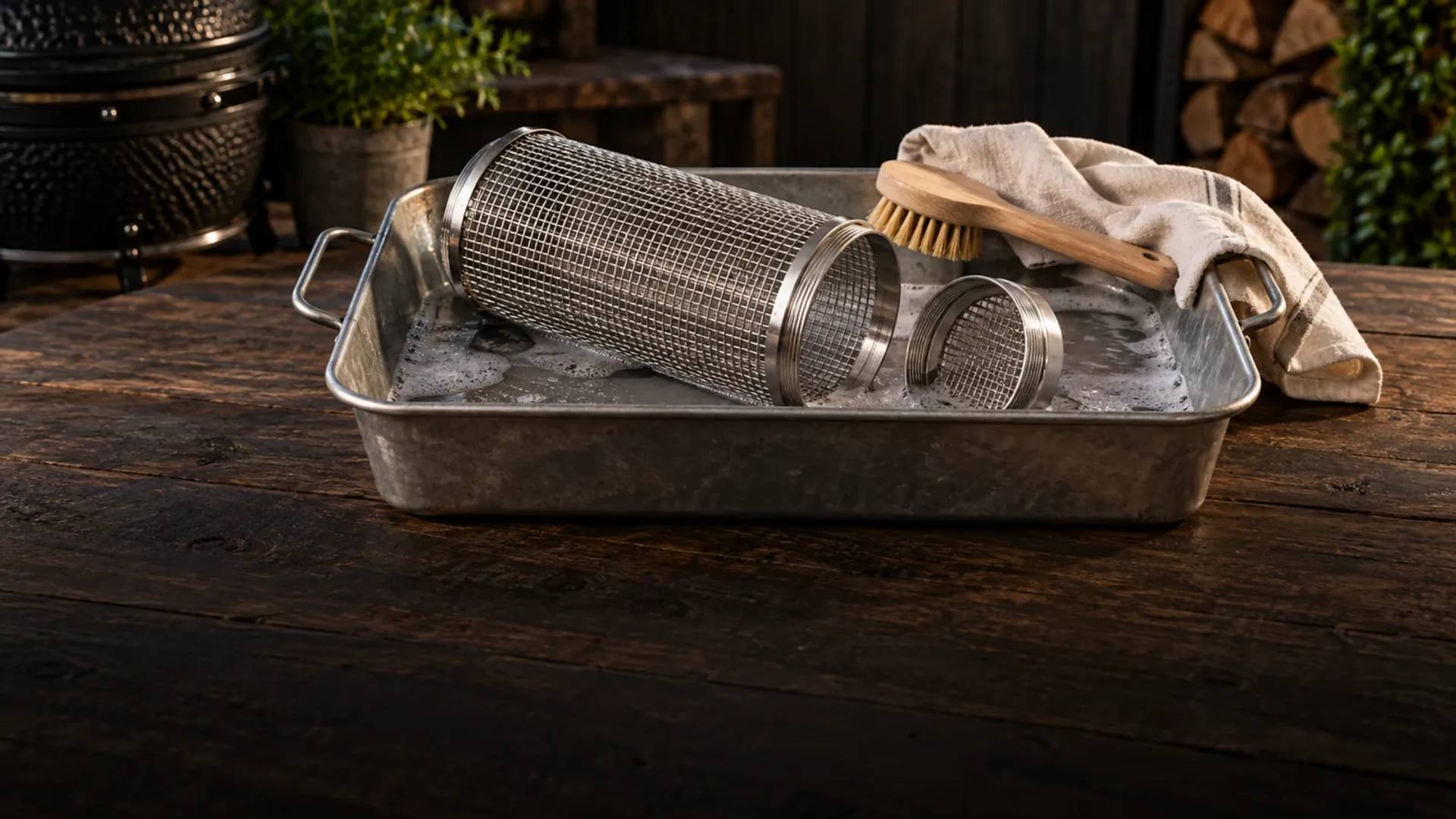
Look for scraps before reaching for a scented cleaner. Check the grate undersides, fish basket, used cleaning tool, and cooled drip tray. Clean those parts as their makers direct. Putting clean grates over old fish drippings can leave the job feeling unfinished.
Wash any remaining greasy patches again. Skip rubbing lemon over the bars just to cover the smell. Weber advises against citrus-based cleaning soaps on its grates, and a fresh scent does not prove the surface is clean.
Prefer a bristle-free brush?
Explore our Easy Function Bristle Free Brush for your grill-care kit. Check the listing's grate compatibility and cleaning instructions before choosing it. Inspect any cleaning tool for wear before each use.
Does cleaning make a shared grill safe for a fish allergy?
A clean-looking grate is not proof that fish protein is gone. FARE's cross-contact guidance explains that cooking does not remove the risk of an allergic reaction. Dry scraping or wiping alone is not enough.
When cooking for someone with a fish allergy, use separate clean cookware and utensils, and agree on a safe preparation plan with them. Wash hands and food-contact tools with soap and water. Keep their meal away from fish, used tongs, and splashes. Do not promise that a shared grill is allergen-free after a quick cleanup.
Skip these common cleanup mistakes
- Foil-covered burn-offs: Do not cover the grate with foil and run the grill on high. Weber warns this can trap heat and damage the grill.
- One cleaner for every surface: Use only products approved for your grates. Follow their rinse instructions before food touches the surface.
- Damp storage: Dry washed grates before putting them away. Do not leave bare cast iron sitting in a sink overnight.
- Chasing a shiny finish: Remove food and loose buildup. Bare cast iron's smooth, dark seasoning does not need to be scrubbed away after dinner.
Questions about cleaning grill grates after fish
Should I clean the grates while they are hot?
Some grills allow hot scraping with a suitable tool. For the wash in this guide, let the grates cool first. Never handle hot grates, use an ordinary nylon brush on them, or plunge them into water.
Can I just burn off the fish residue?
A maker-approved heating step may loosen residue, but you still need to remove the debris. There is no single burn-off time for every grill, and heating alone does not make a shared grill safe for someone with a fish allergy.
Can I use vinegar or baking soda?
Start with mild dish soap and water. Use vinegar or a baking soda paste only if your grate maker permits it. Do not assume that a fizzing mixture is needed to lift fish residue or remove allergens.
How can I make cleanup easier next time?
Start with clean grates, preheat properly, and follow your recipe's oiling advice. A fish basket can keep fragile pieces together, though the basket needs washing too. Keep your cleaning tools handy so the job is easy to start once the grill has cooled.
Keep your next cook fresh
Clear the fish scraps, wash away the grease, and give the grates time to dry. Browse our tools for your next cleanup, or join us on YouTube for more grilling tips.
Every Easy Function product ships with a free lifetime replacement warranty.