THE QUICK ANSWER
How do you clean a smooth top electric range safely?
For everyday cleaning, turn the range off and let the glass cool. Wipe away loose crumbs, clean with a soft cloth and a product approved for your cooktop, then remove residue and dry. Use a cooktop scraper only if your manual allows it. Sugar and melted plastic need special spill care.
A smooth top looks easy to wipe down until a pot boils over. Then you are left with a dark ring, sticky sauce, or a cloudy patch that will not budge.
The trick is to match the method to the mess and the surface. Start with your model's manual. The official GE glass cooktop guide is a useful example, but coated tops can have different care rules.
Affiliate disclosure: Some links below are affiliate links. We may earn a commission from qualifying purchases at no extra cost to you. Our Easy Function product links are for outdoor grill care.
Choose the right supplies before you start
You do not need a cabinet full of cleaners. A small kit makes it easier to keep the right tools close by:
- Two clean, soft cloths: one for wiping and one for drying.
- Water and, if allowed by your manual, a little mild dish soap for light grease.
- A ceramic-glass cooktop cleaner approved for your range.
- A cleaning pad labeled safe for that cooktop surface.
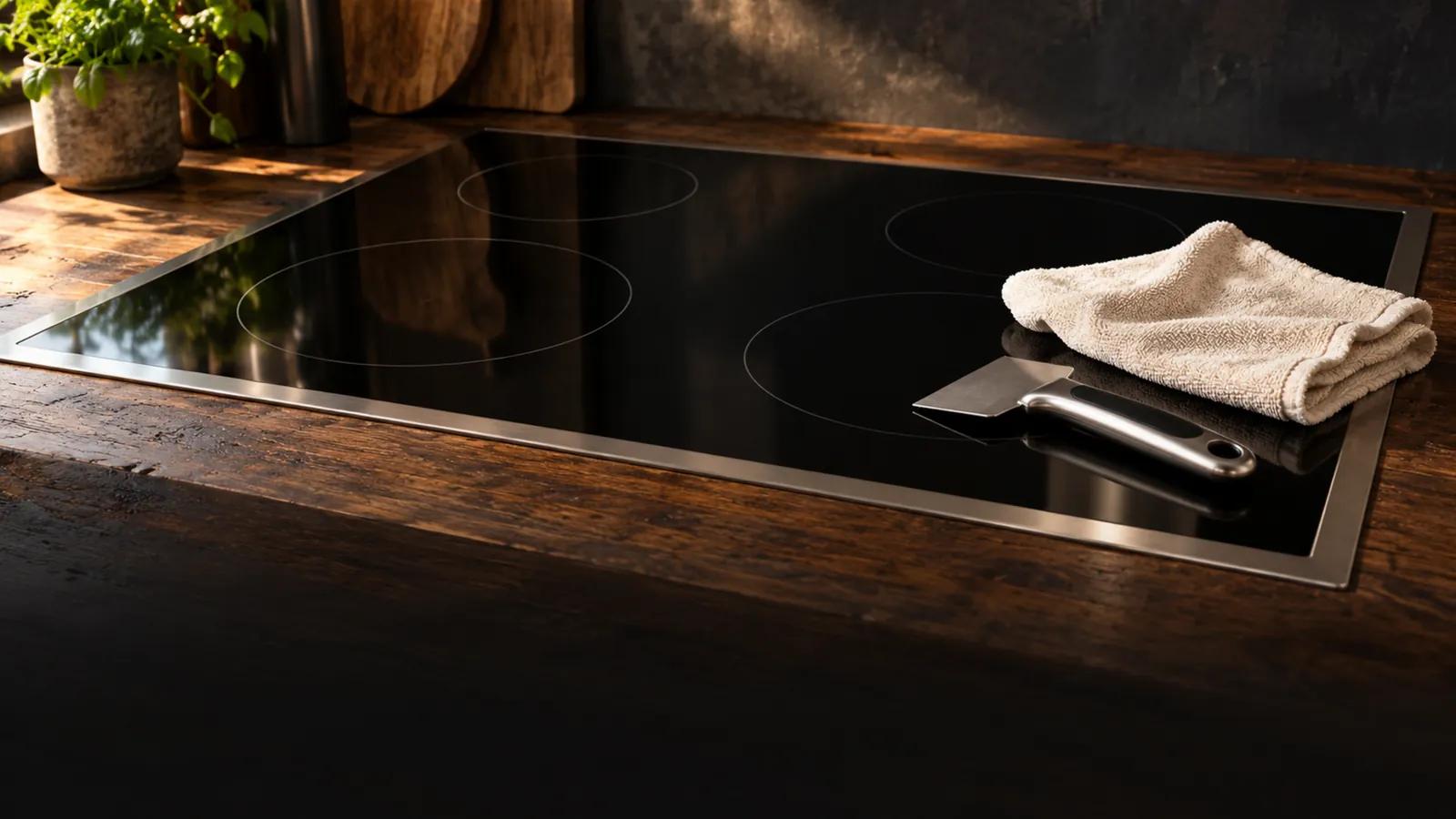
- A purpose-made cooktop scraper, only for models that allow one.
Check for a special coating
Whirlpool says scrapers can harm its WipeClean coating. Its WipeClean care guide starts with water, a soak, and a soft sponge. A tool that suits one glass top may damage another.
How to clean the cooktop after everyday cooking
For light grease and fresh food spots, keep the process gentle. These steps cover the glass surface, where the heating elements sit underneath.
- Turn everything off and let it cool. Remove cookware when safe. Follow the hot-surface light and your manual; do not touch the glass to test its heat. Do not wipe hot glass with a wet cloth; steam can burn you. Keep sugar or melted-plastic spills out of this routine and use the special guidance below.
- Pick up loose crumbs. Use a clean, soft cloth to lift away food and grit. Check the cloth too. A bit of hard debris caught in it can turn a quick wipe into a scratch.
- Wipe away light grease. Use a damp cloth. If your manual permits mild dish soap, add a small amount to the cloth, wipe, then remove the soap with a separate damp cloth. Avoid leaving puddles around controls and edges.
- Treat spots that remain. Apply the approved cooktop cleaner as directed. Work it over the marks with the recommended pad or cloth. Give it the label's stated working time rather than scrubbing harder.
- Remove the cleaner and dry. Follow the label's wiping or rinsing steps, then buff with a fresh, dry cloth. Check the surface from the side for streaks. Remove all cleaner residue before you cook again.
For the trim and knobs, use their own care instructions. Keep glass-cleaning cream off finishes or sensors unless the manual says it is safe there. Only remove knobs that the maker says are removable.
Remove burnt-on food without digging into the glass
Start with approved cleaner and the correct pad. Repeat the treatment if needed. For hardened spots, LG's glass cooktop guide describes using its supplied scraper at about a 45-degree angle after the surface has cooled.
Use that method only if your range allows it. Follow its directions for surface temperature, blade angle, and cleaner use. Keep the blade edge even against the glass and gently lift the deposit. Do not jab with a blade corner, use a kitchen knife, or scrape with a damaged blade.
If the mark is flat, take a closer look before reaching for a scraper. The problem may be a deposit rather than a piece of burnt food.
| What you see | What to try | When to stop |
|---|---|---|
| Raised, burnt food | Approved cleaner; a cooktop scraper only if permitted. | The method is not lifting it or needs forceful digging. |
| White rings or cloudy deposits | Cooktop cleaner and the maker's recommended pad. | Repeated approved cleaning makes no change. |
| Gray or shiny pan marks | Treat possible metal transfer with approved cooktop cleaner. | The mark appears to be a scratch, pit, or crack. |
Café's glass cooktop care tips cover water deposits and pan marks. Actual scratches are different: a cleaner cannot fill missing glass.
FOR YOUR OUTDOOR GRILL
Keep a separate tool for grill cleanup
Cooking on the grill this weekend too? Explore the Easy Function Wood Grill Scraper for your grill-care kit. It is a grill tool; do not use it as a scraper for your smooth glass cooktop.
Sugar and melted plastic need a different approach
Hot jam, syrup, candy, and melted plastic can bond to some glass tops and leave pits as they cool. Turn off the elements and check your manual's spill instructions promptly.
For its standard glass tops, GE directs users to remove pans safely, wear an oven mitt, and use a new, sharp cooktop scraper to move the spill to a cool area. It then calls for removing the moved spill with paper towels and leaving the remaining residue until the glass has cooled.
This is a model-specific exception. Follow your own manual, especially for a coated top. Keep hands away from hot glass and sticky spills. If you cannot follow the hot-spill procedure safely, contact the maker for help. Do not heat the affected element again until all residue is removed.
Skip harsh tools and make the next cleanup easier
A stubborn ring does not call for a tougher scouring pad. Whirlpool's ceramic-glass cleaning instructions warn against steel wool, abrasive powders, chlorine bleach, rust remover, and ammonia.
- Use cooktop products. Do not assume window cleaner, oven cleaner, or grill degreaser is safe for the glass.
- Lift pans instead of sliding them. Keep the bottoms clean and dry, and check for rough edges.
- Clean after cooking. Once the surface is cool, remove normal spills before they get baked on again.
- Watch foods that boil over. Use a roomy pot and lower the heat when liquid rises.
The Samsung electric cooktop care guide also stresses dry pan bottoms and prompt cleanup. Small habits help keep dinner from turning into a long scrubbing session.
Smooth top electric range cleaning FAQs
Can I use vinegar or baking soda?
Some makers, including Samsung, describe these methods for certain stains. They are not a universal choice for every coating or finish. Check your manual first and follow its method. An approved cooktop cleaner is the simpler starting point when you are unsure.
Is dish soap enough for daily cleaning?
It can handle light grease if your model allows it. Use a small amount, wipe away the soap, and dry. For burnt-on food or mineral marks, use the treatment approved for your glass top.
Will cleaning remove scratches?
Cleaning may remove a mark sitting on the glass, such as metal transfer or a mineral deposit. It will not repair a cut or pit in the surface. Avoid grinding away at a line that does not change after proper cleaning.
What if the glass is cracked or pitted?
Stop using the range and arrange service. Do not try to seal the damage with glue or polish. GE's cracked cooktop guidance calls for repair and says to avoid using the oven on an affected range too.
Keep the everyday routine simple: cool the top, lift off loose debris, use the approved cleaner, and dry it well. When a mark needs more care, check the surface type before changing tools.
Explore Easy Function BBQ gear
Getting your outdoor cooking kit ready? Browse our grill tools, including the Wood Grill Scraper linked above. Choose each tool for its intended surface.
Check out all our productsJoin us for more grilling ideas
Find more Easy Function content on our YouTube channel and keep your next backyard cookout on the menu.
Subscribe on YouTubeEvery Easy Function product ships with a free lifetime replacement warranty.