The quick answer
How do you clean a grill without harsh chemicals?
Scrape food from warm grates with a suitable grill tool. Once the grates cool, use warm water and a soft pad to lift leftover mess. For stubborn spots on compatible stainless steel, try baking soda and water. Rinse well, dry fully, and lightly oil bare cast iron.
Sticky sauce, burnt cheese, and last night's burger bits do not always need a strong grill spray. A good tool and a little cleanup after cooking can keep the job simple.
In this guide, “without chemicals” means without harsh commercial grill cleaners. Water, baking soda, and vinegar are chemicals too, but they are familiar household options. The right choice depends on your grill's surface.
Start with your owner's manual. For example, Traeger's official cleaning guide recommends scraping grates while warm and waiting for the grill and ash to cool before deeper cleaning.
Affiliate disclosure: Easy Function is our brand. Some shopping links below are affiliate links, and we may earn a commission at no extra cost to you.
Choose a natural cleaning method for your grates
Check whether the cooking surface is bare metal, porcelain enamel, or another coating. Cast iron can have an enamel layer, so its weight alone will not tell you how to clean it.
| Grate surface | Start here | Take care with |
|---|---|---|
| Stainless steel | Scraping, warm water, and a soft cleaning pad. | Use baking soda only if the maker allows it. |
| Bare cast iron | Gentle scraping, a brief hand wash, full drying, and a thin oil layer. | Avoid soaking and routine acid cleaning. |
| Porcelain enamel | Cool-water cleaning with a soft pad or approved nylon brush. | Sharp metal edges can chip the coating. |
| Nonstick or specialty coating | Use the maker's stated method and approved soft tools. | Do not assume a paste or scraper is coating safe. |
Keep a scraper, soft cloth, non-scratch pad, bowl of warm water, and dry towel nearby. Wear heat-resistant gloves for warm-grate work. Nylon brushes belong on cool grates unless their maker clearly says otherwise.
Method 1: scrape, wash with warm water, and dry
This is the best place to start after a normal cookout. Deal with loose food first, then decide whether the surface needs more work.
- Shut the grill down correctly. Turn off gas burners and the fuel supply as your manual directs. Let pellet grills finish their shutdown cycle before unplugging.
- Scrape while warm, if your grate and tool allow it. Use a long-handled tool and gentle strokes. Keep hands clear of the cooking surface.
- Let the grates cool before washing. Remove washable grates if the manual allows. Work away from burners, pellets, and electrical parts.
- Lift the remaining food. Use warm water and a soft pad. On suitable stainless grates, hold a damp cloth against a sticky patch before scrubbing again.
- Rinse and dry. Remove loosened bits and dry both sides, corners, and joints. Follow the extra cast iron steps below when needed.
If water leaves a slick grease film, use a little mild dish soap where your manual permits it, then rinse well. A water-only routine has limits. You do not need to leave greasy residue behind to avoid a heavy-duty cleaner.
A tool for the scraping step
Easy Function Wood Grill Scraper
Prefer a wood tool for routine cleanup? Our Wood Grill Scraper is an option to consider. Check the fit with your grates and follow its shaping and use instructions. Inspect the wood edge for cracks or splinters before each use.
Method 2: use baking soda for stubborn spots
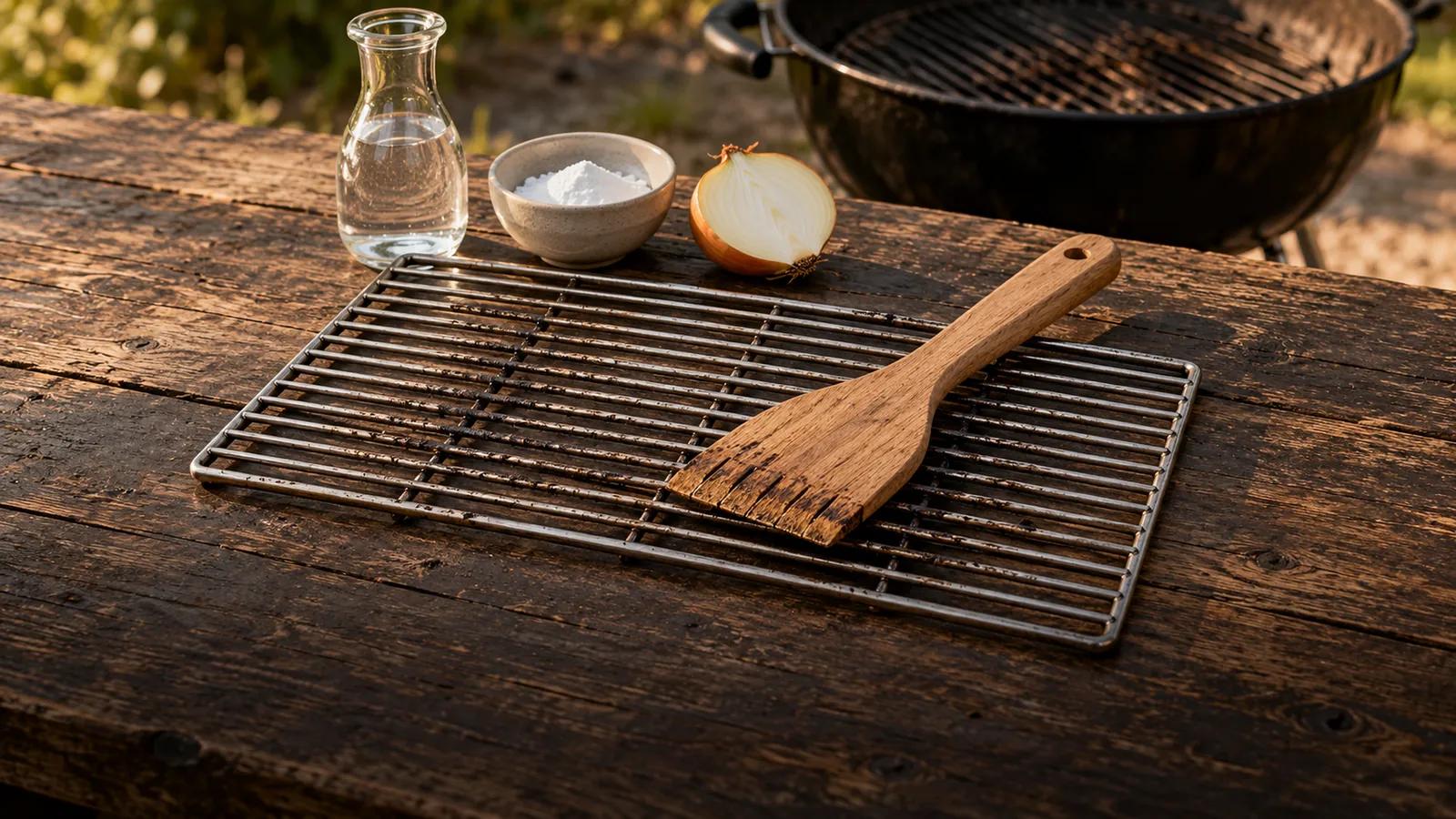
For cooled, compatible stainless steel grates, baking soda and water can help loosen stuck food. Arm & Hammer's grill guide includes a paste made with three parts baking soda to one part water.
- Mix a small batch: 3 tablespoons of baking soda with 1 tablespoon of water.
- Spread it over dirty spots on the cool, removed grate.
- Leave it for a few minutes, then work gently with a non-scratch pad.
- Rinse off all paste and loose food. Dry fully before putting the grate back.
Check before using baking soda on coatings or aluminum. Repeat a gentle pass rather than scraping harder. A dark stain does not always mean there is food left to remove.
Give cast iron and enamel the right care
For bare cast iron, keep washing brief. Lift stuck bits with an approved scraper or brush, wash by hand, and dry at once. Rub on a very thin layer of cooking oil and wipe away the excess. Follow your grill's instructions if the surface needs to be seasoned again.
Lodge's cast iron care advice confirms that a little mild soap is fine, while soaking and air drying can lead to rust. Water itself is not the problem; leaving iron wet is.
For porcelain enamel, use gentle tools and avoid sharp metal edges. Weber's grate-care guidance warns that metal scraping can damage enamel and advises against citrus cleaning agents.
Coated iron is different: Do not automatically season every cast iron grate. Weber says its porcelain-enameled cast iron grates do not need seasoning. Follow the care instructions for your own model.
Do vinegar, lemon, and onions clean a grill?
You will see all three in backyard cleaning tips. Treat them as optional helpers, not a reason to skip scraping, rinsing, or checking the surface.
White vinegar
Use it only on surfaces whose maker permits acids, following its dilution and contact-time advice. Rinse and dry. Skip routine vinegar cleaning on seasoned iron, and do not assume it suits aluminum or coatings.
Lemon and onion
Rubbing food over a grate may move some loose mess, but it leaves more residue to clear. Lemon is acidic. Neither is a reliable way to sanitize the cooking surface.
Do not count on vinegar to disinfect your grill. The American Cleaning Institute explains that vinegar is not a disinfectant.
Also, fizz does not prove that vinegar and baking soda clean better together. The American Chemical Society describes their reaction as producing carbon dioxide, water, and sodium acetate. For this routine, stick with baking soda and water instead of adding vinegar to the paste.
Clean below the grates, too
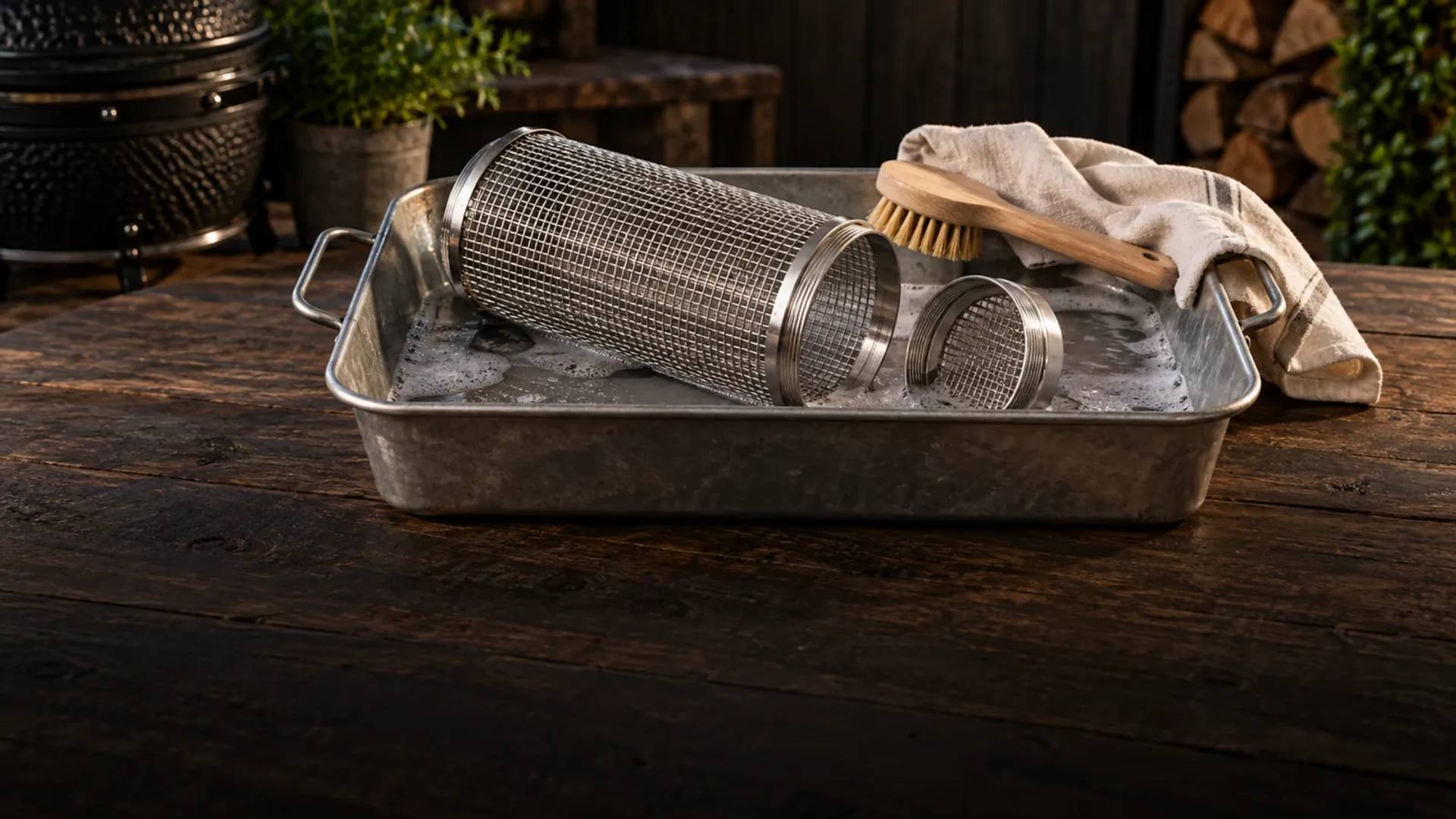
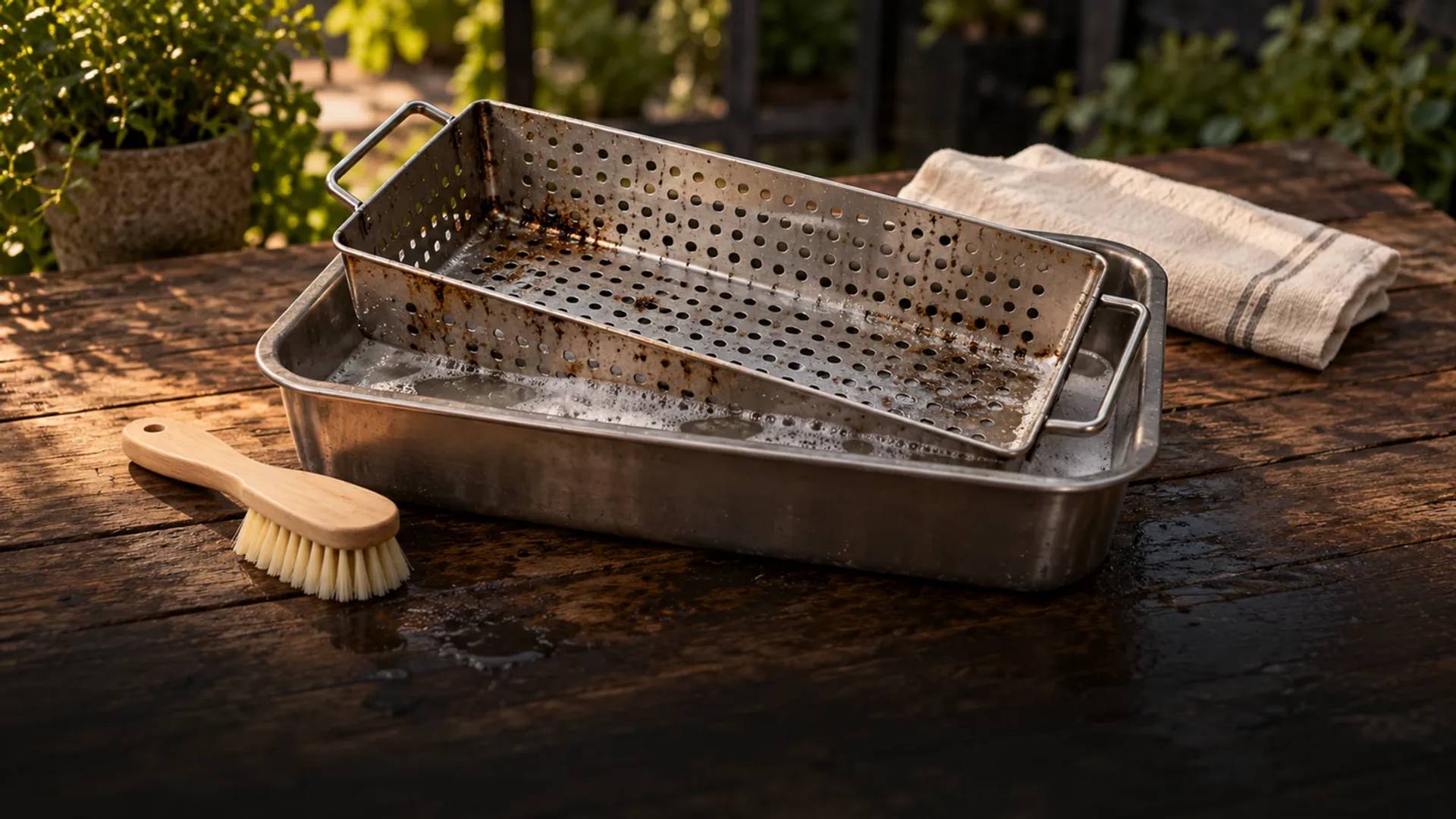
Clean grates do not fix a full grease tray. Once the grill is cold, remove loose debris and empty the grease catcher as your manual directs. Wipe washable trays separately and dry them before putting them back.
- Gas grills: Close the fuel supply before deeper cleaning. Keep water out of burner ports, ignition parts, and gas fittings.
- Charcoal grills: Wait until coals and ash are completely cold. Remove ash before the next cook; Kingsford notes that clearing cooled ash improves airflow.
- Pellet grills: Finish shutdown, unplug, and let everything cool. Keep pellets and electrical parts dry. Follow the manual for grease and cold-ash removal.
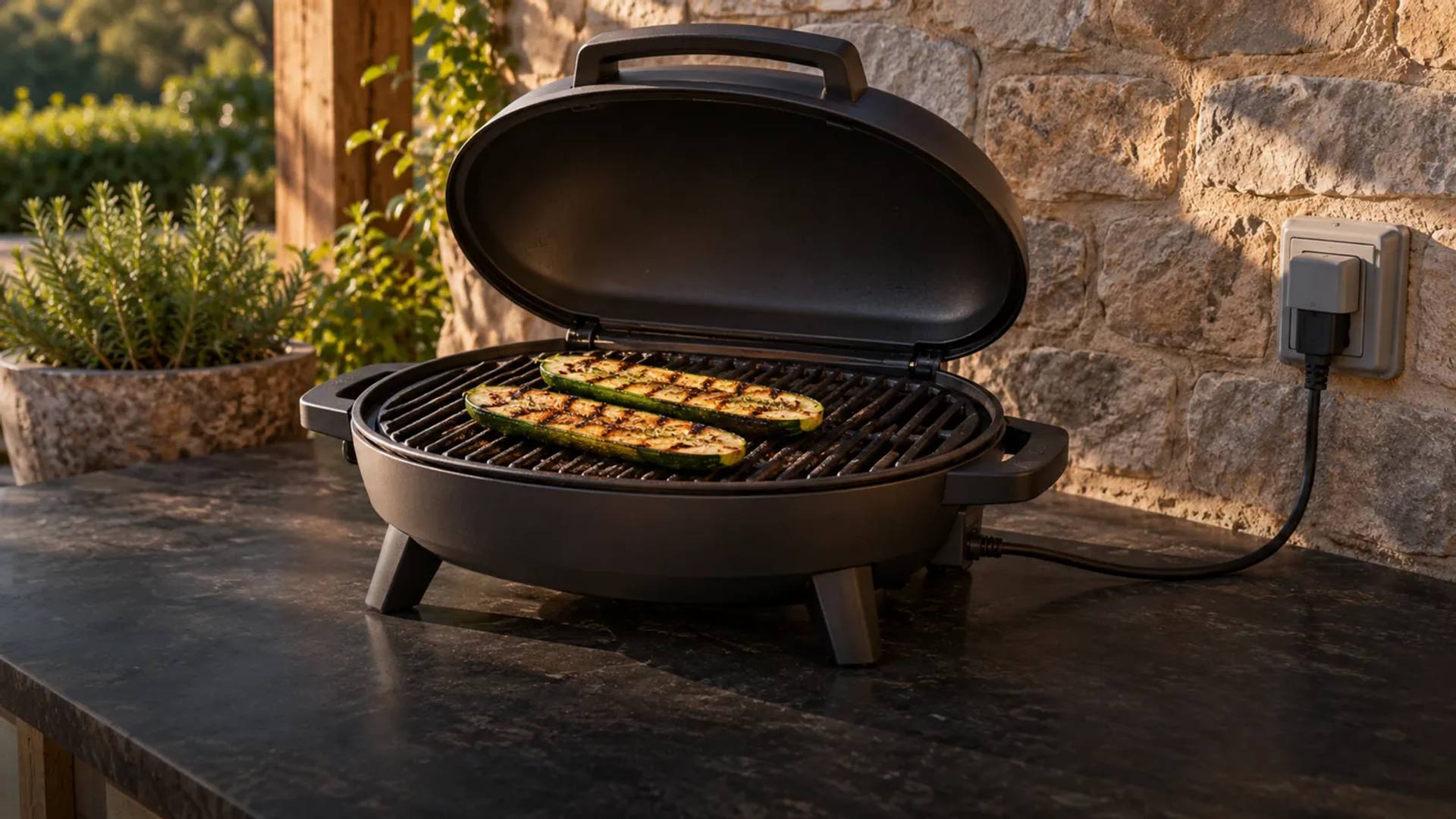
- Electric grills: Unplug and cool before washing approved removable parts. Never immerse the cord, controller, or heating element. Weber's electric grill manual includes these precautions.
Avoid pouring water onto a hot grill or trying to steam-clean it with a wet towel. Use warm water on cooled, washable parts instead. Heating the grill alone will not empty grease or remove loose debris.
Choose tools you can inspect and use gently
Check any cleaning tool for wear before using it. The U.S. Consumer Product Safety Commission warns that loose metal bristles can stick to food and cause serious injury if swallowed.
A wood scraper or suitable bristle-free brush offers another approach. Still check the tool and grates for loose pieces, damage, and leftover debris. Bristle-free does not mean every tool suits every coating.
Explore our Easy Function Bristle Free Brush
Prefer a brush-style tool? Check our Bristle Free Brush and choose the listing for your region. Confirm grate compatibility and cleaning temperature in the product instructions.
Questions about natural grill cleaning
Can I clean a grill with just water?
Water and gentle scraping can handle light mess. Stuck food may need a compatible baking soda treatment. If grease remains, use a little mild dish soap where allowed, rinse, and dry.
Should I clean grill grates hot or cold?
Warm scraping can help with loose food if your tool and grate allow it. Wait until the grate cools before washing it or applying a paste. Use nylon tools only within their stated temperature limits.
Can I soak cast iron grill grates overnight?
Avoid soaking bare cast iron. Wash it briefly, dry fully, and apply a thin oil layer. For enameled cast iron, follow the maker's instructions for that coating.
How often should I clean my grill naturally?
Clear food from the grates after each use and check the grease tray before cooking. Follow your model's schedule for deeper cleaning. Long cooks and fatty foods can mean cleaning sooner.
Start with the lightest method that gets the job done. Scrape gently, wash only what needs washing, and put everything back dry. That small routine makes the next cookout easier.
Every Easy Function product ships with a free lifetime replacement warranty.