The quick answer
Can you clean a flat top grill with vinegar?
Yes, if your griddle’s care instructions allow it. Remove loose food, use the approved vinegar-and-water mix, wipe or scrub as directed, then rinse and dry fully. Oil or re-season the surface if needed. Vinegar can strip seasoning from steel and cast iron, so it should not be your default cleaner after every cook.
Burgers are off the grill, but a sticky patch of sauce is still hanging on. A bottle of vinegar might seem like the easiest fix. Before you reach for it, check what your flat top is made of.
For example, Blackstone warns that vinegar can weaken griddle seasoning. That dark layer is baked-on oil that helps protect the steel and keep food from sticking. Our advice: clean off dinner while keeping that useful layer whenever you can.
Affiliate disclosure: Behind The Grill is published by Easy Function. We sell the tools featured below, and qualifying purchases through our links may earn us a commission at no extra cost to you.
Check your cooking surface first
Look up the model number in your manual. A shiny plate may be stainless steel, chrome, or another finish. The metal on the outside of the grill does not tell you what is on top.
| Cooking surface | Vinegar advice | Best starting point |
|---|---|---|
| Seasoned steel or cast iron | May remove seasoning. Save it for a maker-approved deep clean. | An approved scraper and water where the maker allows it, followed by drying and oiling. |
| Uncoated stainless steel | Use only if the cooking-plate instructions allow it. | The cleaner and pad listed for that plate. |
| Chrome or composite plate | Skip a general vinegar method. | Tools and cleaning steps made for that finish. |
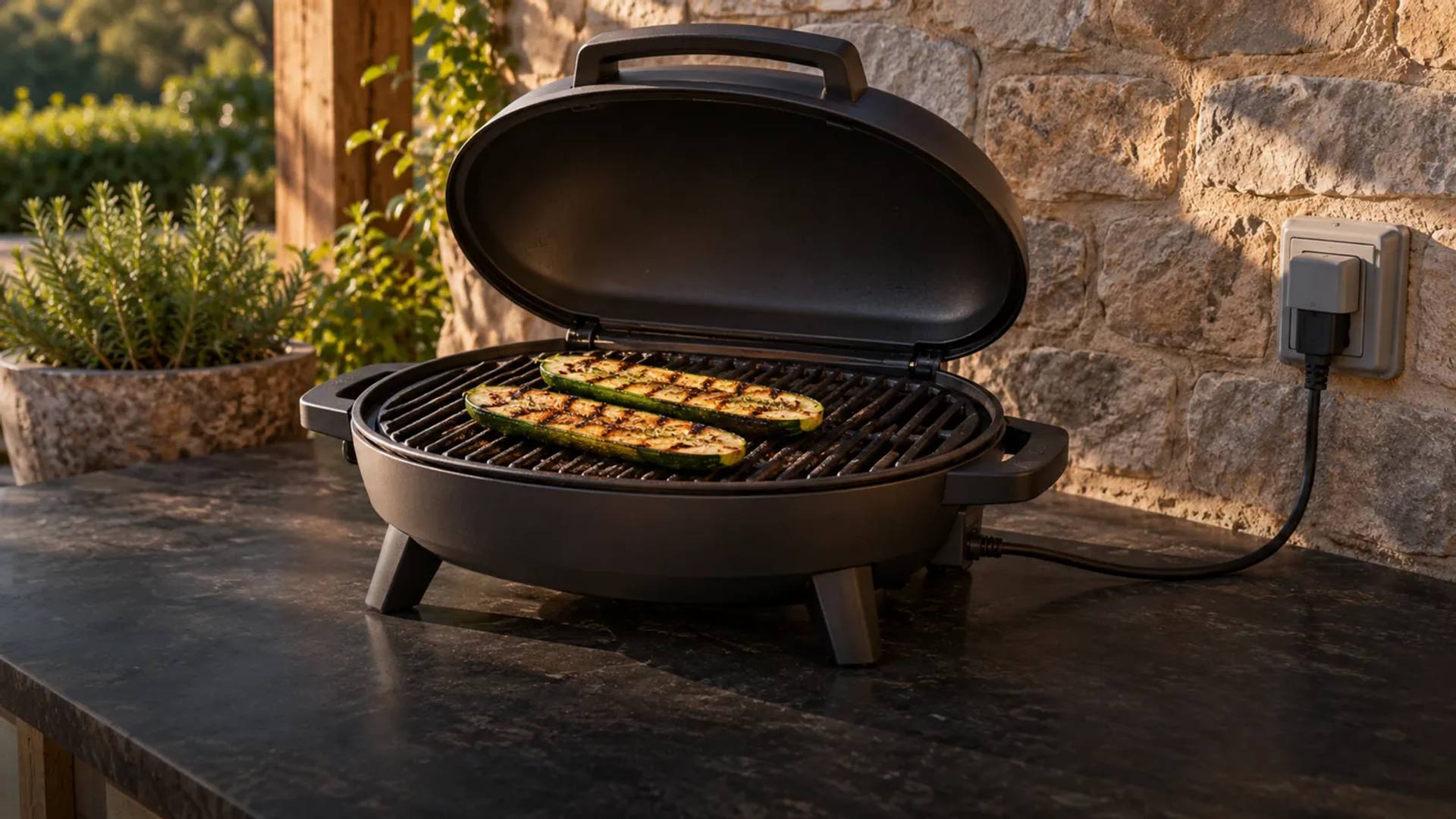
| Nonstick or ceramic-coated electric griddle | Do not assume vinegar is approved. | Unplug, cool, then use the recommended soft sponge and cleaner. |
There are approved uses: Wolf’s cleaning reference lists white vinegar and water for stubborn griddle stains. It does not make that method right for every brand. Likewise, Vulcan uses different cleaning methods for steel, chrome, and composite plates.
Gather a few simple supplies
- Plain white vinegar and clean water, if approved for your plate.
- A griddle scraper or spatula suited to your cooking surface.
- A surface-safe pad or soft sponge, plus clean cloths or paper towels.
- Heat-resistant gloves and tongs for any warm-surface work.
- Cooking oil if your griddle needs a protective coat or fresh seasoning.
Stock your BBQ cleanup kit
Explore our Easy Function BBQ tools and check each product’s intended use before choosing one for your grill.
Explore our BBQ productsHow to clean a flat top grill with vinegar
Use these steps only when your manual allows vinegar. Its mixing ratio, cleaning temperature, and contact time take priority. If the manual gives no vinegar method, use its regular cleaning routine instead.
- Set the grill to the right cleaning temperature. Turn it off and let it cool as directed. Some plates are cleaned warm; electric coated models may need to cool fully and be unplugged. Never flood a hot plate with cold liquid. Keep your face and hands clear of steam.
- Remove loose food and grease. Use the approved scraper with smooth strokes toward the grease outlet. Wipe up loose bits before adding liquid. Avoid digging a sharp corner into the plate.
- Prepare the approved vinegar mix. Measure it in a separate container. Do not guess the strength or swap in a stronger cleaning vinegar. Use only as much liquid as the instructions call for.
- Work on the remaining residue. Apply the mix and use the approved cloth or pad. Follow the stated contact time. Do not leave vinegar sitting overnight or keep scrubbing once the food residue is gone.
- Remove the liquid and rinse. Collect the dirty liquid safely, then wipe with clean water as directed until the residue is gone. Keep liquid away from controls and electrical parts. Do not tip an assembled grill to drain it.
- Dry and protect the plate. Wipe it fully dry, including the edges. Use heat for final drying only if your manual directs it. Apply a thin oil coat where required. If the cleaning removed seasoning, complete the full seasoning process before cooking again.
What vinegar-to-water ratio should you use?
There is no single ratio for every flat top. For example, Gastrotools specifies equal parts water and vinegar for a deep clean of its carbon steel griddle over medium heat. That means the same measured amount of each.
The brand says this removes existing seasoning and requires new seasoning afterward. Treat it as a restoration method for the product covered by that guide, rather than a recipe for every backyard griddle.
Keep cleaners separate. Never mix vinegar with bleach. Use ventilation and avoid breathing steam from any cleaning liquid.
For everyday seasoned-steel cleanup, start with water
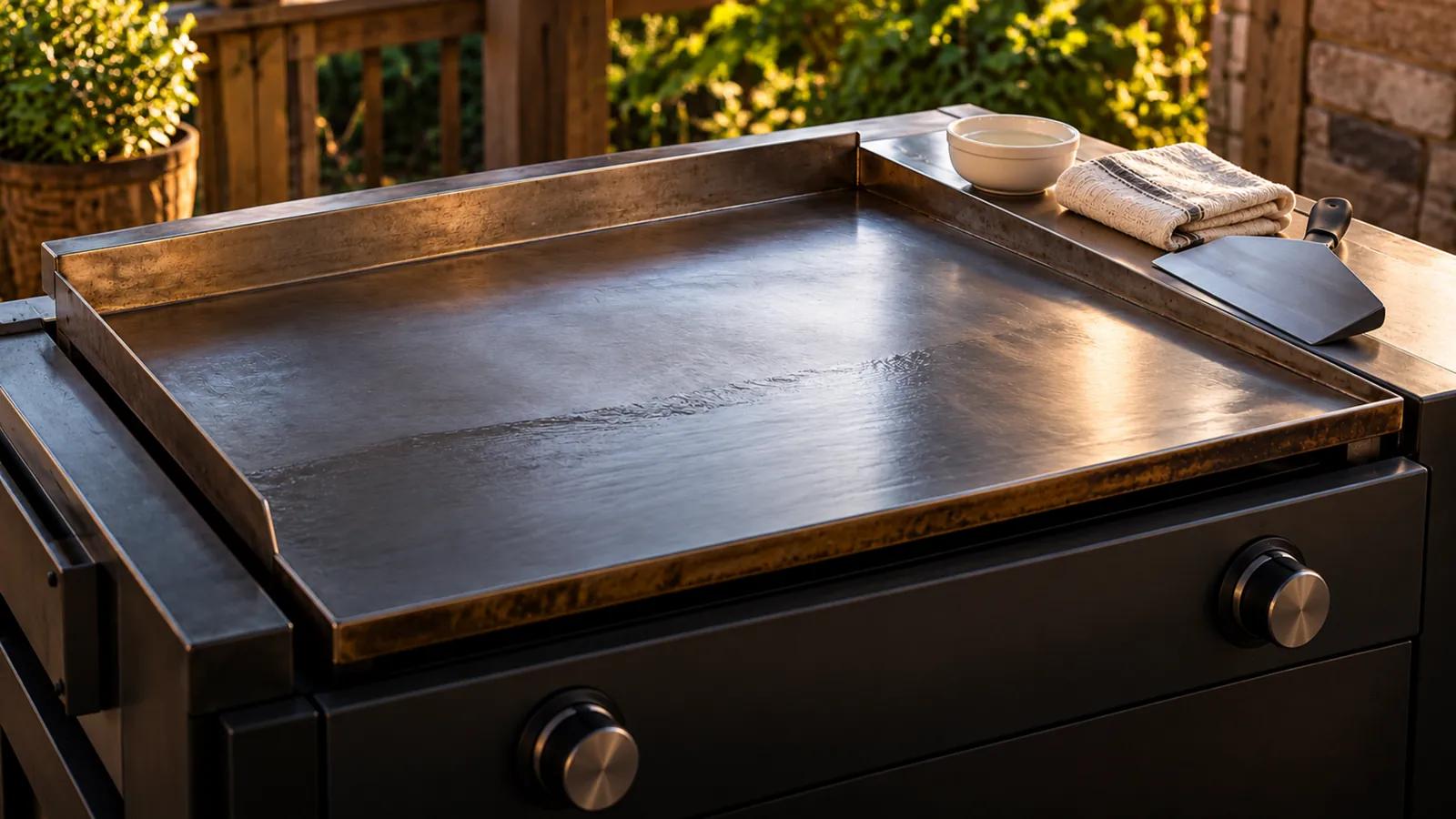
Most post-dinner messes do not need an acid treatment. Blackstone’s care guide starts with scraping, wiping, and a little water for stuck food on a warm plate.
After removing the mess, dry the surface and spread a very thin layer of cooking oil. Wipe away any pools. Let the griddle cool before covering it, and empty the grease tray once it is safe to handle.
A clean seasoned plate can still be brown or black. Aim for a smooth surface without loose food, flaking material, or sticky grease. You do not need to scrub it back to bright metal after every meal.
Also cleaning grill grates?
Easy Function Wood Grill Scraper
Our wood scraper forms grooves that fit grill grates as you use it. It gives you a cleaning option without wire bristles for the grate side of your BBQ setup.
Check the fit: This product is designed around grill grates. For a flat cooking plate, choose a scraper approved by the griddle maker.
See how wooden grill scrapers work before choosing your tool.
What if the surface still looks dirty?
Sticky patches: Remove loose grease first, then repeat the approved cleaning step on the patch. Adding more oil over a sticky mess will not clean it.
Hard, raised food: Use a small amount of water and gentle scraping if allowed. Avoid grinding a scraper corner into the plate.
Rust or peeling seasoning: Switch to the maker’s restoration instructions. Clean off loose material and rebuild seasoning where required. Do not hide rust under fresh oil and carry on cooking.
Color changes only: Some darkening is normal. Wolf also notes that griddle discoloration is normal, so a change in color alone does not mean you need a harsher cleaner.
Flat top grill vinegar cleaning FAQs
Can I use vinegar on a Blackstone after every cook?
Use its normal care routine instead. Vinegar can damage the seasoning you are trying to keep. Scrape, use water as directed, dry, and apply a thin oil coat.
How long should vinegar sit on the griddle?
Follow the contact time in your model’s instructions. There is no safe soak time that applies to every finish. If the instructions do not include vinegar, choose the listed cleaning method.
Do I need to season the grill after using vinegar?
If vinegar removed seasoning from a steel or cast iron plate, yes. A light storage coat of oil is different from baking on new seasoning. Follow the full process for your model. Coated griddles have different care needs.
Can I use a metal scraper on every flat top?
No. Some steel plates allow metal scrapers, while coated plates need gentler tools. Chrome can require a special scraper. Match the tool to the cooking surface.
Make the next cleanup easier
Clear the food after each cook, protect the surface, and save deeper cleaning for when it is needed. Explore our BBQ tools or join us on YouTube for more grilling content.
Every Easy Function product ships with a free lifetime replacement warranty.