The quick answer
How often should you clean a pellet stove?
Check the burn pot daily while the stove is in use. Many models need it cleaned daily or at each hopper refill. Plan to check the ash pan and clean the glass about weekly. Follow your manual for deeper cleaning and vent care, and arrange professional service at least once a year. Heavy use and high-ash pellets can shorten these gaps.
A warm room is easy to enjoy. A stove full of ash is easy to overlook. The trick is to give each part the care it needs before buildup affects the fire.
For example, ComfortBilt's cleaning schedule calls for burn-pot care at each hopper refill and weekly ash-pan care. Your own stove's manual sets the right schedule for your model. This guide will help you build a routine around it.
Affiliate disclosure: We may earn a commission when you buy through links on our product pages, at no extra cost to you.
A pellet stove cleaning schedule you can follow
Use this as a planning guide. Clean sooner if ash builds up, and follow any shorter time or fuel limit in your manual. A daily check does not mean a full daily teardown.
| When | What to check or clean | What changes the timing |
|---|---|---|
| Daily during use | Inspect the burn pot. Clear ash, hard lumps, and air holes as directed. | Some models need cleaning at every refill or more often. |
| About weekly | Check the ash pan, remove loose firebox ash, and clean cold glass as needed. | Pan size, pellet ash, and hours of use. |
| At the manual's interval | Clean heat-exchange surfaces and approved ash passages. | Intervals may be weekly, monthly, or based on fuel burned. |
| During the heating season | Have venting inspected and cleaned at its stated interval. | Fuel use and deposits may require service before the year ends. |
| At least yearly | Arrange a professional cleaning and inspection. | Heavy use or problems can call for more visits. |
| At season's end | Complete seasonal cleaning and remove leftover pellets as directed. | Your model's storage instructions. |
Keep a bag count beside the stove. If your manual gives a fuel limit, the count helps you spot when a larger clean is due. One US ton is 2,000 pounds, or 50 bags weighing 40 pounds each.
Why your stove may need cleaning sooner
Two homes can use the same stove and still need different cleaning routines. A stove heating the house all day burns more fuel than one used for a few evening hours.
Pellets matter, too. Some leave more ash and fine dust. Use the fuel your manufacturer allows, keep it dry, and watch for changes when you switch brands. A higher price alone does not tell you how a pellet will burn in your stove.
Look for these signs during normal use:
- Ash or hard lumps blocking the burn-pot holes.
- Pellets piling up instead of burning well.
- A weak, dark, or slow-moving flame that differs from normal.
- Repeated trouble starting the stove.
These signs can point to poor airflow, fuel trouble, or another fault. They do not prove that ash is the only cause. ComfortBilt recommends getting support when poor flame quality or ignition trouble continues after cleaning.
How to handle a routine cleaning safely
Have your manual, supplied cleaning tool, gloves, eye protection, metal ash container, and an ash-rated vacuum ready. Follow the steps for your model; only open parts the manual lists for owner care.
- Use the OFF control. Let the normal shutdown finish. Wait until the stove and ash are fully cold and the exhaust blower stops, then unplug before maintenance. Pulling the plug early can stop smoke from venting properly.
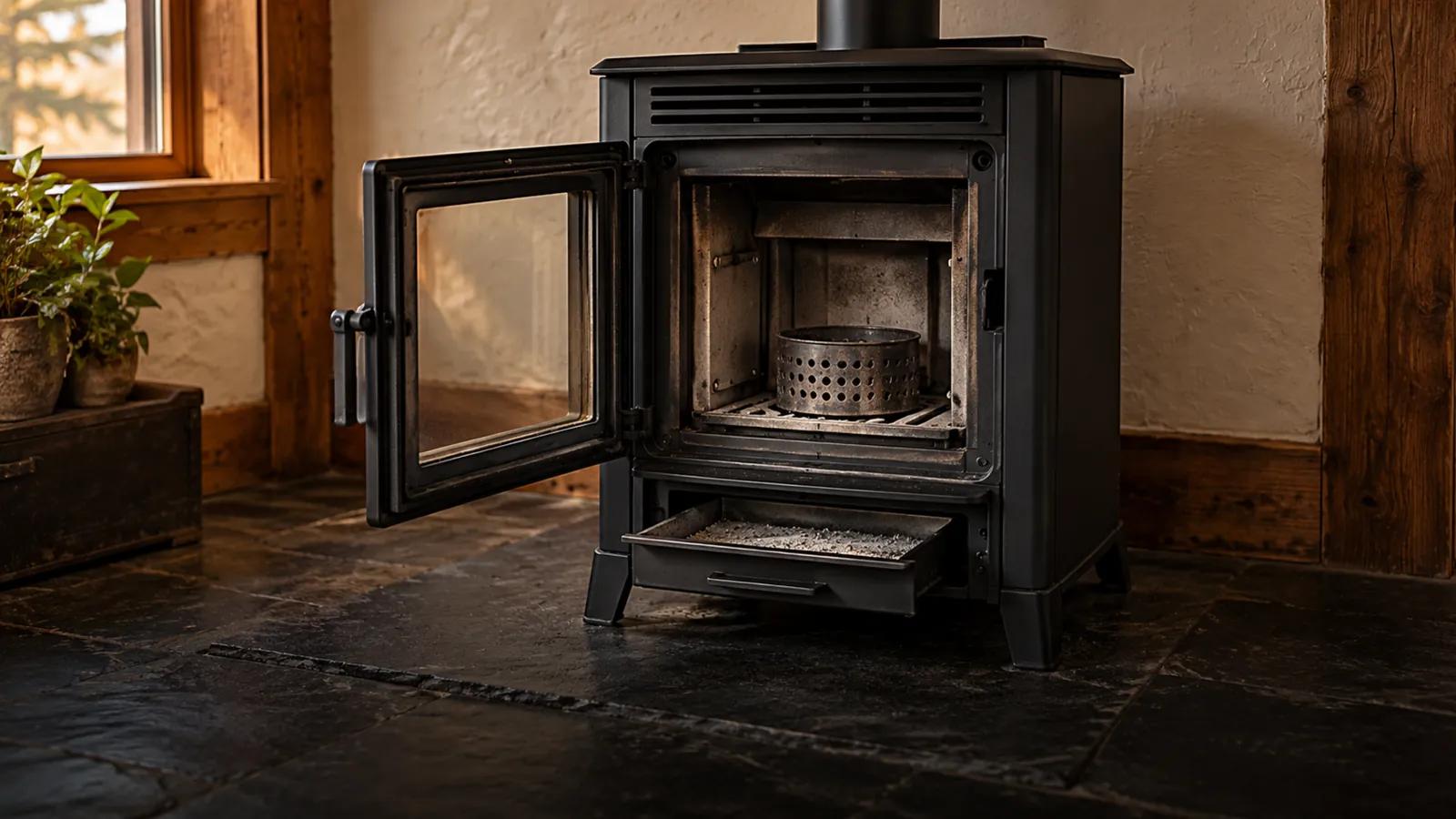
- Clear the burn pot. Remove ash and hard deposits with the approved tool. These hard lumps are often called clinkers. Clear the air holes without changing their size or damaging the pot.
- Remove loose ash. Empty the pan as directed. Use a vacuum made for stove ash with the right fine-ash filter. Follow both the stove and vacuum manuals.
- Clean the cold glass. Use a soft cloth and the cleaner your manual allows. Avoid abrasive pads and cleaners. Check the glass and door seal for damage.
- Put every part back. Seat the burn pot correctly, secure approved access covers, and close the ash pan and door. Check your work before restoring power.
Cold ash only: Never vacuum hot ash or embers, even with an ash vacuum. Do not use an ordinary household vacuum for stove ash. Embers can start a fire inside the machine.
The Harman P-Series manual explains safe shutdown and vacuum use. Quadra-Fire's Mt. Vernon E2 guide shows why clearing clinkers and air holes is part of routine care.
Give your grill some care, too
Our Easy Function collection includes wood grill scrapers and other BBQ tools for your outdoor cooking setup. For pellet stove interiors, use the tools approved by your stove maker.
Explore our Amazon BBQ productsWhere should pellet stove ash go?
Place cooled ash in a metal container with a tight-fitting lid. Keep it outside on a surface that cannot burn, away from decks, dry leaves, firewood, and other items that can catch fire.
The U.S. Fire Administration recommends keeping the container at least 10 feet from buildings. Never tip ash straight into a trash can. Keep it contained until every ember is fully cold, then follow local disposal rules.
Do deeper cleaning and vent care need a separate schedule?
Yes. A tidy firebox does not tell you how much ash is behind its panels or inside the exhaust pipe. Fine ash can collect along the path that carries smoke outside.
ComfortBilt lists weekly heat-tube cleaning and deeper chamber and vent cleaning after each ton of pellets. Other models use different limits. Check both your stove manual and vent maker's instructions. Do not assume the exhaust system can wait for a yearly visit.
For the annual visit, ask the technician to check the stove, venting, fans, seals, and safety parts. Mention any smoke smell, starting trouble, or new noise. Let a qualified technician handle work beyond the owner's cleaning steps.
After the final fire of the season, clean the stove and remove leftover fuel as your manual directs. ComfortBilt's off-season guide explains why hidden ash passages, the hopper, and the full exhaust path all deserve attention.
Smoke indoors or a carbon monoxide alarm needs immediate action. If smoke enters the room, stop using the stove and use its OFF control if safe. Have the cause checked before restarting. If a CO alarm sounds, get everyone outside and call emergency services. Stay outside until responders say it is safe.
Common pellet stove cleaning questions
Does a self-cleaning pellet stove still need cleaning?
Yes. An automatic cleaning feature handles only the tasks listed for that model. Check the manual for the ash pan, glass, hopper, fans, and venting that still need care.
Is cleaning once a month enough?
Monthly cleaning alone is usually too far apart for a stove used each day. The burn pot and ash pan often need care sooner. A monthly task in the manual does not replace the daily and weekly tasks.
Why does the glass turn black so quickly?
Fast soot buildup can come from fuel quality, restricted airflow, or another burning problem. Clean the cold glass and check the approved maintenance steps. If it quickly returns, ask your dealer to find the cause.
Where can I find the right cleaning instructions?
Use the model and serial number on the stove to find its owner's manual or ask the maker's support team. Match the model and version. For example, the Ashley AP5617-W manual has its own cleaning and seasonal care steps.
Make your routine easy to keep: note the last clean, count the bags burned, and choose a regular day to check the ash pan. Small jobs done on time help you stay ahead of the next cold spell.
Get your grill ready for the next cook
Explore Easy Function's grill scrapers, BBQ guides, and other outdoor cooking tools in our Amazon product collection.
Browse all our BBQ productsJoin us on YouTube
Visit the Easy Function channel for more from our BBQ community and subscribe to follow along.
Subscribe to Easy FunctionEvery Easy Function product ships with a free lifetime replacement warranty.