The quick answer
Can you clean a grill with a potato?
A cut potato may pick up a little loose residue, but it cannot replace proper grill cleaning. Use a suitable scraper or brush for stuck-on food and follow your grill's care guide for grease. The popular claim that potato starch makes grates nonstick is uncertain, so keep the potato trick optional.
A potato sounds like a handy shortcut. Cut it in half, rub it over the grates, and get back to grilling. But before you reach into the pantry, it helps to know what this trick can actually offer.
Start with regular grate care. Weber recommends cleaning cooking grates every time you use the grill. A quick kitchen hack should fit around that habit, rather than take its place.
Affiliate disclosure: We make Easy Function grilling tools. Some links below are affiliate links, which may earn us a commission at no extra cost to you.
What does rubbing a potato on grill grates do?
The cut face gives you a soft, damp surface to rub against the grate bars. It may collect loose crumbs. Think of that as a light wipe, not a way to break down a season's worth of grease.
You may also have seen people rub a raw potato over hot grates before cooking. The claim is that the starch it leaves behind helps food release. That is a different goal from cleaning, and the results are not clear.
In a firsthand test for PEOPLE, food writer Shay Spence found that food also released well on grates he had not rubbed with potato. That test did not show a clear benefit from the potato.
Loose crumbs
A potato may pick some up, but it can leave bits of its own behind.
Burnt sauce and grease
Use a grate-safe tool and the cleaning method in your grill manual.
Food that sticks
Clean grates, proper preheating, and a little oil on food are a better starting point.
Do not count on a potato to disinfect the grill, restore rusty metal, or clean the grease tray. Those jobs need their own care steps.
How to try a potato wipe on your grill
Curious whether it picks up loose crumbs? Keep this small test simple. Use cool grates with the grill off. These steps test the potato as a wipe; they do not test the hot-grate nonstick claim.
- Check the surface. Look up your grate material and approved cleaning tools. If you see flaking coating, deep rust, or damaged bars, deal with that first.
- Remove stuck-on food. Use a scraper or brush suited to the grates, at the temperature your manual allows. Let the grill cool before the potato test.
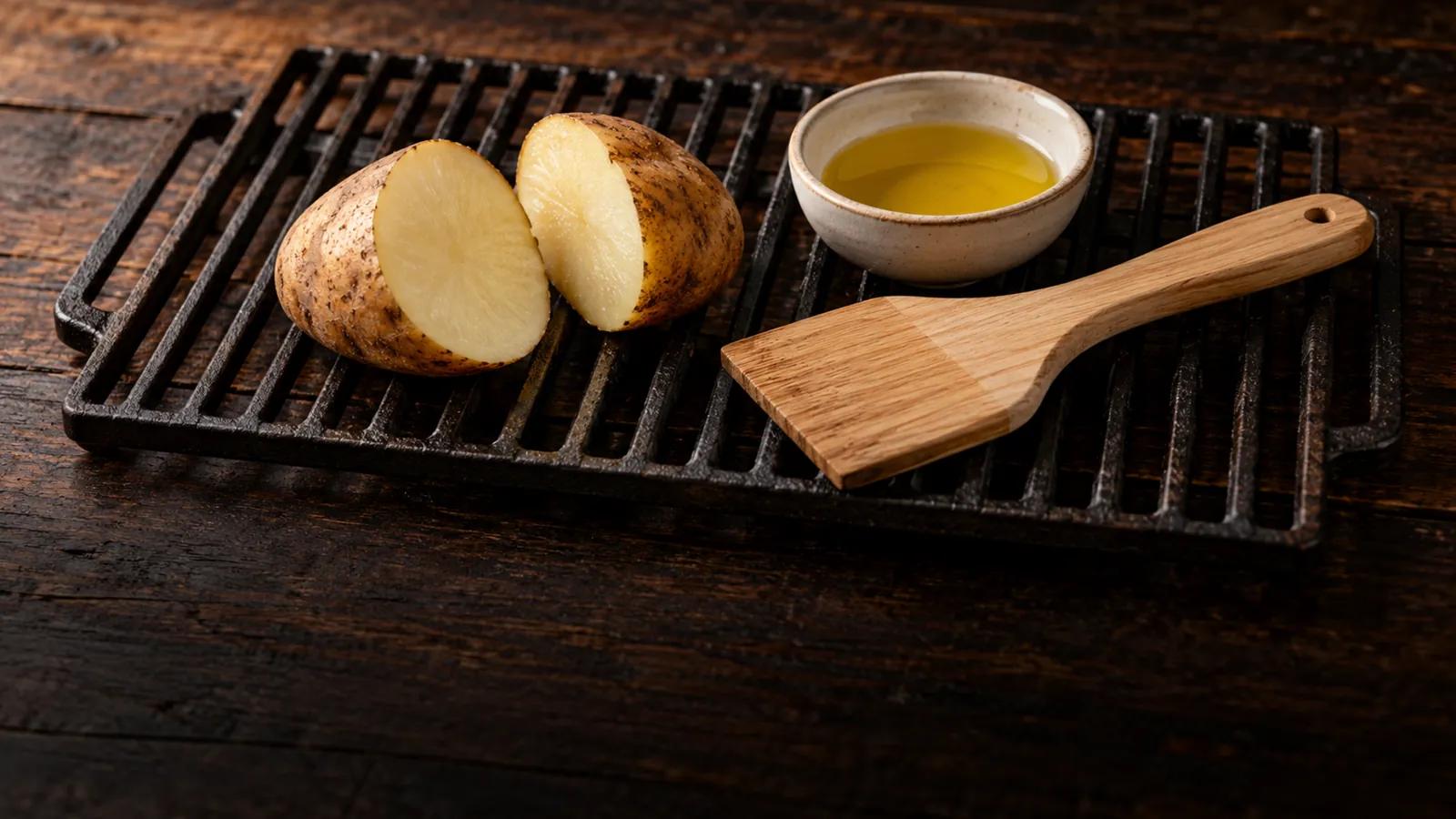
- Wash and halve a raw potato. Leave the skin on for a firmer grip. There is no need to buy a special variety.
- Grip it with long tongs. Hold the rounded side firmly, with the flat cut face toward the grate. Rub gently along a small area. Stop if it slips or starts breaking apart.
- Check what is left. Remove any potato pieces and starchy film with a clean, damp cloth if your manual permits. Dry the grates fully. If grease remains, finish with the approved cleaning method.
- Discard the used half. Wash the tongs before using them for food. Preheat the grill as usual before your next cook.
There is no reason to keep rubbing once the potato starts smearing. If it adds more cleanup than it saves, leave this trick out of your routine.
For the scraping step
Easy Function Wood Grill Scraper
Want a tool without wire bristles? Our wood grill scraper is an option for routine grate scraping. Check that it suits your grate design, and follow its shaping and use instructions.
Choose a cleaning method for the mess
Match the job to what you see on the grate. A few crumbs call for less work than thick, sticky buildup.
| What you see | Useful next step | Potato's role |
|---|---|---|
| Loose crumbs | Remove debris with a suitable tool or approved wipe. | Optional light wipe. |
| Burnt food or sauce | Use an approved brush or scraper; clean further as needed. | Too soft for the main job. |
| Heavy grease | Deep-clean cooled parts with products allowed by the manual. | Skip it. |
| Rust or flaking coating | Check the maker's repair or replacement advice. | Do not use it as a repair method. |
Check your grate material first
Grates can look similar but need different care. Check the manual rather than guessing from the color.
- Stainless steel: Use tools and cleaners approved for the grate. A potato does not take the place of removing baked-on food.
- Bare cast iron: Dry it promptly after wet cleaning, and follow its oiling and seasoning steps. Lodge's general cast iron care guide also stresses drying fully and applying a thin layer of oil. Your grill manual should guide the exact grate routine.
- Porcelain-coated grates: Protect the coating. Avoid forceful scraping and unapproved abrasive pads. These grates may not need seasoning; Weber says its newer porcelain-enameled cast iron grates do not.
Skip the salt upgrade. Some potato hacks add coarse salt for extra scrubbing. Do not assume that is suitable for your coating. A plain potato test is enough; adding grit changes how the surface is rubbed.
Want food to stick less? Start here
If fish tears or burgers cling to the bars, focus on your cooking setup. Weber's advice for its porcelain-enameled grates includes proper preheating and a light coat of oil on the food.
- Clean first. Remove leftover food before adding a fresh meal.
- Preheat as directed. Give the grate time to reach the cooking temperature your food needs.
- Lightly oil the food. Do this during prep, away from the flames.
- Give food time to release. Avoid tugging at meat the moment it hits the grate.
Keep these habits in place even if you try the potato hack. Starch left on the grate is not a lasting protective coating.
When your grill needs more than a quick wipe
Sticky grease, thick food deposits, and a full grease tray call for proper cleaning. Let the grill cool and shut it down as the manual directs before removing parts or using a cleaner.
Use only products approved for each surface. Keep liquids away from electrical parts, and dry cleaned grates before storage. Check the grease collection area too; wiping the cooking bars does not clean the parts below them.
Our guide to deep-cleaning a grill walks through the wider job. Use it alongside your model's care instructions.
Common questions about the potato trick
Should the potato be raw or cooked?
Use a raw potato if you try the wipe. A cooked potato is softer and more likely to break apart, leaving you with extra bits to remove.
Can a potato remove rust from grill grates?
Do not rely on it for rust removal. Check the grate maker's advice. Bare iron may allow a restoration process, while damaged coatings or badly corroded bars may need replacement.
Does potato starch season cast iron grates?
No. A starch smear is not the same as seasoning cast iron with oil. Follow the seasoning steps for your grates, and remember that coated cast iron may need different care.
Can I eat the potato after using it to clean?
Discard the half that touched the dirty grates. Keep it away from food you plan to serve, and wash the tongs before cooking with them.
Our take: try a potato if you are curious, but keep your regular cleaning tools close. A grate free of old food and grease is a much better starting point for dinner than a clever shortcut alone.
Keep your next cleanup simple
Add the Easy Function Wood Grill Scraper to your routine if it suits your grates. Use it for the scraping step, then finish any deeper cleaning your grill needs.
Explore our grilling tools
See our Easy Function products for backyard grilling and everyday grill care.
Browse all our productsEvery Easy Function product ships with a free lifetime replacement warranty.