The quick answer
Does cleaning a flat top grill with ice really work?
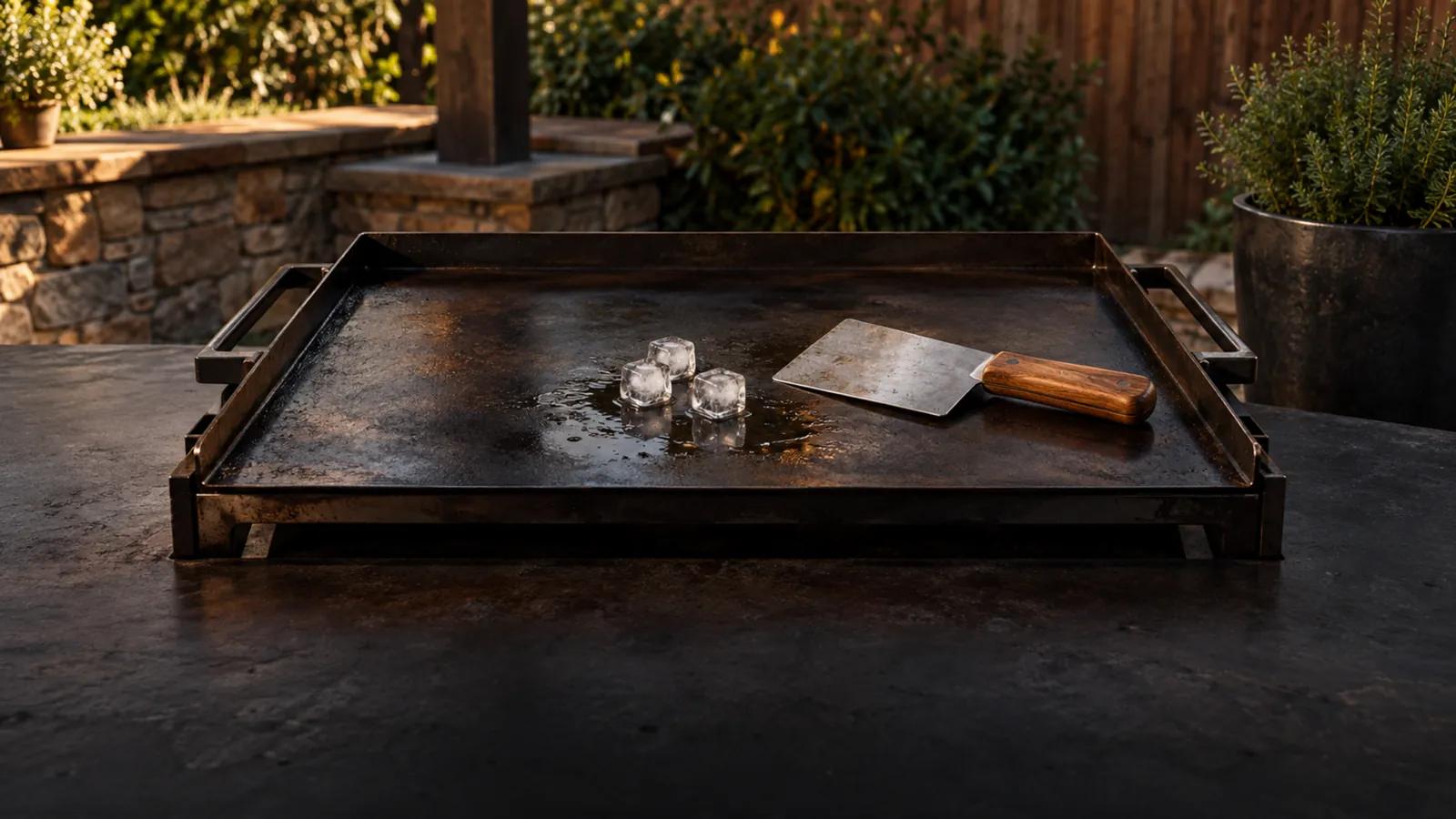
Ice can help loosen some stuck food as it melts and the water heats up. But the sudden cold can stress a hot griddle plate and cause warping. We recommend your grill maker’s cleaning method instead. A suitable scraper and a little water, used as directed, can loosen food without adding ice.
That pile of browned bits after burgers or breakfast can make a quick cleaning trick look tempting. Toss on ice, watch it hiss, and scrape the mess away. Easy, right?
The hiss does not tell the whole story. Traeger’s griddle care advice lists ice and large amounts of cold water among the causes of warping. Before trying a trick from a cooking video, check what your own flat top needs.
Affiliate disclosure: As an Amazon Associate, we earn from qualifying purchases. If you buy through our affiliate links, we may earn a commission at no extra cost to you.
Why does ice seem to clean a flat top?
The useful part is the water. Ice melts on the hot plate, and some of that water turns to steam. The moisture and heat can help soften stuck food, making it easier to lift with a scraper.
Think of the browned onion bits left after cooking. A little water can help release them. You still need to move the bits and dirty liquid off the cooking surface. A cloud of steam does not carry all that mess away.
Ice also has to melt before that water can heat up. It does not have a special grease-cutting ingredient. You do not need ice for the water-based cleaning routine your maker recommends.
What to expect: Moisture may help release light food residue. Thick burnt deposits, rust, and damaged seasoning need their own care steps. Adding more ice is not a fix for any of those problems.
Can ice damage a flat top grill?
Yes, a sudden temperature change can make the plate warp. This stress is called thermal shock. A very cold spot cools faster than the hot metal around it, which can make the surface bend.
That does not mean one ice cube will always ruin a grill. Traeger notes that some warping is temporary. Still, avoiding a sharp temperature drop is a sensible way to care for your cooktop.
Commercial equipment is not an automatic exception. Vulcan warns against using ice to cool a griddle because it may damage the cooking surface. Its guide uses room-temperature water and different tools for different plate types.
There is also the steam to think about. Keep your hands and face away from rising steam and hot grease. Do not lean over the plate to watch the ice melt.
Check your cooking surface before choosing a tool
“Flat top” describes the shape, not the finish. Look up your model number and care guide before copying a cleaning routine. A tool meant for one surface may damage another.
| Surface | Cleaning approach | Key check |
|---|---|---|
| Seasoned, uncoated steel | Scrape, use water as directed, dry, and apply a thin oil layer. | Keep the seasoning intact. |
| Chrome | Use tools approved for the chrome plate. | Vulcan warns that griddle bricks damage chrome. |
| Composite plate | Use the maker’s steps for that plate design. | Do not assume it needs the same care as steel. |
| Nonstick coating | Follow the exact model’s care steps. | Check which pads and scrapers are allowed. |
If you cannot tell which finish you have, ask the maker before using a metal blade, cleaning brick, or strong cleaner.
Choose BBQ tools that fit your setup
Browse our Easy Function range for your next cookout. Check each item’s intended surface before buying, especially if you use both a flat top and a grill with grates.
Explore all Easy Function productsHow to clean a seasoned steel flat top without ice
For a seasoned, uncoated steel griddle, Blackstone’s care guide gives a useful starting point. Have your approved scraper, water, towels, tongs, and cooking oil ready. Follow your model’s directions if they differ.
- Let the plate cool as directed. Turn off the heat after cooking. Do not rush cooling with ice or a flood of water.
- Scrape off loose food. Use an approved scraper with controlled strokes. Push debris toward the grease opening.
- Loosen stubborn spots. If the care guide allows it, use a little warm water on the still-warm plate. Keep clear of steam, then scrape again.
- Wipe away the mess. Use towels held with tongs while the plate is warm. Remove the dirty liquid.
- Dry and lightly oil. Dry fully, then spread a thin film of cooking oil over the seasoned steel.
- Finish the cleanup. Once safe to handle, empty and clean the grease container. Let the grill cool before covering.
Keep the finish in mind: Seasoning is the cooked-on oil layer that helps protect steel. Do not assume that this oiling routine, or the same scraper, suits a coated electric griddle.
What if food still will not come off?
Stop and look at the patch before pressing harder. Is it loose food, a sticky layer, rust, or the dark seasoning itself? Those are different jobs. A dark steel plate does not need to look shiny and new after every meal.
For food residue, repeat the approved cleaning steps gently. If the patch stays put, check the maker’s deep-cleaning advice. Use only a pad, cleaner, or brick approved for that finish. Do not jump from light scraping to heavy grinding.
For peeling seasoning or rust, use the maker’s repair process. Ice will not rebuild the protective layer. And if the plate rocks or no longer drains well, contact the maker before trying to force it flat.
Also cooking on a grill with grates?
Our Easy Function Wood Grill Scraper is a bristle-free option designed to form grooves that fit grill grates with use. Keep it in mind for your grate-style BBQ, and choose a scraper approved by your maker for a smooth flat top.
Your flat top ice-cleaning questions
Can I use ice on a Blackstone griddle?
We recommend following Blackstone’s care guide for your model. Its steel-griddle routine uses water on a warm plate, scraping, drying, and oiling. You do not need ice to do that job.
Does the steam sanitize the cooking surface?
A brief burst of steam is not a reliable sanitizing step. Remove the food and grease, then follow your equipment’s cleaning instructions. Do not use the amount of steam as proof that the surface is ready for food.
What temperature should the grill be for cleaning?
Use the temperature or cooling stage in your model’s care guide. There is no single cleaning temperature for every steel, chrome, composite, or coated flat top.
What if I have already used ice?
Do not assume the plate is ruined. Stop adding ice, let it cool naturally, and check for changes in shape or finish. If something looks wrong, ask the manufacturer for help with your exact model.
Make cleanup part of the cookout
Keep the right scraper and towels nearby so cleanup feels like the last step of cooking. For more from Easy Function, subscribe to our YouTube channel and join us for your next backyard BBQ.
Subscribe to Easy Function on YouTubeEvery Easy Function product ships with a free lifetime replacement warranty.