The quick answer
Can you use oven cleaner on cast iron grill grates?
Skip oven cleaner for routine cleaning. Lye-based formulas can strip the seasoning from bare cast iron. Use an oven cleaner only if both your grate maker and the exact cleaner label allow it. Porcelain-coated cast iron has different care needs, so check the finish before you start.
A thick layer of burnt sauce can make a strong spray look like the easy way out. And some products do list iron as a suitable surface. For example, the official Easy-Off Heavy Duty page lists iron and porcelain enamel. That does not mean it is the right choice for every grate.
Our advice is to start with the least harsh method your grill maker allows. You want yesterday's food off the bars while keeping the cooking surface in good shape. Here's how to make that call.
About our product links: Behind The Grill is run by Easy Function, and we feature our own grill tools below. As an Amazon Associate, we earn from qualifying purchases.
First, check which cast iron grates you have
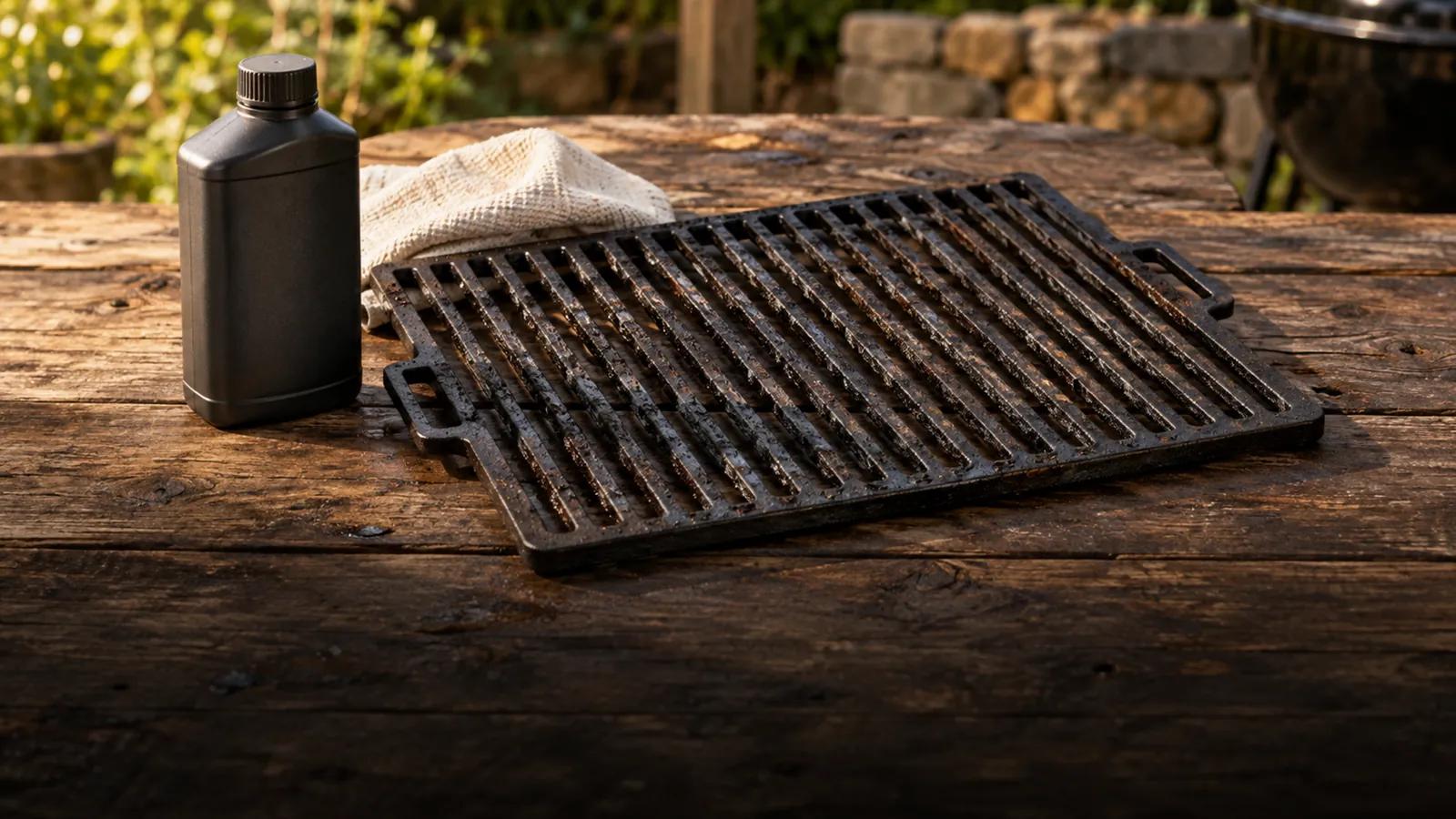
Bare cast iron relies on seasoning: a thin layer of oil that hardens onto the metal through heat. Porcelain-enameled cast iron has a coating over the iron. A dark finish alone does not tell you which one you own. Check the manual, model number, or replacement-part listing.
| Grate type | Oven cleaner guidance | Better starting point |
|---|---|---|
| Bare, seasoned cast iron | Can lose seasoning with a lye-based cleaner. | Scrape off food; wash, dry, and oil as directed. |
| Porcelain-enameled cast iron | Use only if both the cleaner and grill maker approve. | Use tools and cleaners approved for the coating. |
| Unknown or damaged finish | Hold off until you identify the surface. | Ask the grate maker for care or replacement advice. |
Do not assume every cast iron grate needs seasoning. Weber says its newer porcelain-enameled cast iron grates do not need it. Follow the instructions for your model.
Why oven cleaner can cause extra work
Some heavy-duty oven cleaners contain sodium hydroxide, also called lye. It cuts through baked-on grease, but it can also attack the oil layer you want to keep. Field Company's care FAQ explains that lye damages seasoning.
Once that layer is stripped, exposed iron needs care to prevent rust. A quick spray-and-wipe job can turn into cleaning, drying, and reseasoning. Oven cleaner also adds removal steps that simple scraping does not require.
The grill's instructions matter too. Weber's gas barbecue cleaning guide warns against oven cleaner. If your maker bans it, a cleaner's general list of suitable metals does not change that.
Is there any benefit? A suitable cleaner can loosen heavy grease. But on seasoned iron, you may lose useful seasoning along with the mess. That trade-off rarely makes sense for normal cleanup.
Start with a wooden scraper
Our Easy Function Wood Grill Scraper offers a way to lift stuck food without wire bristles. Its edge develops grooves to match the grate with use. Follow the scraper's heat instructions and your grill maker's tool guidance.
How to clean cast iron grill grates without oven cleaner
For bare, seasoned grates, start with this simple routine. Check your manual first, especially if the grates have a coating.
- Let the grill cool for a deep clean. Turn it off and shut off the fuel supply as your manual directs. Wait until the grates are safe to handle before removing them.
- Lift off loose food. Use a grate-safe scraper or brush. Work along the bars with steady pressure. Avoid digging at the surface with a sharp edge.
- Wash when needed. If the maker allows it, use warm water, a little mild dish soap, and a suitable brush. Rinse away the soap and loosened food. Skip long soaks.
- Dry right away. Wipe both sides and the spaces between the bars with a clean cloth. Do not leave bare iron to drip-dry.
- Protect bare iron. Add a thin coat of cooking oil and follow the grate maker's care or seasoning steps. Keep the coating light, with no pools of oil.
Soap is not automatically off-limits. Lodge's cast iron care guide allows dish soap and stresses drying fully and adding a thin oil layer. Its advice is for cookware; your grill manual sets the rules for your grates.
For coated grates: Choose tools approved for the finish. Do not use a bare-iron rust-removal method on enamel. Clean off loose food, but do not scrape away the coating to chase a spotless look.
Already used oven cleaner? Do this before cooking
One use does not automatically mean you need new grates. Put cooking on hold while you check the product and the surface.
- Read the exact label. Follow its removal and rinsing steps, along with its ventilation and protective-gear directions. Do not borrow a wait time from a different spray.
- Check for an unapproved use. If the label or grill manual rules it out, contact the cleaner maker and grill maker for advice before using the grates again.
- Inspect after the cleaner is fully removed. Bare iron may need rust removal or fresh seasoning. For chipped or peeling enamel, ask the grate maker whether replacement is needed.
Do not rely on heat alone to remove oven cleaner. Complete the label's cleaning and rinsing steps before any heating or seasoning. Do not add vinegar, bleach, or another cleaner to try to fix the first treatment.
How to rebuild seasoning on bare cast iron
If the seasoning has been stripped, start with clean, fully dry grates. Remove any rust using the grate maker's approved method. Then spread a very thin layer of suitable cooking oil over both sides and wipe off the excess.
Heat and cool the grates using the time and temperature listed for your grill. Repeat if the maker calls for it. A heavy, sticky oil layer is not the goal.
For a grill-specific example, Char-Griller's cleaning and seasoning guide covers oiling both sides and heating its cast iron grates. Use your own model's instructions rather than copying a skillet's oven setting.
Seasoning does not repair a damaged enamel coating. If you are unsure which surface you have, confirm it before trying to rebuild anything.
Prefer a brush for regular cleanup?
Take a look at our Easy Function Bristle Free Brush. Check the listing's surface and heat guidance against your grill manual. Inspect the tool for wear, and check the grates for loose debris before food goes on.
Common questions about oven cleaner and cast iron
Is fume-free oven cleaner safe for cast iron grates?
The words “fume-free” do not tell you whether a product suits your grates. Check that exact formula's label and your grill manual. Do not assume all oven cleaners work the same way.
Should I soak cast iron grill grates overnight?
Avoid long soaks. Bare iron can rust when left wet. Scrape off food, wash as directed, and dry fully. A dishwasher is also a poor choice for seasoned cast iron.
Will oven cleaner remove rust from cast iron?
Do not choose an oven cleaner as a rust treatment unless its label approves that job and your grate maker agrees. Removing grease or seasoning is different from removing rust.
Should I scrub cast iron until it looks shiny?
No. Remove stuck food and loose residue. A sound, dark seasoning layer belongs on bare iron. For coated grates, protect the finish rather than trying to reveal the metal underneath.
For your next cleanup, identify the grate finish, reach for a suitable scraper, and follow the maker's wash-and-care steps. Keeping up with small messes makes it easier to avoid a major stripping job later.
Explore our grill tools
Browse the Easy Function range and choose tools that fit your grill and cleaning routine.
See all Easy Function productsJoin us on YouTube
Visit the Easy Function channel for more from the team behind Behind The Grill.
Subscribe to Easy FunctionEvery Easy Function product ships with a free lifetime replacement warranty.