If you’ve ever stood in front of the meat section or scrolled through a BBQ menu and wondered, “What’s the real difference between baby back ribs and spare ribs?” you’re not alone.
These two rib cuts often confuse even seasoned grillers.
But once you understand how they differ in size, flavor, and cooking style, choosing the right one becomes easy.
Let’s break it down simply and clearly so you know exactly what to expect the next time ribs are on the grill.
Subscribe to Our YouTube Channel :)
What Are Baby Back Ribs?
Baby back ribs come from the top part of the pig’s ribcage, near the spine.
They’re called “baby” not because they come from young pigs, but because they are smaller and more tender than spare ribs.
They are:
-
Shorter in length
-
Curved in shape
-
Leaner with less fat
-
Quicker to cook
Because of their tenderness and size, baby back ribs are often a favorite for backyard BBQs and family dinners.
They cook evenly, have less cartilage, and deliver a nice bite without much chew.
What Are Spare Ribs?
Spare ribs come from the lower part of the ribcage, closer to the belly.
These ribs are bigger, meatier, and contain more fat and connective tissue.
They are:
-
Larger and flatter
-
Richer in flavor due to more marbling
-
Slightly tougher but more rewarding if cooked low and slow
-
Best suited for long smoking or braising
Spare ribs are often the go-to for pitmasters who like bold flavors and a bit of chew.
They need more time on the grill; however, they offer deeper flavor thanks to the fat content.
Taste & Texture: Lean vs Rich
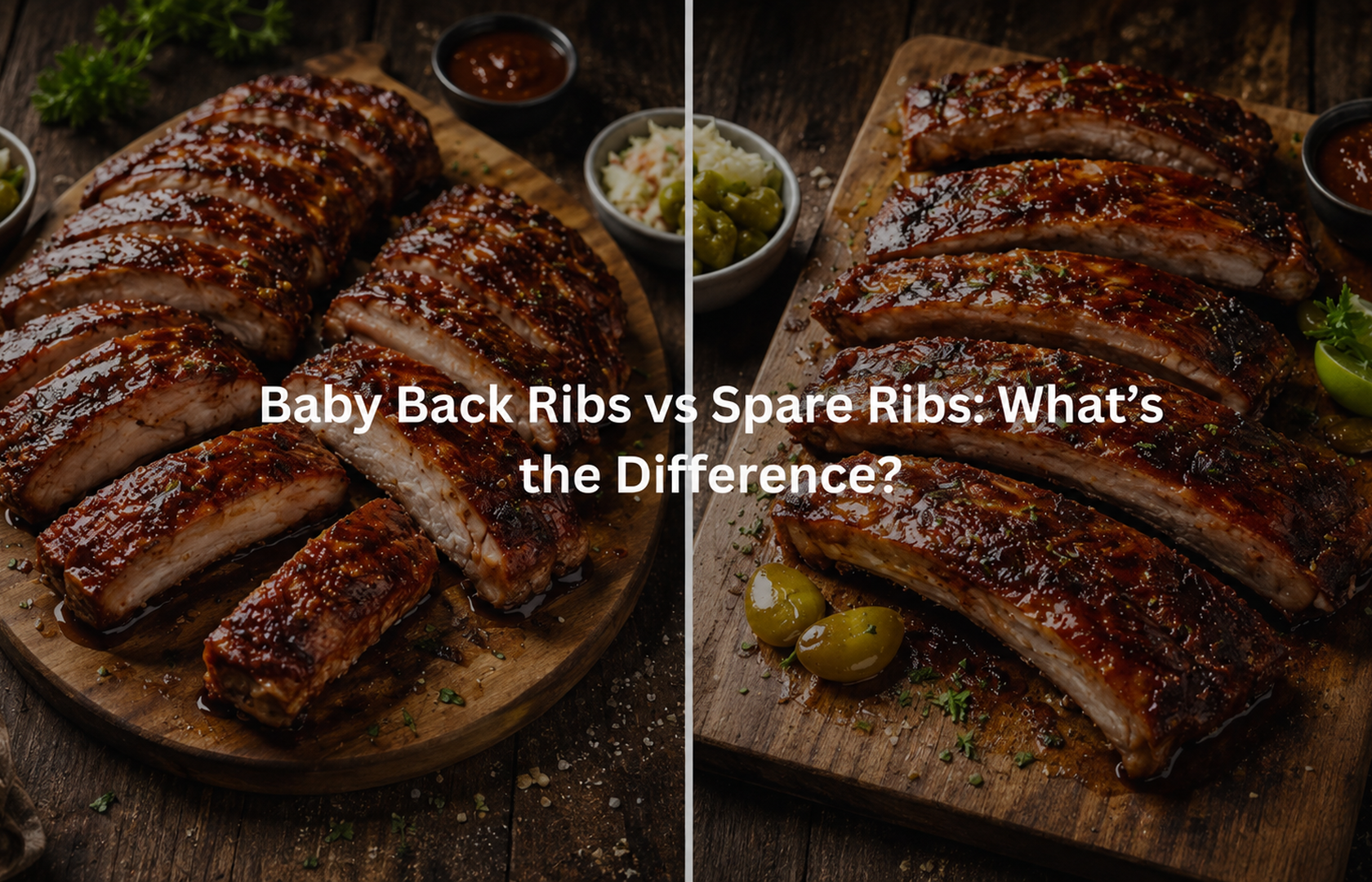
When comparing baby back ribs vs spare ribs, texture is a key difference.
-
Baby back ribs are mild, lean, and tender.
-
They’re great for folks who prefer a cleaner bite and less fat.
-
Spare ribs are fattier, with a richer flavor.
-
They’re slightly chewier; but that’s what makes them stand out in traditional BBQ.
If you’re planning to sauce your ribs heavily, baby backs may let the sauce shine.
If you want something smoky, savory, and full of flavor, spare ribs are the way to go.
Still unsure how to get the best taste and texture from your ribs?
Check out our Beginner’s Guide to Smoking Ribs at Home for easy, step-by-step help.
Cooking Time: Fast vs Low-and-Slow
Another big difference comes down to how long they take to cook.
-
Baby back ribs usually cook in 1.5 to 2 hours at 225–250°F (107–121°C).
-
Spare ribs need 3 to 4 hours at the same temperature.
This is because spare ribs have more fat and connective tissue that needs to break down slowly.
Rushing this will make them tough.
If you’re smoking ribs, a tool like the Easy Function Meat Smoking Guide Magnet is helpful: it gives quick-glance info on ideal temperatures and wood pairings for different meats; perfect for beginners and pros alike.
Buy Easy Function Meat Smoking Guide - Amazon Canada
Buy Easy Function Meat Smoking Guide - Amazon USA
Want more specific tips?
Learn the Exact Temperature to Smoke Ribs to ensure they come out juicy and full of flavor every time.
Cost Comparison
In most grocery stores, baby back ribs are more expensive than spare ribs.
This is because they’re smaller, more tender, and in higher demand.
-
Baby back ribs = higher price per pound
-
Spare ribs = more meat for your money
If you’re feeding a crowd or want more value, spare ribs might be the better pick.
But if tenderness and ease are your top priority, baby backs are worth the extra cost.
Grill Clean-Up Tip
No matter which ribs you cook, cleaning your grill after a sticky BBQ session is key.
Grease and charred sauce build up fast.
A safer alternative to wire brushes is the Easy Function Wood Grill Scraper.
It shapes to your grates over time; and it won’t leave dangerous bristles behind.
Buy Easy Function Wood Grill Scraper - Amazon USA
Buy Easy Function Wood Grill Scraper - Amazon Canada
If you’ve ever worried about metal bristles in your food, this tool is a must-have for your grilling kit.
So, Which Should You Choose?
Here’s the bottom line:
-
Choose baby back ribs if you want tender, quick-cooking ribs with a lean bite.
-
Choose spare ribs if you prefer bold flavor, larger portions, and don’t mind a longer cook.
There’s no wrong answer; just different styles for different tastes and occasions.
Whether you go with baby back or spare ribs, be sure to explore the full range of Easy Function grilling tools designed to make your BBQ experience safer and smoother.
Click the image to check out our products and make your next cookout even better.
P.S. - After you read Baby Back Ribs Vs Spare Ribs: What’s The Difference?, check out Cook Spare Ribs On A Gas Grill The Right Way For Flavor. It shows you how to cook spare ribs so they turn out tender and full of taste.
Every Easy Function product ships with a free lifetime replacement warranty.